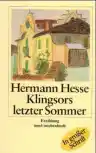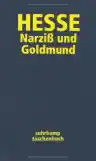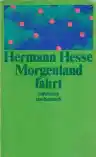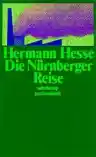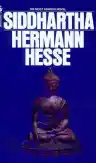
Siddhartha: Eine indische Dichtung
A concise, representative entry point into Hesse's spiritual and philosophical fiction.
Author guide
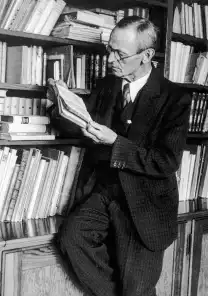
Hermann Karl Hesse (1877–1962) was a German-born Swiss writer and painter. His extensive body of work includes novels, novellas, short-story collections, poetry, travel writing, essays, memoirs, political commentary, and illustrated books. His best-known works include Peter Camenzind, Demian, Siddhartha, Der Steppenwolf, Narziß und Goldmund, and Das Glasperlenspiel. Hesse's writing frequently examines the individual's conflict with social institutions, the search for an integrated self, Eastern and Western spiritual traditions, artistic vocation, and the value of solitude and nature. He was awarded the Nobel Prize in Literature in 1946.
Catalog record updated .
Not sure where to begin?
A concise, representative entry point into Hesse's spiritual and philosophical fiction.

A short, influential coming-of-age novel that introduces Hesse's central theme of self-discovery.
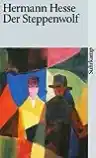
Hesse's most widely recognized modernist novel and a strong introduction to his mature work.
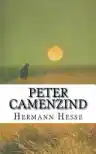
The breakthrough novel and a useful starting point for reading Hesse chronologically.
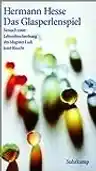
The culminating late novel and the work most closely associated with Hesse's Nobel recognition.
Outside the series
novel · 1904
Peter Camenzind by Hermann Hesse, Michael E. Roloff Peter Camenzind, a young man from a Swiss mountain village, leaves his home and eagerly takes to the road in search of new experience. Traveling through Italy and France, Camenzind is…
novel · 1906
Enthält den Originaltext des Romans, Kommentare und Interpretationen sowie eine Einführung in Leben und Werk des deutschen Nobelpreisträgers (1877-1962).
novel · 1910
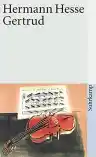
Es ist die Geschichte zweier durch Anlage und Schicksal völlig verschiedener und dennoch befreundeter Künstlernaturelle, des leidgeprüften Komponisten Kuhn und des Sänger - Don Juans Heinrich Muoth, deren beider Liebe zu Gertrud ihre…
novella · 1914
novella · 1914
novel · 1914
novella · 1914
novella-collection · 1915
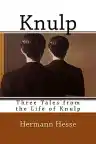
First published in 1915, Knulp was Hesse's most popular book in the years before Demian. This is the first edition in English. Knulp is an amiable vagabond who wanders from town to town, staying with friends who feed and shelter him.…
novella-collection · 1916
novel · 1919
A powerful new translation of Nobel Prize winner Hermann Hesse’s masterpiece of youthful rebellion—with a foreword and cover art by James Franco A Penguin Classic A young man awakens to selfhood and to a world of possibilities beyond the…
novella-collection · 1920
novella · 1922
Herman Hesse's classic novel has delighted, inspired, and influenced generations of readers, writers, and thinkers. In this story of a wealthy Indian Brahmin who casts off a life of privilege to seek spiritual fulfillment. Hesse…
novel · 1927
A story that focuses on the loneliness and suffering of the protagonist, Harry Haller, who feels that he has no place in a world filled with meaningless frivolity. Having decided to take his own life a chance encounter causes him to…
novel · 1930
novella · 1932
Hermann Hesses Erzählung berichtet von dem Geheimbunde der Morgenlandfahrer, der die in allen Völkern und Zeiten zerstreute Gemeinschaft der Gläubigen, der Träumer, Dichter, Phantasten darstellen soll, symbolisch in ein gleichzeitiges…
novel · 1943
Hesse’s most highly acclaimed book, The Glass Bead Game is set in a fictional state in Central Europe in the 25th Century. The state of Castalia is the home of an austere order of intellectuals who run a group of boarding schools for boys…
novel-fragment · 1945
novella-fragment · 1966
biography · 1904
biography · 1904
travel-writing · 1913
graphic-memoir · 1920
memoir · 1925
travel-sketches · 1926
travel-memoir · 1927
diary · 1928
memoir · 1930
memoir · 1937
short-story-collection · 1907
short-story-collection · 1908
short-story-collection · 1912
short-story-collection · 1915
short-story-collection · 1919
short-story-collection · 1929
short-story-collection · 1935
short-story-collection · 1945
pamphlet · 1916
political-pamphlet · 1919
essay-collection · 1920
essay-collection · 1928
literary-essays · 1929
Über das Lesen, über den Umgang mit Büchern, über die Magie des Buches hat Hesse zahlreiche Essays, Betrachtungen und Skizzen geschrieben und es stets als eine seiner Aufgaben betrachtet, Vermittler zu sein und an die Werke großer…
essay-collection · 1931
literary-essay · 1940
essay-collection · 1946
essay-collection · 1946
political-essays · 1946
poetry-collection · 1899
poetry-collection · 1902
poetry-collection · 1911
poetry-collection · 1915
poetry-collection · 1919
graphic-poetry · 1920
poetry-collection · 1929
poetry-collection · 1934
prose-poem · 1936
poetry-collection · 1937
poetry-collection · 1963
posthumous-prose-collection · 1965
posthumous-prose-collection · 1973
posthumous-prose-collection · 1977
prose-collection · 1899
This work has been selected by scholars as being culturally important, and is part of the knowledge base of civilization as we know it. This work was reproduced from the original artifact, and remains as true to the original work as…
prose-collection · 1901
graphic-work · 1920
graphic-tale · 1954
prose-collection · 1923
prose-collection · 1951
prose-collection · 1955
Hermann Hesse (1877–1962) was a German-born writer who became a Swiss citizen in 1924. He was born in Calw in the Black Forest and died in Montagnola, Switzerland.
Sources: hermann-hesse.de (opens in a new tab)ead.nb.admin.ch (opens in a new tab)
He trained as a bookseller in Tübingen and Basel and published early poems and prose. After his first major literary success in 1904, he was able to support himself as a writer.
Sources: hermann-hesse.de (opens in a new tab)nobelprize.org (opens in a new tab)
His writing was shaped by his pietist-Christian family background and sustained engagement with Hinduism, Buddhism, and Chinese philosophy. The Nobel Foundation also identifies Francis of Assisi, Buddha, Nietzsche, and Dostoyevsky among his influences.
Sources: hermann-hesse.de (opens in a new tab)nobelprize.org (opens in a new tab)
Hesse received the Nobel Prize in Literature in 1946 for writings exemplifying classical humanitarian ideals and high qualities of style. He also received Frankfurt’s Goethe Prize in 1946 and the Peace Prize of the German Booksellers in 1955.
Sources: nobelprize.org (opens in a new tab)nobelprize.org (opens in a new tab)
His works were popular during his lifetime and remain among the most widely read works by a 20th-century German writer. The Swiss Literary Archive reports that his literary work has been translated into 60 languages.
Sources: library.ethz.ch (opens in a new tab)ead.nb.admin.ch (opens in a new tab)