Moby-Dick; or, The Whale
Melville's central masterpiece and the best entry point to his mature fiction.
Author guide
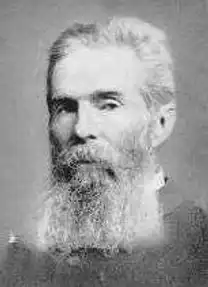
Herman Melville (1819–1891) was an American writer whose early sea narratives drew on his experiences as a sailor and whose fiction developed from popular South Seas adventure into psychologically and philosophically ambitious novels. His major works include Moby-Dick, Pierre, The Confidence-Man, the short-story collection The Piazza Tales, and the long poem Clarel. Although his fiction was largely written before 1860, he spent much of his later career composing poetry, including Battle-Pieces, John Marr and Other Sailors, and Timoleon. Billy Budd, Sailor was published posthumously.
Catalog record updated .
Not sure where to begin?
Melville's central masterpiece and the best entry point to his mature fiction.

His first published book and an accessible introduction to his early sea narratives.

A compact introduction to his acclaimed short fiction.
Outside the series
novel · 1849
This is the extended and annotated edition including an extensive biographical annotation about the author and his life. Mardi is Melville's first pure fiction work (while featuring fictional narrators, his previous novels were heavily…
novel · 1849
nonfiction · 1850
A novel, but widely believed to be semi-autobiographical; this book describes in great detail Melville's experiences during 14 months of being in the American Navy. White Jacket is the narrator of the story and we never discover his name.…
novel · 1851
novel · 1852
historical-novel · 1855
novel · 1857
The Confidence-Man: His Masquerade, first published in New York on April Fool's Day 1857, is the ninth book and final novel by American writer Herman Melville. Centered on the title character, The Confidence Man portrays a group of…
novella · 1924
Aboard the warship Bellipotent, the young orphan Billy Budd was called the Handsome Sailor. Billy was tall, athletic, noble looking; he was friendly, innocent, helpful and ever-cheerful. He was a fierce fighter and a loyal friend. All the…
memoir · 1846
At one time the most popular of Melville's works, Typee was known as a travelogue that idealized and romanticized a mysterious South Sea island for readers in the ruthless, industrial, "civilized" world of the nineteenth century. But…
memoir · 1847
Melville's continuing adventures in the South Seas—now for the first time in Penguin ClassicsFollowing the commercial and critical success of Typee, Herman Melville continued his series of South Sea adventure-romances with Omoo. Named…
short-story-collection · 1856
The Piazza Tales (1856) is a collection of short stories by American writer Herman Melville. Before publication, five of its six stories appeared in Putnam’s Monthly during a period of productivity with which Melville sought to achieve…
pamphlet · 1846
poetry-collection · 1866
When ocean-clouds over inland hills Sweep storming in late autumn brown, And horror the sodden valley fills, And the spire falls crashing in the town, I muse upon my country's ills— The tempest bursting from the waste of Time On the…
long-poem · 1876
poetry-collection · 1888
poetry-collection · 1891
poetry-collection · 1924
Herman Melville (1819–1891) was an American novelist, short-story writer, and poet best known for Moby-Dick. His writing was strongly shaped by his experiences at sea.
Sources: poetryfoundation.org (opens in a new tab)loa.org (opens in a new tab)
Yes. He worked on merchant, whaling, and naval vessels, including the whaleship Acushnet and the frigate United States, before returning home in 1844 to write about his experiences.
Sources: pbs.org (opens in a new tab)nps.gov (opens in a new tab)
Melville drew on his whaling voyages, the 1839 account of the legendary whale Mocha Dick, and his extensive reading. His friendship with Nathaniel Hawthorne also encouraged him to develop the book into a more allegorical novel.
Sources: pbs.org (opens in a new tab)poetryfoundation.org (opens in a new tab)
Although his early books attracted attention, Moby-Dick received limited critical and commercial success, selling only about 3,000 copies during his lifetime. Literary scholars began treating it as a masterpiece mainly in the 1920s.
Sources: pbs.org (opens in a new tab)columbia.edu (opens in a new tab)
After his fiction became commercially difficult to sustain, Melville worked for many years as a customs inspector on the New York docks and devoted much of his later life to poetry. He was also working on Billy Budd when he died in 1891.
Sources: pbs.org (opens in a new tab)poetryfoundation.org (opens in a new tab)