Walden; or, Life in the Woods
Thoreau's central and most accessible book, combining nature writing, memoir, philosophy, and social criticism.
Author guide
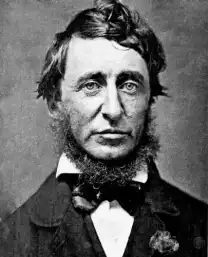
Henry David Thoreau (1817–1862) was an American writer, naturalist, philosopher, and leading transcendentalist. His nonfiction combines close observation of nature with reflections on ethics, self-reliance, society, abolitionism, and political resistance. He published two books during his lifetime, A Week on the Concord and Merrimack Rivers and Walden; many major travel narratives, essays, letters, poems, and his extensive journal appeared posthumously.
Catalog record updated .
Not sure where to begin?
Thoreau's central and most accessible book, combining nature writing, memoir, philosophy, and social criticism.

His first book and an important foundation for his travel writing, natural observation, and philosophical style.
A representative posthumous collection of major essays, including Walking, Natural History of Massachusetts, and Wild Apples.
The most direct entry point to Thoreau's political and abolitionist writing, including Civil Disobedience and A Plea for Captain John Brown.
Outside the series
nonfiction · 1854
This work has been selected by scholars as being culturally important, and is part of the knowledge base of civilization as we know it. This work was reproduced from the original artifact, and remains as true to the original work as…
nonfiction · 1905
travel-narrative · 1849
Thoreau's first book excels at depicting nature around his trip in words.
travel-narrative · 1864
Based on Thoreau's experiences in the forests of Maine on three separate occasions in 1846, 1853 and 1857, The Maine Woods is a captivating portrait of the region in the mid-1800s. Rich with the naturalistic detail that is common with…
travel-narrative · 1865
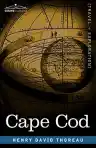
Thoreau's account of his travels and explorations on Cape Cod is considered his most genial book, and one of his most appealing. Published in 1865 after his death, Thoreau's CAPE COD remains an indispensable guide to the area.
travel-narrative · 1905
journal · 1906
essay-collection · 1863
essay-collection · 1866
essay-collection · 1894
essay · 1902
poetry-collection · 1895
poetry · 1907
correspondence · 1865
Henry David Thoreau was born on July 12, 1817, in Concord, Massachusetts, and died there on May 6, 1862, from tuberculosis.
Thoreau was a writer, naturalist, philosopher, lecturer, surveyor, and pencil maker. He also briefly taught school and supported himself through several of these occupations.
Yes. He became a leading American Transcendentalist and was especially influenced by his neighbor and mentor Ralph Waldo Emerson, as well as other Transcendentalist thinkers.
Sources: thoreausociety.org (opens in a new tab)npgallery.nps.gov (opens in a new tab)
Thoreau lived in a cabin at Walden Pond from July 1845 to September 1847 to experiment with simple living, study nature, and devote more time to writing and philosophical reflection.
Sources: npgallery.nps.gov (opens in a new tab)thoreausociety.org (opens in a new tab)
Thoreau remains influential as a major American nature writer and thinker on simple living, conservation, and political conscience. His essay “Civil Disobedience” also became an important reference point for later discussions of principled resistance, including Gandhi’s political thought.
Sources: thoreausociety.org (opens in a new tab)academic.oup.com (opens in a new tab)