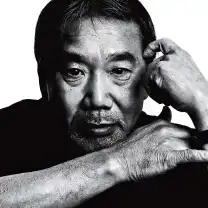
Haruki Murakami was born in Kyoto in 1949 and grew up in the Kobe area. He studied drama at Waseda University and ran a jazz bar in Tokyo before beginning his literary career with Hear the Wind Sing in 1979. His novels, short stories, essays, memoirs, travel writing, interviews, and illustrated books have been translated into more than fifty languages. His major honors include the Tanizaki Prize, Yomiuri Literary Prize, World Fantasy Award, Franz Kafka Prize, Jerusalem Prize, and Princess of Asturias Award. He also translates English-language fiction into Japanese, particularly works by writers such as Raymond Carver, F. Scott Fitzgerald, Truman Capote, and John Irving.
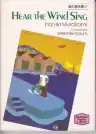
In Hear the Wind Sing the narrator is home from college on his summer break. He spends his time drinking beer and smoking in J’s Bar with the Rat, listening to the radio, thinking about writing and the women he has slept with, and…
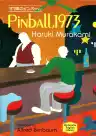
Published in 1980 by Japanese author Haruki Murakami, Pinball, 1973 is the second book in the Trilogy of the Rat series. It is preceded by Hear the Wind Sing (1979) and followed by A Wild Sheep Chase (1982) and is the second novel written…
It begins simply enough: A twenty-something advertising executive receives a postcard from a friend, and casually appropriates the image for an insurance company's advertisement. What he doesn't realize is that included in the pastoral…
Across two parallel narratives, Murakami draws readers into a mind-bending universe in which Lauren Bacall, Bob Dylan, a split-brained data processor, a deranged scientist, his shockingly undemure granddaughter, and various thugs,…
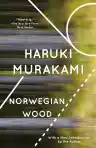
Toru, a quiet and preternaturally serious young college student in Tokyo, is devoted to Naoko, a beautiful and introspective young woman, but their mutual passion is marked by the tragic death of their best friend years before. Toru…
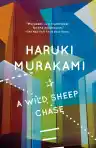
He burst upon the international scene with the wildly acclaimed *A Wild Sheep Chase*. He quickly came to represent the quirky voice of a new generation of Japanese writers. Now Haruki Murakami gives us his wittiest, boldest, most daring…
South of the Border, West of the Sun is the beguiling story of a past rekindled, and one of Haruki Murakami’s most touching novels. Hajime has arrived at middle age with a loving family and an enviable career, yet he feels incomplete.…
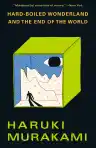
Japan's most highly regarded novelist now vaults into the first ranks of international fiction writers with this heroically imaginative novel, which is at once a detective story, an account of a disintegrating marriage, and an excavation…
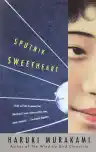
K is madly in love with his best friend, Sumire, but her devotion to a writerly life precludes her from any personal commitments. At least, that is, until she meets an older woman to whom she finds herself irresistibly drawn. When Sumire…
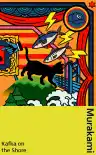
Kafka on the Shore is powered by two remarkable characters: a teenage boy, Kafka Tamura, who runs away from home either to escape a gruesome oedipal prophecy or to search for his long missing mother and sister; and an aging simpleton…
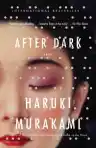
A short, sleek novel of encounters set in the witching hours of Tokyo between midnight and dawn, and every bit as gripping as Haruki Murakami’s masterworks The Wind-Up Bird Chronicle and Kafka on the Shore. At its center are two sisters:…
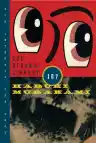
Opening the flaps on this unique little book, readers will find themselves immersed in the strange world of best-selling Haruki Murakami's wild imagination. The story of a lonely boy, a mysterious girl, and a tormented sheep man plotting…
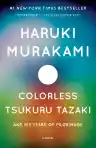
Tsukuru Tazaki had four best friends at school. By chance all of their names contained a colour. The two boys were called Akamatsu, meaning ‘red pine’, and Oumi, ‘blue sea’, while the girls’ names were Shirane, ‘white root’, and Kurono,…
A thirty-something portrait painter in Tokyo is abandoned by his wife and finds himself holed up in the mountain home of a famous artist, Tomohiko Amada. When he discovers a previously unseen painting in the attic, he unintentionally…
“Truth is not found in fixed stillness, but in ceaseless change/movement. Isn’t this the quintessential core of what stories are all about?” —Haruki Murakami, from the afterword to The City and Its Uncertain Walls The long-awaited new…
While training for the New York City Marathon, Haruki Murakami decided to keep a journal of his progress. The result is a memoir about his intertwined obsessions with running and writing, full of vivid recollections and insights,…
Originally published in the New Yorker in 2019, and now presented in a full, unabridged form, Abandoning a Cat is a poignant, self-reflective work by Haruki Murakami. Here he writes about his father, the son of a priest who might have…
Haruki Murakami, a writer both mystical and hip, is the West's favorite Japanese novelist. Perhaps unsurprisingly, Murakami lived abroad until 1995. That year, two disasters struck Japan: the lethal earthquake in Kobe and the deadly…
From the bestselling author of Kafka on the Shore and The Wind-up Bird Chronicles comes this superb collection of twenty-four stories that generously expresses Murakami's mastery of the form. From the surreal to the mundane, these stories…
A riveting new collection of short stories from the beloved, internationally acclaimed Haruki Murakami. The eight masterful stories in this new collection are all told in the first person by a classic Murakami narrator, a lonely man. Some…
Murakami Radio is a collection of Haruki Murakami's short personal essays. It was originally published in June 2001 by Magazine House. In the essays, Murakami reflects on anything that occurred in his life that, no matter how seemingly…
"The Big Radish and the Hard-to-Choose Avocado" includes 52 amusing essays by Haruki Murakami. In these essays, Murakami humorously writes about the moods of vegetables, strange tales about radishes, the superpower of selecting the best…
The Lion Who Likes to Eat Salad is a collection of 52 witty essays by Haruki Murakami, accompanied by 52 beautiful illustrations by artist Ōhashi Ayumi. It is the sister book to The Big Radish and the Hard-to-Choose Avocado. This…
The international literary icon opens his eclectic closet: Here are photographs of Murakami’s extensive and personal T-shirt collection, accompanied by essays that reveal a side of the writer rarely seen by the public. Many of Haruki…
Two of Japan's foremost contemporary cultural spokespersons met for an informal conversation with remarkable results. While their extended talk took place at a particular location at a particular moment in history, much of the content is…
Haruki Murakami is a Japanese author known for fiction that combines everyday life with surreal or dreamlike elements. He also writes essays, memoir, and literary nonfiction.
Where was Haruki Murakami born, and what did he do before becoming a full-time writer?
Murakami was born in Kyoto in 1949 and grew up in Kobe. After studying at Waseda University, he ran a small jazz bar with his wife before pursuing writing full time.
His writing is strongly influenced by jazz and Western literature. He has specifically discussed learning from writers such as F. Scott Fitzgerald, Raymond Carver, Tolstoy, and Dostoyevsky, as well as from music’s rhythm, harmony, and improvisation.
Why is Haruki Murakami considered an important global author?
His work is recognized for its universal themes and for connecting Japanese traditions with Western cultural influences. His books have appeared in more than 50 languages, and Waseda University preserves his archive through an international literature center.