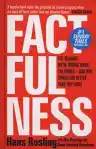
Factfulness: Ten Reasons We're Wrong About the World—and Why Things Are Better Than You Think
The clearest introduction to Rosling's core ideas about global development, data, and human progress.
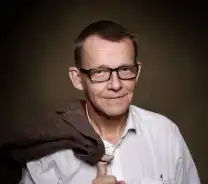
Author guide
Hans Rosling (1948–2017) was a Swedish physician, professor of international health at Karolinska Institutet, statistician, and internationally renowned public educator. He co-founded the Gapminder Foundation and used data visualization, research, and storytelling to challenge misconceptions about global health and development. His books include the memoir How I Learned to Understand the World, written with Fanny Härgestam, and the posthumously published Factfulness, written with Ola Rosling and Anna Rosling Rönnlund.
Catalog record updated .
Not sure where to begin?
The clearest introduction to Rosling's core ideas about global development, data, and human progress.
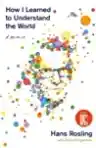
Best starting point for Rosling's personal history and intellectual development.
Outside the series
nonfiction · 2018
When asked simple questions about global trends—what percentage of the world’s population live in poverty; why the world’s population is increasing; how many girls finish school—we systematically get the answers wrong. So wrong that a…
memoir · 2017
Hans Rosling (1948–2017) was a Swedish physician, statistician, and professor of international health at Karolinska Institutet. He became widely known for explaining global health and development through data-rich public talks.
Source: news.ki.se (opens in a new tab)
After qualifying as a physician, Rosling worked in Sweden and served as a district medical officer in northern Mozambique, where his research helped identify konzo, a paralytic disease. He later taught and researched international health, helped establish Médecins Sans Frontières Sweden, and co-founded Gapminder.
Sources: news.ki.se (opens in a new tab)unfpa.org (opens in a new tab)
His medical training and fieldwork shaped his focus on health, poverty, and population change; an exchange in Bangalore and his work in Mozambique also challenged his assumptions about developing countries. He later used those experiences to promote checking stereotypes against current data.
Sources: news.ki.se (opens in a new tab)gapminder.org (opens in a new tab)
He received the Royal Geographical Society’s 2014 Patron’s Medal for advancing public understanding of geographical data and influencing decision-makers. He also received, posthumously, the 2017 United Nations Population Award for contributions to population and global health.
Sources: rgs.org (opens in a new tab)unfpa.org (opens in a new tab)
His legacy includes Gapminder, the foundation he co-founded to make global trends easier to understand through data visualizations and educational tools. His approach to public education continues through Gapminder and was honored by the University of Washington’s Hans Rosling Center for Population Health.
Sources: gapminder.org (opens in a new tab)washington.edu (opens in a new tab)