Book Series Guide
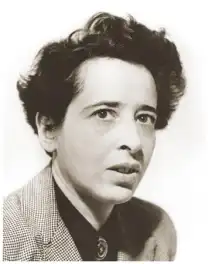
Hannah Arendt

Author guide

Hannah Arendt Books in Order

Hannah Arendt (1906–1975) was a German-born Jewish-American political theorist and writer. After fleeing Nazi Germany and later occupied France, she settled in the United States and produced influential works on totalitarianism, statelessness, political action, revolution, violence, judgment, and responsibility. She wrote primarily in German and English, often authorizing substantially distinct versions in both languages.

political theorypolitical philosophyhistoryessaymemoirdiarypoetry

Catalog record updated .

Hannah Arendt's Newest Book

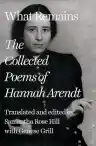
Cover of What Remains: The Collected Poems of Hannah Arendt

What Remains: The Collected Poems of Hannah Arendt

poetry-collection · First published 2025

A landmark literary event, What Remains collects Arendt’s complete poetic oeuvre—never before published in English—into a single edition. The German-Jewish political philosopher Hannah Arendt (1906–1975) is world-renowned for her work on totalitarianism, the human condition, and the banality of evil. Not many people know that she also wrote poems—yet the language of poetry, especially that of Goethe and Schiller, was a banister for Arendt’s thinking throughout much of her adult life. Between 1923 and 1961, Arendt wrote seventy-four poems, many of them acting as signposts in her biography, marking moments of great joy, love, loss, melancholia, and remembrance. Now, for the first time in English, Samantha Rose Hill and Genese Grill present these intensely personal poems in chronological order, taking us from the zenith of the Weimar Republic to the Cold War, and from Marburg, Germany, to New York, New York. A gift to all readers of Arendt, this stunning en face edition provides an unparalleled view into the private life of one of the most definitive thinkers of the twentieth century.
Not sure where to begin?

Start with one of these

Cover of The Origins of Totalitarianism

The Origins of Totalitarianism

Best entry point for Arendt's account of antisemitism, imperialism, and totalitarian rule.

Cover of The Human Condition

The Human Condition

Best introduction to her central analysis of labor, work, action, plurality, and the public world.

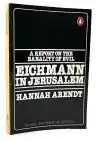
Cover of Eichmann in Jerusalem: A Report on the Banality of Evil

Eichmann in Jerusalem: A Report on the Banality of Evil

Accessible major work connecting political judgment, responsibility, bureaucracy, and the banality of evil.

Outside the series

Bibliography by category

Novels (1)
  1. Eichmann in Jerusalem: A Report on the Banality of Evil

    nonfiction · 1963

    **Eichmann in Jerusalem: A Report on the Banality of Evil** is a 1963 book by political theorist *Hannah Arendt*. Arendt, a Jew who fled Germany during Adolf Hitler's rise to power, reported on Adolf Eichmann's trial for The New Yorker. A…

Nonfiction (2)
Essays and speeches (18)
  1. Sechs Essays

    essay-collection · 1948

  2. Die Krise in der Erziehung

    pamphlet · 1958

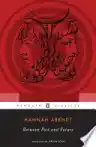
  3. Between Past and Future: Six Exercises in Political Thought

    essay-collection · 1961

    From the author of Eichmann in Jerusalem and The Origins of Totalitarianism, “a book to think with through the political impasses and cultural confusions of our day” (Harper’s Magazine) Hannah Arendt’s insightful observations of the…

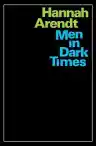
  4. Men in Dark Times

    essay-collection · 1968

    Collection of essays which present portraits of individuals ranging from Rosa Luxemburg to Pope John XXIII who the author believes have illuminated "dark times" "Dark times" is Brecht's phrase, and Hannah Arendt uses it not to suggest…

  5. On Violence

    essay · 1970

    El término «violencia», en su sentido más elemental, refiere al daño ejercido sobre las personas por parte de otros seres humanos. Los experimentos totalitarios del siglo xx ampliaron este uso de la violencia, a una escala y una…

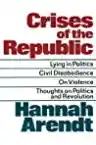
  6. Crises of the Republic

    essay-collection · 1972

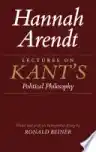
  7. Lectures on Kant's Political Philosophy

    lectures · 1982

    Hannah Arendt's last philosophical work was an intended three-part project entitled The Life of the Mind. Unfortunately, Arendt lived to complete only the first two parts, Thinking and Willing. Of the third, Judging, only the title page,…

  8. Essays in Understanding: 1930–1954

    essay-collection · 1994

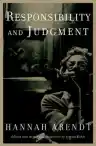
  9. Responsibility and Judgment

    essay-collection · 2003

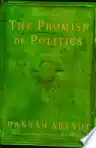
  10. The Promise of Politics

    essay-collection · 2005

    Presents a collection of essays and previously unpublished writings that look at the philosophical aspects of political science, including Marxian philosophy and its transformation following the emergence of totalitarianism. Reprint.

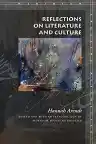
  11. Reflections on Literature and Culture

    essay-collection · 2007

    This is the first volume in any language that collects Hannah Arendt's remarkable series of essays and notes on literary figures and cultural questions.

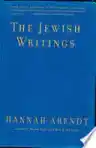
  12. The Jewish Writings

    essay-collection · 2007

    Presents a collection of essays, editorials, and book reviews on Jewish history, issues, and politics written over a forty-year period by the political philosopher who fled Germany in 1933 following the rise of Hitler. Reprint.

  13. The Freedom to Be Free

    essay · 2018

    This book includes three essays in which the Hannah Arendt argues that there can be no freedom without politics, and no politics without freedom.

Poetry (2)
  1. Ich selbst, auch ich tanze: Die Gedichte

    poetry-collection · 2015

  2. What Remains: The Collected Poems of Hannah Arendt

    poetry-collection · 2025

    A landmark literary event, What Remains collects Arendt’s complete poetic oeuvre—never before published in English—into a single edition. The German-Jewish political philosopher Hannah Arendt (1906–1975) is world-renowned for her work on…

Other (8)
  1. Der Liebesbegriff bei Augustin

    monograph · 1929

  2. The Origins of Totalitarianism

    monograph · 1951

    Examines the rise of antisemitism in Central and Western European Jewish history in the 19th century, European colonial imperialism from 1884 to World War I, and the institutions and operations of totalitarian movements and governments.

  3. The Human Condition

    monograph · 1958

    The past year has seen a resurgence of interest in the political thinker Hannah Arendt, “the theorist of beginnings,” whose work probes the logics underlying unexpected transformations—from totalitarianism to revolution. A work of…

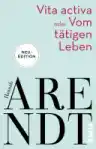
  4. Vita activa oder Vom tätigen Leben

    monograph · 1960

    WAS TUN, WENN WIR TÄTIG SIND? » Vita activa« im ursprüngliche Sinne meint Arbeiten, Herstellen und Handeln. Hannah Arendts umfassende Analyse gilt vor allem diesen drei Grundtätigkeiten. Sie untersucht darüber hinaus, wie sie sich im…

  5. On Revolution

    monograph · 1963

    About the American, French and Russian revolutions.

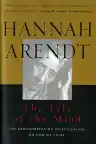
  6. The Life of the Mind

    unfinished-work · 1978

    Discusses the nature of thought and volition, examines past philosophical theories, and clarifies the relation between will and freedom

Frequently asked questions about Hannah Arendt

Who was Hannah Arendt?

Hannah Arendt (1906–1975) was a German-born Jewish-American political theorist, writer, and teacher. Her work examined totalitarianism, political action, judgment, and citizenship.

Sources: histories.newschool.edu (opens in a new tab)plato.stanford.edu (opens in a new tab)

Where was Hannah Arendt born, and where did she study?

She was born in Linden near Hanover, Germany, and grew up in Königsberg. She studied at Marburg, Freiburg, and Heidelberg, where she earned her doctorate under Karl Jaspers.

Source: uni-marburg.de (opens in a new tab)

What was Hannah Arendt’s academic career?

Arendt taught at several American universities, including the University of Chicago, before becoming a University Professor of Philosophy at The New School for Social Research in 1967. She also held visiting professorships, including at Princeton and Columbia.

Sources: tile.loc.gov (opens in a new tab)histories.newschool.edu (opens in a new tab)

Who influenced Hannah Arendt’s thinking?

Martin Heidegger and Karl Jaspers were her most influential teachers. She studied with Heidegger at Marburg and completed her doctorate under Jaspers at Heidelberg, maintaining important intellectual relationships with both.

Sources: loc.gov (opens in a new tab)uni-marburg.de (opens in a new tab)

What awards did Hannah Arendt receive, and what is her legacy?

Among her honors were the Emerson-Thoreau Medal in 1969 and Denmark’s Sonning Prize in 1975. Her legacy continues through political theory and scholarship on modernity, action, judgment, citizenship, and the dangers of totalitarian government.

Sources: tile.loc.gov (opens in a new tab)plato.stanford.edu (opens in a new tab)histories.newschool.edu (opens in a new tab)