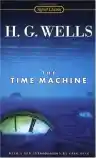
The Time Machine
The concise foundational scientific romance that established Wells's importance as a speculative novelist.
Author guide
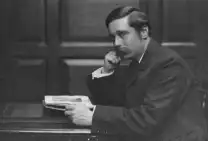
Herbert George Wells (1866–1946) was an English writer whose career encompassed scientific romances, realist novels, short stories, essays, popular science, history, political commentary, sociology, biography, memoir, travel writing, and film scenarios. His major imaginative works include The Time Machine, The Island of Doctor Moreau, The Invisible Man, The War of the Worlds, and The First Men in the Moon. He also produced influential books on world history, education, social organization, human rights, and the future of civilization, sometimes in collaboration with other authors.
Catalog record updated .
Not sure where to begin?
The concise foundational scientific romance that established Wells's importance as a speculative novelist.
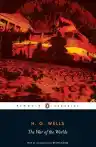
His most influential alien-invasion novel and a defining example of Victorian scientific romance.

A fast, accessible novel combining scientific speculation, horror, and social satire.
A representative realist comedy showing Wells's range beyond science fiction.
The best entry point to his major historical and civilizational nonfiction.
Read in order
nonfiction-series · complete
A related sequence of Wells's books on social development, scientific progress, and the making of modern humanity.
Book 1 · social-science-nonfiction · 1901
nonfiction-series · complete
A three-volume sequence addressing human history, the science of life, and the conditions for mankind's future prosperity.
Book 1 · world-history · 1920
Ben shu shang su ren lei wen ming de kai duan, xia zhi di er ci shi jie da zhan . jiang gu ai ji, gu xi la, gu luo ma, ying guo, mei guo, fa guo deng chao ji da guo de qi luo xing shuai you tiao bu wen di zhan xian zai dou zhe mian qian.
Book 2 · popular-science · 1930
Book 3 · social-science-nonfiction · 1931
Outside the series
novella · 1895
First published in 1895, The Time Machine won author H.G. Wells immediate recognition and has been regarded ever since as one of the great masterpieces in the literature of science fiction. It popularized the concept of time travel and…
novel · 1895
What if an angel fell to earth -- and nobody liked him? That's the fascinating premise at the heart of this engrossing fantasy tale from science fiction master H.G. Wells. Penned around the same time Wells captured the world's imagination…
novel · 1896
Ranked among the classic novels of the English language and the inspiration for several unforgettable movies, this early work of H. G. Wells was greeted in 1896 by howls of protest from reviewers, who found it horrifying and blasphemous.…
novel · 1896
novel · 1897
This book is the story of Griffin, a scientist who creates a serum to render himself invisible, and his descent into madness that follows.
novel · 1898
The War of the Worlds is the first-person narrative of an unnamed protagonist in Surrey and that of his younger brother in London as Earth is invaded by Martians. Written between 1895 and 1897, it is one of the earliest stories that…
novel · 1899
From the author of The Invisible Man and The War of the Worlds: “Everyone who has ever read When the Sleeper Wakes remembers it” (George Orwell). One of the founding fathers of science fiction, H. G. Wells is known for such landmark…
novel · 1900
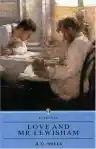
One of H. G. Wells' first ventures outside of the science fiction realm, the novel Love and Mr. Lewisham was published in the year 1900. Seeking love rather than his youthful hopes of fame and glory, Mr. Lewisham moves to the city of…
novel · 1901
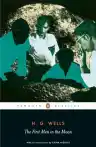
H. G. Wells's story of the first men on the moon, and what they find there... Classics Illustrated tells this wonderful tale in colorful comic strip form, providing an excellent introduction for younger readers. Also includes theme…
novel · 1902
novel · 1904
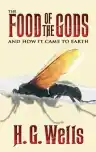
Two scientists devise a compound that produces enormous plants, animals — and humans! The chilling results are disastrous.
utopian-novel · 1905
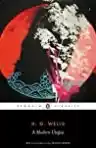
Imagine a life without worries. You live in a perfect environment untouched by pollution. You have a job to do and play an important role in society. The politicians are watching out for your best interest. And, you get along with your…
novel · 1905
novel · 1906
H. G. Wells, in his 1906 In the Days of the Comet uses the vapors of a comet to trigger a deep and lasting change in humanity's perspective on themselves and the world. In the build-up to a great war, poor student William Leadford…
political-nonfiction · 1908
novel · 1908
Following the development of massive airships, naive Londoner Bert Smallways becomes accidentally involved in a German plot to invade America by air and reduce New York to rubble. But although bombers devastate the city, they cannot…
novel · 1909
Ann Veronicaby H. G. Well-Ann Veronica is a New Woman novel by H.G. Wells published in 1909. Ann Veronica describes the rebellion of Ann Veronica Stanley, "a young lady of nearly two-and-twenty," against her middle-class father's stern…
novel · 1909
Tono-Bungay is a new medicine with the power to change one's life forever. Or so its inventors claim. Sardonic and hugely derisory, 'Tono-Bungay' can be read as a biting satire on the follies of English sensibilities.
novel · 1910
H. G. Wells' comic 1910 novel, The History of Mr. Polly, stars Alfred Polly, a timid man who is more successful at daydreaming than working in the local draper's shops. He marries a woman he's not really in love with, despite being in…
novel · 1911
political-nonfiction · 1912
novel · 1912
Many of the earliest books, particularly those dating back to the 1900s and before, are now extremely scarce and increasingly expensive. We are republishing these classic works in affordable, high quality, modern editions, using the…
novel · 1913
novel · 1914
novel · 1915
novel · 1915
novel · 1916
political-nonfiction · 1916
Prophecy may vary between being an intellectual amusement and a serious occupation; serious not only in its intentions, but in its consequences. For it is the lot of prophets who frighten or disappoint to be stoned. But for some of us…
novel · 1915
novel · 1917
religious-nonfiction · 1917
DigiCat Publishing presents to you this special edition of "God, the Invisible King" by H. G. Wells. DigiCat Publishing considers every written word to be a legacy of humankind. Every DigiCat book has been carefully reproduced for…
novel · 1918
political-nonfiction · 1919
novel · 1919
H G Wells (1866-1946) was an English writer, prolific in many genres. He wrote dozens of novels, short stories, and works of social commentary, history, satire, biography and autobiography, and even two books of recreational war games. He…
political-nonfiction · 1919
political-nonfiction · 1921
novel · 1922
novel · 1923
Mr. Barnstaple found himself in urgent need of a holiday, and he had no one to go with and nowhere to go. He was overworked. And he was tired of home. He was a man of strong natural affections; he loved his family extremely so that he…
novel · 1924
A man from the future dreams of a past life in this mind-bending story by the author of The Invisible Man and The War of the Worlds. Known for such classic novels as The Time Machine and The Island of Doctor Moreau, H. G. Wells is…
novel · 1925
While Wells is primarily remembered for his science fiction, he also made excursions into history, social science, and commentary. This novel story tells how a retired laundry man suffered from delusions that he was the reincarnation of…
novel · 1926
novel · 1927
political-nonfiction · 1928
novel · 1928
novel · 1930
novel · 1932
political-nonfiction · 1932
political-nonfiction · 1931
political-nonfiction · 1934
political-nonfiction · 1935
novella · 1936
A young man, a country doctor, and the living fear of a brutal force that seems to come from the ground.
novel · 1937
novel · 1937
novella · 1937
novel · 1938
novella · 1938
social-science-nonfiction · 1939
novel · 1939
novella · 1940
novel · 1940
political-nonfiction · 1941
political-nonfiction · 1942
political-nonfiction · 1942
social-science-nonfiction · 1942
political-nonfiction · 1940
social-science-nonfiction · 1942
political-nonfiction · 1940
H. G. Wells’s passionate and influential manifesto—never before available in the United States—was first published in England in 1940 in response to World War II. The progressive ideas Wells set out were instrumental in the creation of…
novel · 1941
social-science-nonfiction · 1944
travel-and-social-commentary · 1906
philosophy · 1908
First and Last Things is a 1908 work of philosophy by H. G. Wells setting forth his beliefs in four "books" entitled "Metaphysics," "Of Belief," "Of General Conduct," and "Some Personal Things."
guide · 1911
Suggests some of the games that can be created using toy soldiers and other figurines, blocks, boards and planks, and toy trains arranged in various ways on an appropriate floor. New postscript offers biographical sketches of Wells,…
guide · 1913
LITTLE WARS is the game of kings - for players in an inferior social position. It can be played by boys of every age from twelve to one hundred and fifty - and even later if the limbs remain sufficiently supple - by girls of the better…
biography · 1920
history-education · 1921
world-history · 1922
Of the more than one hundred books that H. G. Wells published in his lifetime, this is one of the most ambitious. Spanning the origins of the Earth to the outcome of World War I, A Short History of the World is an engrossing account of…
world-history · 1925
future-history · 1933
"When Dr Philip Raven, an intellectual working for the League of Nations, dies in 1930 he leaves behind a powerful legacy an unpublished dream book'. Inspired by visions he has experienced for many years, it appears to be a book written…
memoir · 1934
En un momento de desgaste personal y abierto escepticismo, H.G. Wells, uno de los escritores más importantes de la literatura occidental, realizó el relato de su vida hasta 1934, fecha de publicación de este Experimento en autobiografía.…
travel-memoir · 1939
world-history · 1941
memoir · 1944
short-story-collection · 1895
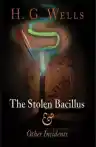
The Stolen Bacillus and Other Incidents was H. G. Wells' first collection of short stories, published in 1895. These fantasy and science fiction tales were all written between 1893 and 1895 and published in various periodicals.
short-story-collection · 1897
short-story-collection · 1897
short-story-collection · 1899
Tales of Space and Time collects together two novellas and three short stories by the great science fiction writer H. G. Wells. First published in 1899, this absorbing and stimulating read contains:The Crystal Egg (short story)The Star…
short-story-collection · 1903
In truth the mastery of flying was the work of thousands of men - this man a suggestion and that an experiment, until at last only one vigorous intellectual effort was needed to finish the work. But the inexorable injustice of the popular…
short-story-collection · 1911
Presents a collection of short science fiction stories written by H.G. Wells, including "The Country of the Blind," "The Star," and "The New Accelerator."
short-story-collection · 1911
The title story tells of a promising public figure used up by his job and obsessed by a vision of an enchanted garden he had known as a child. It is a tale all of us know, the attempt to recover a period when our lives were simpler and…
short-story-collection · 1922
short-story-collection · 1923
short-story-collection · 1923
film-story-collection · 1940
essay-collection · 1895
essay-collection · 1897
essay · 1902
political-pamphlet · 1907
essay-collection · 1912
essay-collection · 1912
essay-collection · 1914
Book Excerptn we went on from those anticipations of swaying insecurity to speculations about the psychological and physiological effects of flying. Most people who look down from the top of a cliff or high tower feel some slight qualms…
essay-collection · 1914
H.G. Wells was one of the greatest writers of the 20th century. Wells was a prolific author in many genres including history, politics, and social commentary.
political-pamphlet · 1916
essay · 1917
political-essay-collection · 1918
political-essay · 1922
essay-collection · 1925
essay-collection · 1928
essay-collection · 1930
essay-collection · 1938
In 1937, H. G. Wells proposed a predigital, freely available World Encyclopedia to represent a civilization-saving World Brain. In a series of talks and essays in 1937, H. G. Wells proselytized for what he called a "World Brain," as…
essay · 1945
political-essay-collection · 1940
essay · 1945
textbook · 1893
textbook · 1893
war-reportage · 1917
Book Excerpt: ...m in a torrent. The great man of this war is the common man. It becomes ridiculous to pick out particular names. There are too many true stories of splendid acts in the past two years ever to be properly set down. The…
political-reportage · 1920
polemic · 1926
film-story · 1929
"The King Who Was a King - The Book of a Film" is a fascinating treatise on the development of film written by H. G. Wells and first published in 1929. Writing at the when cinema was beginning to explode, Wells explores the emerging…
social-commentary · 1930
political-memorandum · 1932
film-story · 1935
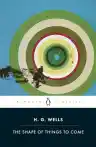
"Things to Come is the 1936 release of London Films, produced from the 1935 "film story" by H.G. Wells, the text of the present work. It reflects on a long literary career often given to the fate of man and the prospect of a unified world…
film-story · 1936
"Man Who Could Work Miracles (without a The) is a film, ostensibly a comedy, that H.G. Wells (1866-1946) scripted late in life for London Film Productions. The present volume is a literary text of the scenario and dialogue published in…
polemic · 1943
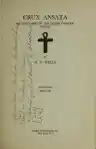
"CRUX ANSATA--An Indictment of the Roman Catholic Church", by H. G. Wells (96 pgs.) is a fervent attack on the Roman Catholic Church and Pope Pius XII written by H. G. Wells at the height of the Second World War. Within it, Wells uses his…
H. G. Wells was the commonly used name of Herbert George Wells (1866–1946), an English novelist, social commentator, and pioneering science-fiction author.
Sources: npg.org.uk (opens in a new tab)oxfordlearnersdictionaries.com (opens in a new tab)
He studied biology at the Normal School of Science, later the Royal College of Science, where he was taught by biologist Thomas Henry Huxley. He also worked as a teacher, and his first publication was a biology textbook.
Sources: imperial.ac.uk (opens in a new tab)london.ac.uk (opens in a new tab)
His scientific education, interest in evolution, and concern with social and political change shaped both his speculative fiction and his nonfiction.
Sources: imperial.ac.uk (opens in a new tab)london.ac.uk (opens in a new tab)
He became especially famous for early science-fiction novels such as The Time Machine, The Invisible Man, and The War of the Worlds.
Sources: oxfordlearnersdictionaries.com (opens in a new tab)npg.org.uk (opens in a new tab)
Wells helped establish science fiction as a major literary form and used imagined futures to examine technology, war, social organization, and humanity’s prospects. His work continues to influence literature and popular culture.
Sources: npg.org.uk (opens in a new tab)london.ac.uk (opens in a new tab)