Madame Bovary
Flaubert’s defining novel and the clearest introduction to his realism, irony, and style.
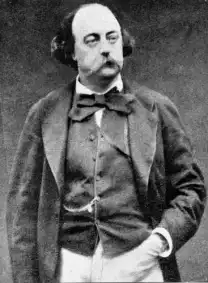
Author guide
Gustave Flaubert (1821–1880) was a French novelist whose meticulous style, irony, and impersonal narrative method profoundly influenced modern fiction. His major works include Madame Bovary, Salammbô, L’Éducation sentimentale, La Tentation de saint Antoine, Trois contes, and the unfinished Bouvard et Pécuchet. He also wrote plays, travel writing, a memoir-like early novel, essays, and substantial unpublished juvenilia.
Catalog record updated .
Not sure where to begin?
Flaubert’s defining novel and the clearest introduction to his realism, irony, and style.
A concise published collection showing the range of Flaubert’s late fiction.

A major companion novel presenting his mature treatment of history, desire, and disillusionment.
Outside the series
novel · 1901
novel · 1857
Gustave Flaubert's "Madame Bovary" is the classic tale of its title character, Emma Bovary, the second wife of Charles Bovary, a well meaning yet plodding and clumsy doctor. Emma is an educated young woman who longs for the luxury and…
novel · 1862
Salammbô (1862) is a historical novel by Gustave Flaubert.[1] It is set in Carthage during the 3rd century BC,[1] immediately before and during the Mercenary Revolt which took place shortly after the First Punic War. After the First Punic…
novel · 1869
Le 15 septembre 1840, vers six heures du matin, la Ville-de-Montereau , pres de partir, fumait a gros tourbillons devant le quai Saint-Bernard. Des gens arrivaient hors d'haleine ; des barriques, des cables, des corbeilles de linge…
novel · 1881
nonfiction · 1913
Avoir l'esprit bourgeois, c'est penser selon les habitudes de son milieu et s'y conformer. Sa vie durant, Flaubert joua de la lyre, du couteau (à découper) et de la massue. Au cours de sa vaste entreprise de démolition, lui vint l'idée…
travel_book · 1886
short_story_collection · 1877
pamphlet · 1872
prose-poem · 1874
C'est dans la Thebaide, au haut d'une montagne, sur une plate-forme arrondie en demi-lune, et qu'enferment de grosses pierres. La cabane de l'ermite occupe le fond. Elle est faite de boue et de roseaux, a toit plat, sans porte. On…
play · 1874
play · 1880
collection · 1910
Gustave Flaubert (1821–1880) was a French novelist and playwright whose exacting style and unsentimental observation made him a central figure in nineteenth-century French literature.
Sources: essentiels.bnf.fr (opens in a new tab)catalogue.bnf.fr (opens in a new tab)
He was born in Rouen, France, on December 12, 1821, and died at Croisset near Rouen on May 8, 1880.
Flaubert is known for renewing the nineteenth-century novel through realism, painstaking research, relentless revision, and an impersonal narrative style focused on precise expression.
Sources: essentiels.bnf.fr (opens in a new tab)expositions.bnf.fr (opens in a new tab)
His early Romanticism, close observation of human behavior, and travels in Egypt and Tunisia shaped his imagination; his lifelong attachment to Elisa Schlesinger also influenced aspects of his fiction.
Flaubert is often regarded as a father of the modern novel. His style and artistic discipline strongly influenced later writers, including Émile Zola and Guy de Maupassant, as well as twentieth-century authors.