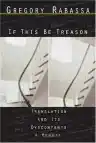
If This Be Treason: Translation and Its Dyscontents, A Memoir
The most accessible introduction to Rabassa's life, ideas, and career as a translator.
Author guide
Gregory Rabassa (1922–2016) was an American literary translator and scholar of Spanish and Portuguese literature. He taught at Columbia University and Queens College, translating works by Julio Cortázar, Gabriel García Márquez, Jorge Amado, Mario Vargas Llosa, Clarice Lispector, and others. His translation of Cortázar’s Hopscotch won the inaugural National Book Award for Translation. He also wrote literary criticism, poetry, and the memoir If This Be Treason.
Catalog record updated .
Not sure where to begin?
The most accessible introduction to Rabassa's life, ideas, and career as a translator.
Outside the series
nonfiction · 1965
poetry · 1992
Gregory Rabassa (1922–2016) was an American literary translator and scholar born in Yonkers, New York. He studied at Dartmouth and Columbia University and served as a World War II cryptographer with the Office of Strategic Services.
Sources: arts.gov (opens in a new tab)atanet.org (opens in a new tab)
He is best known for translating major Spanish- and Portuguese-language literature into English, especially Julio Cortázar’s Hopscotch and Gabriel García Márquez’s One Hundred Years of Solitude. His work helped bring Latin American literature to a broad English-speaking readership.
Sources: arts.gov (opens in a new tab)washingtonpost.com (opens in a new tab)
Rabassa taught at Columbia University from 1948 to 1969, then joined Queens College and the CUNY Graduate Center. He remained active as a teacher and scholar for decades before retiring in 2007.
Sources: atanet.org (opens in a new tab)arts.gov (opens in a new tab)
His honors included the 1967 National Book Award for Translation for Hopscotch and the 2006 National Medal of Arts. He also received the PEN Translation Prize, the ATA Gode Medal, and a 2001 PEN American Center career achievement award.
Sources: nationalbook.org (opens in a new tab)arts.gov (opens in a new tab)atanet.org (opens in a new tab)
Rabassa helped make Latin American literary fiction a major presence in English and influenced later translators through his emphasis on preserving an author’s voice while making the translation natural and idiomatic. Critics and fellow translators have described his work as pivotal to the international impact of the Latin American literary boom.
Sources: atanet.org (opens in a new tab)washingtonpost.com (opens in a new tab)