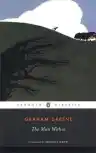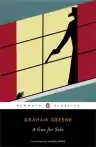
Brighton Rock
An early, morally intense novel introducing Greene's recurring concerns with guilt, faith, and redemption.
Author guide
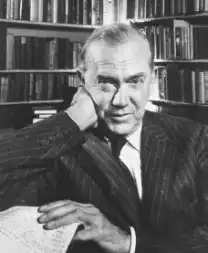
Graham Greene (1904–1991) was an English novelist, short-story writer, playwright, essayist, journalist, and screenwriter. His work ranges from psychological and Catholic novels to political thrillers and comic espionage, often examining conscience, guilt, loyalty, faith, and redemption. He also wrote travel books, memoirs, literary and film criticism, children's books, poetry, and stage and screen works.
Catalog record updated .
Not sure where to begin?
An early, morally intense novel introducing Greene's recurring concerns with guilt, faith, and redemption.
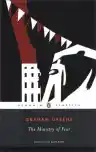
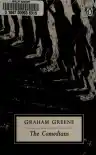
A central Catholic novel and powerful examination of conscience under persecution.
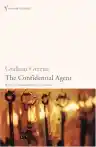
A concise political novel showcasing Greene's international settings and ethical tensions.
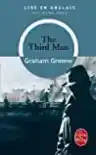
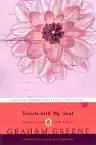
A witty, accessible comic espionage novel representing Greene's lighter mode.
Outside the series
novel · 1929
Graham Greene’s first published novel tells the story of Andrews, a young man who has betrayed his fellow smugglers and fears their vengeance. Fleeing from them, with no hope of pity or salvation, he takes refuge in the house of a young…
novel · 1930
novel · 1931
novel · 1932
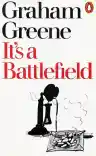
novel · 1934
"It's a Battlefield is both a suspense story and a serious novel, tense and probing. the keynote is set in a quotation from Kinglake at the beginning of the volume: 'In so far as the battlefield presented itself to the bare eyesight of…
novel · 1935
nonfiction · 1938
novel · 1936
Raven is an ugly man dedicated to ugly deeds. His cold-blooded killingof the Minister of War is an act of violence with chillingrepercussions, not just for Raven himself but for the nation as awhole. The money he receives in payment for…
novel · 1938
Pinkie Brown, a neurotic teenage gangster wielding a razor blade and a bottle of sulfuric acid, commits a brutal murder – but it does not go unnoticed. Rose, a naive young waitress at a rundown cafe, has the unwitting power to destroy his…
novel · 1939
WITH A NEW INTRODUCTION BY IAN RANKIN 'In a class by himself...the ultimate chronicler of twentieth-century man's consciousness and anxiety' William Golding In a small continental country civil war is raging. Once a lecturer in medieval…
novel · 1940
One of Greene’s most powerful novels, the book takes as its theme the era of religious suppression in Mexico during the early 1930’s. An unnamed Catholic priest, an alcoholic with a shameful past in search of either oblivion or…
novel · 1943
"A master thriller and a remarkable portrait of a twisted character." —Time For Arthur Rowe, the trip to the charity fête was a joyful step back into adolescence, a chance to forget the nightmare of the Blitz and the aching guilt of…
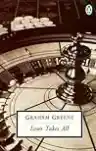
novel · 1948
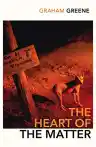
An assistant police commissioner in a West African coastal town lets passion overrule his honor.
novella · 1950
Initially written as a screenplay Greene later transferred the film treatment to novel form as a novella, published together with The Fallen Idol. Set in post-war Vienna The Third Man concerns the mysterious Harry Lime, a black market…
novel · 1951
Maurice Bendrix is a sardonic and cynical writer who reflects on his affair with Sarah, a married woman, during the bombing of London in 1940.
novel · 1955
novel · 1955
This novel is a study of New World hope and innocence set in an Old World of violence. The scene is Saigon in the violent years when the French were desperately trying to hold their footing in the Far East. The principal characters are a…
novel · 1958
Wormold is a vacuum cleaner salesman in a city of power cuts. His adolescent daughter spends his money with a skill that amazes him, so when a mysterious Englishman offers him an extra income he's tempted. In return all he has to do is…
novella · 1959
novel · 1961
Querry, a world famous architect, is the victim of a terrible attack of indifference: he no longer finds meaning in art or pleasure in life. Arriving anonymously at a Congo leper village, he is diagnosed as the mental equivalent of a…
novel · 1966
Strangers in Port-au-Prince are united in the corruption, fear, and revolt of Duvalier-era Haiti in “the most interesting novel of [Greene’s] career” (The Nation). Haiti, under the rule of Papa Doc and his menacing paramilitary, the…
novel · 1969
Greeneland has been described often as a land bleak and severe. A whisky priest dies in one village, a self-hunted man lives with lepers in another. But Greeneland has its summer regions, and in the sunlight everything looks a bit…
novel · 1973
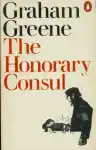
In a provincial Argentinean town, Charley Fortnum, a British consul with dubious authority and a weakness for drink, is kidnapped by Paraguayan revolutionaries who have mistaken him for the American ambassador. Dr. Eduardo Plarr, a local…
novel · 1978
Maurice Castle is a high-level operative in the British secret service during the Cold War. He is deeply in love with his African wife, who escaped apartheid South Africa with the help of his communist friend. Despite his misgivings,…
novella · 1980
novel · 1980
The enigmatic Dr. Fischer is a millionaire, student of human nature, practical joker, and party giver. His parties are famous or perhaps nortorious for they are part of his experiment to see how far the very, very rich will go to satisfy…
novel · 1982
En katolsk præst og en afsat kommunistisk borgmester kører sammen rundt i Spanien i en gammel bil og kommer ud for en række sælsomme og muntre hændelser.
novella · 1985
In a prison in occupied France one in every ten men is to be shot. The prisoners draw lots among themselves - and for rich lawyer Louis Chavel, it seems that his whole life has been leading up to an agonizing and crucial failure of nerve.
novel · 1988
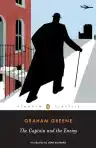
*The Captain and the Enemy* is the last novel published by the English author Graham Greene. It tells the story of a young boy named Victor Baxter taken away from his boarding school by a stranger to live in London. This stranger is…
travel_book · 1936
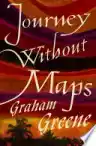
This is an account of a trip Greene made in 1935 with his cousin, Barbara Greene, through the previously unexplored interior of Liberia. It was an extremely uncomfortable journey, with Greene falling seriously ill halfway through the…
travel_book · 1939
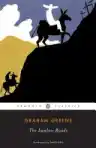
In the late 1930s, Graham Greene was commissioned to visit Mexico to report on how the inhabitants had reacted to the brutal anticlerical purges of President Calles. The Lawless Roads is his spellbinding record of that journey. Taking him…
literary_criticism · 1942
travel_book · 1961
memoir · 1963
literary_criticism · 1966
memoir · 1971
"Writing A Sort of Life ... was in the nature of a psychoanalysis. I made a long journey through time, and I was one of my characters." Known for his espionage thrillers set in exotic locales, Graham Greene is the writer who launched a…
memoir · 1980
With superb skill and feeling, Graham greene retraces the experiences and encounters of a long and extraordinary life. His restlessness is legendary; he has travelled like an explorer seeking our people and political situations. 'at the…
memoir · 1984
På baggrund af egne dagbøger har Graham Greene skrevet en meget personlig beretning om general Omar Torrijos Herrera, hans nærmeste rådgivere, landet Panama, og dets befolkning
memoir · 1992
short_story_collection · 1935
short_story · 1935
short_story_collection · 1947
short_story_collection · 1963
A collection of four stories comprising ` Under The Garden' (A short novel); `A Visit to the Morin'; Dream of a Strange Land' and `A Discovery in the Woods'. In these four stories Graham Greene, one of the master of modern English…
short_story_collection · 1967
short_story · 1990
short_story_collection · 1990
Greene's first new collection of stories in twenty years features twelve tales written over a span of six decades, including "The New House," "News in English," and "The Moment of Truth"
essay_collection · 1948
essay_collection · 1951
essay_collection · 1969
essay_collection · 1972
essay · 1972
essay · 1982
essay · 1989
essay_collection · 1990
essay_collection · 1990
children's_book · 1946
Bored with his daily run between two villages, the little train decides to run away.
children's_book · 1950
Replaced by modern, motorized equipment, Sam Trolley, the fireman, wonders what will become of him, the little horse-drawn fire engine, and Toby, the fire horse.
children's_book · 1952
As Mr. Potter discovers, operating a grocery store is no easy business, especially when the competition takes all the business.
children's_book · 1953
A little steamroller at the London Airport helps foil a smuggling plan.
poetry_collection · 1925
poetry_collection · 1983
screenplay_collection · 1950
play_collection · 1952
play · 1953
play · 1957
play · 1959
A “delicious . . . champagne cocktail” of a stage comedy about a sporting British couple’s marital—and extramarital—propositions (New York Herald Tribune). Victor Rhodes, a hearty and amiable dentist in North London, has what he thinks is…
play · 1964
play · 1975
play · 1981
play · 1983
play · 1984
screenplay · 2005
Mission and return to the West. The result is a remarkable, psychologically charged exploration of fear and crossed frontiers. Author and playwright Graham Greene (1904-91) is best known for his works Brighton Rock, The Power and the…
interview_book · 1983
correspondence · 1989
Graham Greene (1904–1991) was an English novelist, journalist, film critic, playwright, and screenwriter. His fiction is known for combining moral and religious conflict with political intrigue, travel, and suspense.
Sources: english-heritage.org.uk (opens in a new tab)research.hrc.utexas.edu (opens in a new tab)
He was born in Berkhamsted, Hertfordshire, England, on October 2, 1904. He died in Vevey, Switzerland, on April 3, 1991.
Sources: encyclopedia.com (opens in a new tab)english-heritage.org.uk (opens in a new tab)
Yes. During the Second World War he joined the British Secret Intelligence Service, served in Sierra Leone, and later worked at MI6 headquarters under Kim Philby; those experiences informed parts of his fiction.
Sources: english-heritage.org.uk (opens in a new tab)research.hrc.utexas.edu (opens in a new tab)
Greene converted to Roman Catholicism in 1926, shortly before marrying Vivien Dayrell-Browning. Catholic faith, doubt, sin, conscience, and redemption became recurring concerns in his writing.
Sources: english-heritage.org.uk (opens in a new tab)cdn.penguin.co.uk (opens in a new tab)
Among his major honors were the Jerusalem Prize in 1981 and appointment to the Order of Merit in 1986. He is remembered as a major twentieth-century British writer who achieved both critical respect and broad popular readership.
Sources: encyclopedia.com (opens in a new tab)royal.uk (opens in a new tab)english-heritage.org.uk (opens in a new tab)