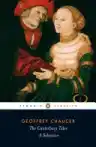
The Canterbury Tales
Chaucer's best-known and most representative work: an ambitious, unfinished frame narrative containing a wide range of genres, voices, and social perspectives.
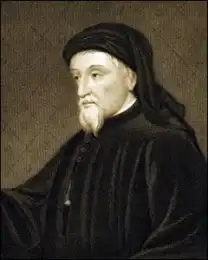
Author guide
Geoffrey Chaucer (c. 1340s–1400) was an English poet, courtier, diplomat, and civil servant. His major works include The Book of the Duchess, The House of Fame, Parlement of Foules, Troilus and Criseyde, The Legend of Good Women, The Canterbury Tales, and A Treatise on the Astrolabe. Writing primarily in Middle English, Chaucer helped establish English as a major literary language. Several attributed minor poems and translations remain subject to scholarly debate; translations and doubtful attributions are excluded here.
Catalog record updated .
Not sure where to begin?
Chaucer's best-known and most representative work: an ambitious, unfinished frame narrative containing a wide range of genres, voices, and social perspectives.
A complete major narrative poem that showcases Chaucer's sustained storytelling, psychological characterization, and mastery of English verse.
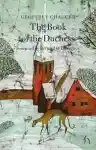
A relatively short and accessible early poem that introduces Chaucer's dream-vision technique and characteristic engagement with grief and literary tradition.
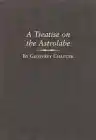
A compact prose work offering a direct introduction to Chaucer's scientific and pedagogical writing outside his poetry.
Outside the series
prose treatise · 1391
A Treatise the Astrolabe by Geoffrey Chaucer is the work of an avid amateur astronomer who happened also to be England’s greatest medieval poet. A user of the astrolabe can plot the movement of the stars, tell time, and calculate numerous…
story collection · 1387
Lively, absorbing, often outrageously funny, Chaucer’s The Canterbury Tales is a work of genius, an undisputed classic that has held a special appeal for each generation of readers. The Tales gathers twenty-nine of literature’s most…
dream-vision poem · 1369
A charming and absorbing dream-poem, `The book of the Duchess' is the earliest of Chaucer's major works, traditionally read as an allegorical elegy for Blanche of Lancaster, John of Gaunt's first wife. ..... [Cover].
narrative poem · 1380
dream-vision poem · 1380
allegorical poem · 1382
romance poem · 1385
Geoffrey Chaucer’s most significant literary accomplishment may well be Troilus and Criseyde, a single, profoundly philosophical narrative of a tragic love affair. Set in ancient Troy and telling the story of the rise and fall, in love…
narrative poem · 1386
Geoffrey Chaucer was a fourteenth-century English poet, courtier, diplomat, and civil servant. Born in London around 1340–1344, he is best known for The Canterbury Tales and died in 1400.
Sources: poets.org (opens in a new tab)westminster-abbey.org (opens in a new tab)
Chaucer served as a courtier, diplomat, civil servant, Controller of Customs, and Clerk of the King’s Works. His public career included royal service, overseas diplomatic missions, and administrative work.
Sources: poets.org (opens in a new tab)westminster-abbey.org (opens in a new tab)
Chaucer drew on French love poetry and was strongly influenced by Italian writers including Dante, Petrarch, and Boccaccio. His diplomatic travels to Italy helped acquaint him with their work.
Sources: poets.org (opens in a new tab)britishlibrary.cn (opens in a new tab)
Chaucer helped establish English, rather than French or Latin, as a major literary language and is often called the father of English literature. His verse forms also influenced later English poetic traditions.
Sources: poets.org (opens in a new tab)britishlibrary.cn (opens in a new tab)
Chaucer is buried in Westminster Abbey’s south transept, now known as Poets’ Corner. His burial there in 1400 began the tradition of commemorating poets and writers in that part of the Abbey.
Sources: westminster-abbey.org (opens in a new tab)westminster-abbey.org (opens in a new tab)