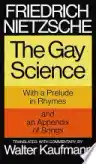
The Gay Science
An accessible mature work introducing Nietzsche's aphoristic style and central themes.
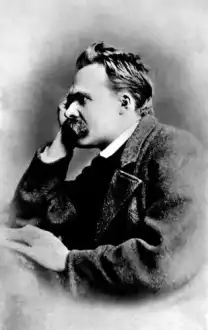
Author guide
Friedrich Nietzsche (1844–1900) was a German philosopher, classical philologist, cultural critic, essayist, and poet. His writings challenge traditional morality, Christianity, metaphysics, nationalism, and conventional ideas of truth, while developing themes including perspectivism, nihilism, the Übermensch, eternal recurrence, and the will to power. He wrote in aphoristic, poetic, polemical, and autobiographical forms, and his major works include The Birth of Tragedy, Human, All Too Human, The Gay Science, Thus Spoke Zarathustra, Beyond Good and Evil, On the Genealogy of Morality, Ecce Homo, and The Antichrist.
Catalog record updated .
Not sure where to begin?
An accessible mature work introducing Nietzsche's aphoristic style and central themes.

A concise entry into Nietzsche's mature critique of morality, metaphysics, and philosophers.
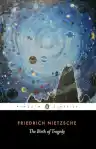
The chronological starting point for tracing Nietzsche's intellectual and stylistic development.
Read in order
essay series · complete
Four separately published essays on German culture, education, history, philosophy, and Wagner.
Book 1 · essay · 1873
Nietzsche harbored a fevered yearning to call false prophets to book and to reduce their fine axioms to absurdity. Accordingly, he planned a series of twenty-four pamphlets and decided to call them Unzeitgemasse Betrachtungen [Untimely…
Book 2 · essay · 1874
Book 3 · essay · 1874
Friedrich Wilhelm Nietzsche (1844-1900) was a German philosopher. His writing included critiques of religion, morality, contemporary culture, philosophy and science, using a distinctive style and displaying a fondness for aphorism.…
Book 4 · essay · 1876
multi volume work · complete
A three-part sequence of aphoristic works for free spirits.
Book 1 · nonfiction_book · 1878
German scholar and thinker Friedrich Nietzsche began his career as a linguist and philologist, but over time, his work became increasingly philosophical in its scope. He came to embrace a radical point of view that prized personal freedom…
Book 2 · aphorism_collection · 1879
Book 3 · aphorism_collection · 1880
"If all goes well, the time will come when one will take up the memorabilia of Socrates rather than the Bible as a guide to morals and reason.""Never yield to remorse, but at once tell yourself: remorse would simply mean adding to the…
Book 1 · philosophical_prose_poem · 1883
Book 2 · philosophical_prose_poem · 1884
Book 3 · philosophical_prose_poem · 1884
Book 4 · philosophical_prose_poem · 1885
Outside the series
nonfiction_book · 1872
A compelling argument for the necessity for art in life, Nietzsche's first book is fuelled by his enthusiasms for Greek tragedy, for the philosophy of Schopenhauer and for the music of Wagner, to whom this work was dedicated. Nietzsche…
nonfiction_book · 1886
Beyond Good and Evil: Prelude to a Philosophy of the Future is a book by philosopher Friedrich Nietzsche, first published in 1886. It draws on and expands the ideas of his previous work, Thus Spoke Zarathustra, but with a more critical…
nonfiction_book · 1887
nonfiction_book · 1889
`Anyone who wants to gain a quick idea of how before me everything was topsy-turvy should make a start with this work. That which is called idol on the title-page is quite simply that which was called truth hitherto. Twilight of the Idols…
nonfiction_book · 1895
Friedrich Nietzsche's "The Antichrist" might be more aptly named "The Antichristian," for it is an unmitigated attack on Christianity that Nietzsche makes within the text instead of an exposition on evil or Satan as the title might…
memoir · 1908
In late 1888, only weeks before his final collapse into madness, Nietzsche (1844-1900) set out to compose his autobiography, and Ecce Homo remains one of the most intriguing yet bizarre examples of the genre ever written. In this…
essay · 1888
essay_collection · 1895
poetry_collection · 1882
poetry_collection · 1891
aphorism_collection · 1881
aphorism_collection · 1882
Nietzsche called The Gay Science "the most personal of all my books." It was here that he first proclaimed the death of God—to which a large part of the book is devoted—and his doctrine of the eternal recurrence. Walter Kaufmann's…
Friedrich Nietzsche (1844–1900) was a German philosopher and cultural critic who challenged traditional European morality, Christianity, and conventional philosophical ideas.
Nietzsche began as a classical philologist and was appointed professor of classical philology at the University of Basel in 1869, at age 24. Poor health led him to leave the professorship in 1879.
Sources: plato.stanford.edu (opens in a new tab)unibas.ch (opens in a new tab)
Arthur Schopenhauer and Friedrich Albert Lange strongly influenced Nietzsche’s early philosophical development, while his friendship with Richard Wagner shaped his thinking about music, art, and culture.
Sources: plato.stanford.edu (opens in a new tab)iep.utm.edu (opens in a new tab)
Nietzsche’s critiques of morality, religion, truth, and culture, along with his analyses of nihilism, power, and selfhood, have had a major influence on modern philosophy and wider intellectual life.
Sources: iep.utm.edu (opens in a new tab)plato.stanford.edu (opens in a new tab)
After a severe mental and physical breakdown in 1889, Nietzsche lived under the care of his mother and sister. He died in Weimar in 1900 from a stroke complicated by pneumonia.