Author guide
Franz Kafka Books in Order
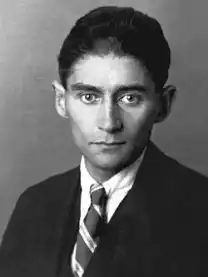
Franz Kafka (1883–1924) was a German-language writer from Prague whose fiction combines modernist experimentation, existential anxiety, bureaucratic absurdity, and parable. His major novels were published posthumously, while several story collections and standalone novellas appeared during his lifetime. His diaries, correspondence, professional writings, and substantial literary manuscripts were also published after his death.
Catalog record updated .
Outside the series
Bibliography by category
Novels (9)
- The Stoker
novella · 1913
This work has been selected by scholars as being culturally important, and is part of the knowledge base of civilization as we know it. This work was reproduced from the original artifact, and remains as true to the original work as…
- The Metamorphosis
novella · 1915
Franz Kafka’s The Metamorphosis begins with one of the most shocking openings in literature: traveling salesman Gregor Samsa wakes up to discover he has turned into a giant insect. But this is not just a story of absurd metamorphosis—it…
- The Judgment
novella · 1916
Das Urteilauthor: Franz KafkaGeorg stand knapp neben seinem Vater, der den Kopf mit dem struppigen weißen Haar auf die Brust hatte sinken lassen.»Georg«, sagte der Vater leise, ohne Bewegung.Georg kniete sofort neben dem Vater nieder, er…
- In the Penal Colony
novella · 1919
"In the Penal Colony" is a short story by Franz Kafka. "In the Penal Colony" (In der Strafkolonie) is a short story in German by Franz Kafka. It is set in an unnamed penal colony. As in other of Kafka's writings, the narrator is detached…
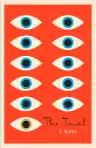
- The Trial
unfinished-novel · 1925
"Written in 1914 but not published until 1925, a year after Kafka's death, The Trial is the terrifying tale of Josef K., a respectable bank officer who is suddenly and inexplicably arrested and must defend himself against a charge about…
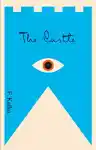
- The Castle
unfinished-novel · 1926
The Castle (original title: "Das Schloß") is the story of K., the unwanted Land Surveyor who is never to be admitted to the Castle nor accepted in the village, and yet cannot go home. As he encounters dualities of certainty and doubt,…
- Amerika
unfinished-novel · 1927
"Franz Kafka's diaries and letters suggest that his fascination with America grew out of a desire to break away from his native Prague, even if only in his imagination. Kafka died before he could finish what he liked to call his…
- Wedding Preparations in the Country
unfinished-novella · 1954
- Office Writings
nonfiction · 1984


Nonfiction (2)
- Diaries 1910–1923
diaries · 1948
- Letter to His Father
memoir · 1952
Short fiction (5)
- Contemplation
short-story-collection · 1912
Contemplation, Kafka's first published book (1913), was one of the few to appear in his lifetime. Composed of eighteen short prose poems, the book as a whole displays the full range of Kafka's compact metaphorical style. In this new…
- A Country Doctor
short-story-collection · 1919
First published in 1919, among the 14 stories contained in this volume are some of Kafka's most renowned shorter works: "Before the Law," "Jackals and Arabs," "A Report for an Academy." As with the other volumes published by Twisted Spoon…
- A Hunger Artist
short-story-collection · 1924
"A Hunger Artist", also translated as "A Fasting Artist" and "A Starvation Artist", is a short story by Franz Kafka published in 1922. The protagonist is an archetype of Kafka, an individual marginalized by society.
- The Great Wall of China
short-story-collection · 1931
About the Book "The Great Wall of China" ("Beim Bau der Chinesischen Mauer") is a short story written by Franz Kafka in 1917. It was not published until 1931, seven years after his death. Max Brod selected stories and published them in…
- Description of a Struggle
short-story-collection · 1936
"Beschreibung eines Kampfes" ist eine etwa zwischen 1903 und 1907 entstandene dreigliedrige Erzählung Franz Kafkas, die sein erstes erhaltenes Werk darstellt und die postum veröffentlicht wurde. Der erste und der dritte Teil beschreiben…



Other (4)
- Letters to Milena
correspondence · 1952
In no other work does Franz Kafka reveal himself as in Letters to Milena, which begins as a business correspondence but soon develops into a passionate but doomed epistolary love affair. Kafka's Czech translator, Milena Jesenská, was a…
- Letters to Family, Friends, and Editors
correspondence · 1959
- Letters to Felice
correspondence · 1967
More than two decades of letters from one of the greatest writers of the twentieth century—the author of The Metamorphosis and The Trial—to the people in his life, from his years as a student in Prague in the early 1900s to his final…
- Letters to Ottla and the Family
correspondence · 1974
Frequently asked questions about Franz Kafka
Who was Franz Kafka, and what was his cultural identity?
Franz Kafka (1883–1924) was a Prague-born writer from a Jewish family who wrote primarily in German. He belonged to the German-speaking Jewish culture of Prague, then part of the Austro-Hungarian Empire.
Sources: kafkamuseum.cz (opens in a new tab)kafkamuseum.cz (opens in a new tab)
What did Franz Kafka do for a living?
After studying law, Kafka worked for two insurance companies, including Prague’s Workers’ Accident Insurance Institute, from 1907 to 1922. He regarded writing as his main calling but pursued it alongside office work.
Sources: kafkamuseum.cz (opens in a new tab)kafkamuseum.cz (opens in a new tab)
What influenced Franz Kafka’s writing?
Kafka’s writing was shaped by Prague’s divided Czech-German cultural life, his Jewish identity and encounters with Yiddish theater, and his experience of law and bureaucracy. He also read authors including Flaubert, Kleist, Dostoevsky, Kierkegaard, and Goethe.
Sources: kafkamuseum.cz (opens in a new tab)kafkamuseum.cz (opens in a new tab)encyclopedia.com (opens in a new tab)
Did Franz Kafka win any literary awards?
No literary prize was formally awarded to Kafka during his lifetime. In 1915, the Fontane Prize went to Carl Sternheim, who passed its 800-mark prize money to Kafka, making Kafka’s connection to the award indirect.
Why is Franz Kafka still important, and what does “Kafkaesque” mean?
Kafka remains influential because his fiction dramatizes alienation, absurdity, and people trapped in opaque institutions. “Kafkaesque” describes nightmarish, disorienting situations shaped by impersonal or bureaucratic power.
Sources: encyclopedia.com (opens in a new tab)press.umich.edu (opens in a new tab)