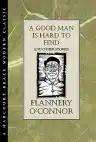
A Good Man Is Hard to Find and Other Stories
The central short-story collection published during O'Connor's lifetime and an accessible introduction to her characteristic themes and style.
Author guide
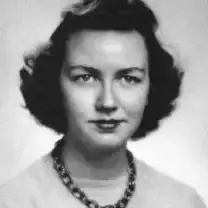
Flannery O'Connor (1925–1964) was an American novelist and short-story writer from Georgia. Her fiction, essays, reviews, letters, and journal writings explore grace, morality, disability, race, and religious belief through sharply comic and often violent encounters in the American South. She published two novels and two story collections during her lifetime; substantial posthumous collections expanded her literary record.
Catalog record updated .
Not sure where to begin?
The central short-story collection published during O'Connor's lifetime and an accessible introduction to her characteristic themes and style.
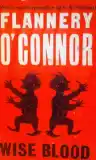
Her first novel and a concise introduction to her Southern Gothic fiction, religious concerns, and grotesque comedy.
Outside the series
novel · 1952
Wise Blood, Flannery O'Connor's astonishing and haunting first novel, is a classic of twentieth-century literature. It is the story of Hazel Motes, a twenty-two-year-old caught in an unending struggle against his inborn, desperate fate.…
novel · 1960
First published in 1955, The Violent Bear It Away is now a landmark in American literature. It is a dark and absorbing example of the Gothic sensibility and bracing satirical voice that are united in Flannery O'Conner's work. In it, the…
literary-criticism · 1983
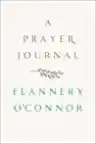
diary · 2013
short-story-collection · 1955
The collection that established O’Connor’s reputation as one of the American masters of the short story. The volume contains the celebrated title story, a tale of the murderous fugitive The Misfit, as well as “The Displaced Person” and…
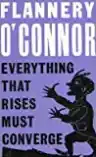
short-story-collection · 1965
The death of Flanner O'Connor at thirty-nine marked the loss of one of America's most gifted contemporary writers at the height of her powers. This volume is the collection on which she was working at the time of her death. Each of the…
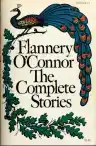
short-story-collection · 1971
Featuring all of American author Flannery O’Connor’s short stories, this collection reveals the author’s contemplations on religion, morality, and fate, set against the backdrop of the American South. The collection contains O’Connor’s…
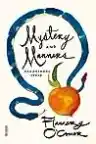
essay-collection · 1969
letters · 1979
This book is a collection of letter sent by the American novellist and writer Flannery O'Connor to various persons incl. notable figures of the literary world at the time. The book is particularly significant, as the author was confined…
graphic-work · 2012
Flannery O’Connor (1925–1964) was an American novelist and short-story writer from Georgia, widely regarded as one of the major fiction writers of the twentieth century. Her Southern Gothic fiction is known for grotesque humor, violence, and religious themes.
Sources: georgiaencyclopedia.org (opens in a new tab)georgiahistory.com (opens in a new tab)
She was born in Savannah, Georgia, on March 25, 1925. After being diagnosed with lupus in 1951, she returned to Milledgeville and lived at the family farm, Andalusia, until her death in 1964.
Sources: georgiahistory.com (opens in a new tab)georgiaencyclopedia.org (opens in a new tab)
She studied at Georgia State College for Women and then entered the University of Iowa’s Writers’ Workshop after receiving a journalism scholarship. The workshop introduced her to influential writers and critics and helped launch her literary career.
Sources: georgiaencyclopedia.org (opens in a new tab)georgiahistory.com (opens in a new tab)
Yes. O’Connor was a devout Roman Catholic, and her faith shaped fiction concerned with grace, sin, salvation, and the search for God, even when her characters and settings were largely drawn from the Protestant South.
Sources: georgiaencyclopedia.org (opens in a new tab)georgiahistory.com (opens in a new tab)
She received the National Book Award for Fiction posthumously in 1972 for The Complete Stories. Her influence is commemorated by the University of Georgia Press’s Flannery O’Connor Award for Short Fiction and by her induction into the Georgia Writers Hall of Fame.
Sources: nationalbook.org (opens in a new tab)ugapress.org (opens in a new tab)georgiaencyclopedia.org (opens in a new tab)