Im Westen nichts Neues
The defining anti-war novel and the clearest entry point into Remarque's treatment of war and the lost generation.
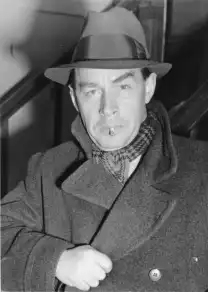
Author guide
Erich Maria Remarque (1898–1970), born Erich Paul Remark in Osnabrück, was a German novelist whose experience as a soldier in the First World War shaped his major anti-war fiction. His novels address war, political violence, displacement, persecution, exile, memory, and the struggle to preserve individual dignity. He lived in European exile and later in the United States and Switzerland. His best-known novel, Im Westen nichts Neues, became an international landmark of twentieth-century pacifist literature.
Catalog record updated .
Not sure where to begin?
The defining anti-war novel and the clearest entry point into Remarque's treatment of war and the lost generation.
A major, self-contained exile novel that introduces Remarque's recurring concerns with persecution, statelessness, and moral choice.
A concise, mature exile novel centered on memory, identity, flight, and the lasting effects of fascism.
Read in order
trilogy · complete
Remarque's planned trilogy about the First World War and its impact on the lost generation.
Book 1 · novel · 1928
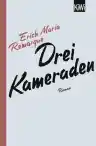
Einer unserer Besten: der Weltbestseller der Anti-Kriegsliteratur»Man hat den Menschen gesagt: Du darfst nicht töten. Aber man hat ihnen auch gesagt: Du mußt gut zielen, damit Du triffst.«Erich Maria RemarqueErich Maria Remarques…
Book 2 · novel · 1930
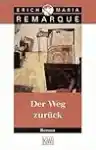
Ende 1918 kehrt eine Handvoll Soldaten von der Westfront zurück. Doch statt der einstigen Kriegsbegeisterung schlägt ihnen nur noch Verachtung entgegen … Die Fortsetzung des Welterfolgs Im Westen nichts Neues . »Große Ausdruckskraft,…
Book 3 · novel · 1936
thematic sequence · complete
A thematic sequence of novels about persecution, flight, statelessness, and exile under National Socialism.
Book 1 · novel · 1939
Book 2 · novel · 1945
It is 1939. Despite a law banning him from performing surgery, Ravic—a German doctor and refugee living in Paris—has been treating some of the city’s most elite citizens for two years on the behalf of two less-than-skillful French…
Book 3 · novel · 1961
Outside the series
novel · 1920
novel · 1998
novel · 1927
novel · 1952
novel · 1954
novel · 1956
novel · 1959
novel · 1971
unfinished novel · 1998
short-story-collection · 1993
play · 1956
posthumous collection · 1998
Erich Maria Remarque was a German-born novelist, journalist, and pacifist best known for anti-war literature. He was born in Osnabrück in 1898 and died in Locarno, Switzerland, in 1970.
Sources: encyclopedia.1914-1918-online.net (opens in a new tab)encyclopedia.ushmm.org (opens in a new tab)
He was born Erich Paul Remark. In the early 1920s, he adopted “Erich Maria Remarque,” replacing his middle name with Maria and using the French spelling of his surname as a literary name.
Sources: remarque.de (opens in a new tab)encyclopedia.ushmm.org (opens in a new tab)
Remarque was drafted into the German army, served on the Western Front, and was wounded in 1917. These experiences, including the loss of comrades, inspired his anti-war fiction and shaped his later writing about war, persecution, and exile.
Sources: encyclopedia.ushmm.org (opens in a new tab)encyclopedia.1914-1918-online.net (opens in a new tab)
Its stark, pacifist depiction of World War I challenged nationalist and militarist ideas about heroic sacrifice. Nazi authorities and conservative nationalists denounced Remarque’s work; his books were burned in 1933, and his German citizenship was revoked in 1938.
Sources: encyclopedia.ushmm.org (opens in a new tab)dhm.de (opens in a new tab)
Remarque received Osnabrück’s Justus Möser Medal in 1964, the Grand Cross of Merit of the Federal Republic of Germany in 1967, and election as a corresponding member of the German Academy for Language and Poetry in 1968. His legacy is also commemorated by Osnabrück’s biennial Erich Maria Remarque Peace Prize, established in 1991.
Sources: remarque.de (opens in a new tab)friedensstadt.osnabrueck.de (opens in a new tab)