Conte d'un nigoun
poetry · First published 2021
Author guide
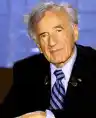
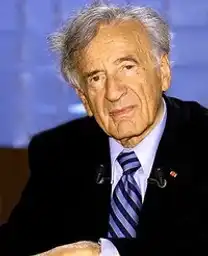
Elie Wiesel (1928–2016) was a Romanian-born American writer, educator, and human-rights advocate whose more than forty books explore the Holocaust, Jewish memory, faith, ethics, and responsibility. His work includes memoirs, novels, essays, religious portraits and legends, plays, dialogues, children's books, and poetry.
Catalog record updated .
poetry · First published 2021
Not sure where to begin?
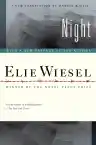
Wiesel's foundational Holocaust memoir and the first volume of the Night Trilogy.
Read in order
trilogy · complete
Elie Wiesel's connected sequence consisting of the memoir Night and the novels Dawn and Day.
Book 1 · memoir · 1958
Night is Elie Wiesel's masterpiece, a candid, horrific, and deeply poignant autobiographical account of his survival as a teenager in the Nazi death camps. This new translation by Marion Wiesel, Elie's wife and frequent translator,…
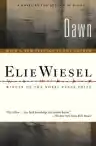
Book 2 · novel · 1960
Two men wait through the night in British-controlled Palestine for dawn - and for death. One is a captured English officer. The other is Elisha, a young Israeli freedom fighter whose assignment is to kill the officer in reprisal for…
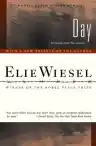
Book 3 · novel · 1961
thematic-series · complete
A series of portraits and legends concerning Hasidic, biblical, Talmudic, and prophetic figures.
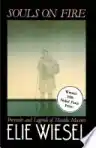
Book 1 · religious-nonfiction · 1972
In Souls on Fire: Portraits and Legends of Hasidic Masters, Elie Wiesel re-enters, like an impassioned pilgrim, the universe of Hasidism. Souls on Fire is not a simple chronological history of Hasidism, nor is it a comprehensive book on…
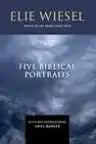
Book 2 · religious-nonfiction · 1975
Discusses the Biblical stories of Adam, Job, Jacob, Cain and Abel, Abraham, Joseph, and Moses.
Book 3 · religious-nonfiction · 1978
Book 4 · religious-nonfiction · 1981
Book 5 · religious-nonfiction · 1991
Book 6 · religious-nonfiction · 1998
Outside the series
novel · 1962
novel · 1964
Gregor—a teenaged boy, the lone survivor of his family—is hiding from the Germans in the forest. He hides in a cave, where he meets a mysterious stranger who saves his life. He hides in the village, posing as a deaf-mute peasant boy. He…
nonfiction · 1966
novel · 1968
Med 6-dages-krigen i 1967 som ramme fortælles en række historier, der i en blanding af drøm og virkelighed, myter og symboler skildrer det jødiske folks 2000-årige lidelseshistorie
novel · 1973
novel · 1980
Paltiel Kossover, a "mute poet" and witness to history, travels from his Jewish childhood in pre-revolutionary Russia to Paris and Berlin in the 1930s as the Nazis take power, and Spain during its Civil War. On his journey he embraces…
religious-nonfiction · 1982
novel · 1983
novel · 1987
Raphael Lipkin is a man obsessed. He hears voices. He talks to ghosts. He is spending the summer at the Mountain Clinic, a psychiatric hospital in upstate New York--not as a patient, but as a visiting professional with a secret, personal…
religious-nonfiction · 1988
novel · 1989
A profoundly moving novel about a Holocaust survivor's struggle to remember both the heroic and the shameful events of his past, and about his American-born son's need to assimilate his father's life into his own.
religious-nonfiction · 1991
religious-nonfiction · 1993
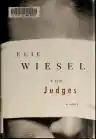
novel · 1999
When their plane from New York to Tel Aviv is forced down by bad weather, five passengers seek refuge at a nearby house where they encounter their enigmatic host, known only as the Judge, who forces them to confront the reality and…
religious-nonfiction · 2002
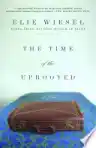
novel · 2003
Tormented by feelings of loss and dispossession after spending his life fleeing first the Nazis and then the 1956 Russian invasion of Hungary, Gamaliel Friedman finally settles in New York, where he works as a ghostwriter and meets a…
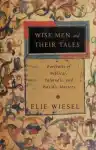
religious-nonfiction · 2003
In Wise Men and Their Tales, a master teacher gives us his fascinating insights into the lives of a wide range of biblical figures, Talmudic scholars, and Hasidic rabbis.The matriarch Sarah, fiercely guarding her son, Isaac, against the…
novel · 2006
From Elie Wiesel, a recipient of the Nobel Peace Prize and one of our fiercest moral voices, a provocative and deeply thoughtful new novel about a life shaped by the worst horrors of the twentieth century and one man's attempt to reclaim…
novel · 2008
novel · 2010
It's 1975, and Shaltiel Feigenberg, a professional storyteller and writer, has been taken hostage. He has been abducted from his home in Brooklyn, New York, blindfolded and tied to a chair in a dark basement. His captors, an Arab and an…
memoir · 1956
memoir · 1994
memoir · 1996
As this concluding volume of his moving and revealing memoirs begins, Elie Wiesel is forty years old, a writer of international repute. Determined to speak out more actively for both Holocaust survivors and the disenfranchised everywhere,…
biography · 2009
memoir · 2011
In this unforgettable book, the award-winning writer, during his recovery after a life-threatening heart surgery, reflected on his many losses and accomplishments, and on all that remained to be done, sharing his aspirations for his…
short-story-collection · 1966
essay-and-story-collection · 1968
This is a very personal account from an Auschwitz survivor. It is profound in it's view about the Holocaust as well as Judaism. If this was the only book available about the 6 million innocents murdered during the 2nd World War it would…
essay-and-story-collection · 1970
Twenty years after he and his family were deported from Sighet to Auschwitz, Elie Wiesel returned to his town in search of the watch—a bar mitzvah gift—he had buried in his backyard before they left.
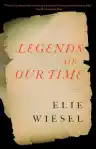
essay-and-story-collection · 1982
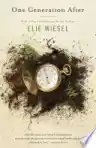
essay-and-story-collection · 1985
essay-and-story-collection · 1989
essay-collection · 1977
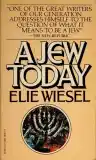
What does it mean to be a Jew today -- in America, in Europe, in Israel? Elie Wiesel, whom both the New York Times Book Review and Le Monde have called "one of the great writers of this generation," addresses himself to the question from…
essay-collection · 1977
art-and-essay-book · 1980
speech · 1987
essay-collection · 1990
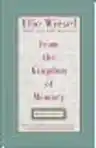
"One of the great writers of our generation" (The New Republic) weaves together memories of his life before the Holocaust and his great struggle to find meaning afterwards. Included are Wiesel's landmark speeches, among them his powerful…
essay-collection · 2001
essay-collection · 2002
essay-collection · 2004
essay · 2006
children's-book · 1983
children's-book · 1999
Recounts some of the stories of the wisdom and folly in the life of the legendary King Solomon.
poetry · 2021
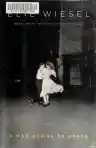
play · 1968
On Yom Kippur eve in 1965, Elie Wiesel found himself in Russia, “in a synagogue crowded with people. The air was stifling. The cantor was chanting . . . Suddenly a mad thought crossed my mind: Something is about to happen; any moment now…
play · 1979
cantata · 1973
dialogue · 1976
Conversations with Elie Wiesel is a far-ranging dialogue with the Nobel Peace Prize-winner on the major issues of our time and on life's timeless questions.In open and lively responses to the probing questions and provocative comments of…
dialogue · 1986
cantata · 1987
dialogue · 1988
dialogue · 1990
dialogue · 1995
dialogue · 1995
dialogue · 1999
dialogue · 2001
Elie Wiesel (1928–2016) was a Romanian-born American author, Holocaust survivor, professor, and human-rights activist. He devoted much of his public life to teaching about the Holocaust and defending human dignity.
Sources: encyclopedia.ushmm.org (opens in a new tab)eliewieselfoundation.org (opens in a new tab)
He was born in Sighet, Transylvania, now part of Romania, and was deported with his family to Auschwitz at age 15 in 1944. He was later imprisoned at Buchenwald; his mother and younger sister were murdered at Auschwitz, and his father died at Buchenwald.
Sources: encyclopedia.ushmm.org (opens in a new tab)eliewieselfoundation.org (opens in a new tab)
Wiesel was also a journalist, university professor, and human-rights activist. He taught at Boston University from 1976 and helped lead the effort that created the United States Holocaust Memorial Museum, serving as founding chairman of its council.
Sources: encyclopedia.ushmm.org (opens in a new tab)nobelprize.org (opens in a new tab)
His work was shaped by Holocaust memory, Jewish wisdom and values, and sustained engagement with questions of faith, ethics, and human responsibility. At Boston University, he taught “Literature of Memory,” drawing on biblical texts, philosophy, history, and contemporary literature.
Sources: bu.edu (opens in a new tab)encyclopedia.ushmm.org (opens in a new tab)
He received the 1986 Nobel Peace Prize for defending human rights and peace, along with honors including the Presidential Medal of Freedom and the U.S. Congressional Gold Medal. His legacy continues through the Elie Wiesel Foundation, which promotes tolerance and human rights through dialogue and youth programs.
Sources: nobelprize.org (opens in a new tab)encyclopedia.ushmm.org (opens in a new tab)eliewieselfoundation.org (opens in a new tab)