A Literature of Their Own: British Women Novelists from Brontë to Lessing
Foundational study of British women novelists and a central work in feminist literary criticism.
Author guide
Elaine Showalter is an American literary critic, feminist theorist, literary historian, and cultural writer. Professor emerita of English at Princeton University, she helped establish feminist literary criticism in the United States and developed the practice of gynocriticism, the study of women as writers. Her scholarship ranges across British and American women's writing, Victorian literature, gender, madness, popular culture, and the history of feminist intellectuals. She has also edited major literary anthologies and written biographies, cultural criticism, and works on teaching literature.
Catalog record updated .
Not sure where to begin?
Foundational study of British women novelists and a central work in feminist literary criticism.
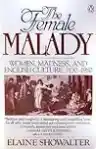
Influential account of women, madness, medicine, and English cultural history.
Accessible, wide-ranging literary history of American women writers from the colonial period to the present.
Outside the series
literary_criticism · 1977
literary_criticism · 1991
cultural_criticism · 1997
cultural_history · 2001
cultural_criticism · 2005
literary_history · 2009
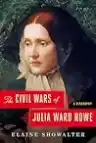
biography · 2016
edited_collection · 1971
edited_collection · 1978
edited_collection · 1985
edited_collection · 1989
edited_reference_work · 1991
edited_collection · 1993
edited_collection · 1997
edited_anthology · 2011
coauthored_nonfiction · 1993
scholarly_monograph · 1985
scholarly_monograph · 1988
scholarly_monograph · 1990
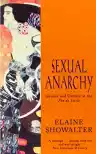
'Sexual anarchy' - dire predictions, disasters, apocalypse - became the hallmark of the closing decades of the nineteenth century. The New Woman and the Odd Woman threatened male identity and self-esteem; teh emergence of feminism and…
pedagogy · 2003
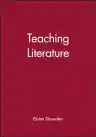
Teaching Literature is an inspirational guidebook for all teachers of English and American literature in higher education. Written by leading academic, prolific author and cultural journalist, Elaine Showalter Original and provocative…
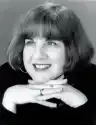
Elaine Showalter is an American literary critic, feminist theorist, literary historian, and cultural commentator, born in Boston in 1941. She is professor emerita of English at Princeton University.
Sources: news.st-andrews.ac.uk (opens in a new tab)english.princeton.edu (opens in a new tab)
She is best known as one of the founders of feminist literary criticism in the United States and for developing gynocriticism, a framework centered on women as writers and on women’s literary traditions.
Sources: library.brown.edu (opens in a new tab)english.princeton.edu (opens in a new tab)
She taught at Douglass College of Rutgers University before joining Princeton in 1984, where she retired as Avalon Professor of the Humanities in 2003. She also worked as a journalist, cultural commentator, editor, and literary-prize judge.
Sources: news.st-andrews.ac.uk (opens in a new tab)penguinrandomhouse.com (opens in a new tab)
Her honors include the 2012 Truman Capote Award for Literary Criticism, an honorary Doctor of Letters from the University of St Andrews, and election as a Fellow of the Royal Society of Literature.
Sources: writersworkshop.uiowa.edu (opens in a new tab)st-andrews.ac.uk (opens in a new tab)rsliterature.org (opens in a new tab)
Showalter helped broaden literary history by centering women writers and created influential methods for analyzing women’s writing. Her work helped establish feminist literary criticism as a major field of academic study.
Sources: news.st-andrews.ac.uk (opens in a new tab)library.brown.edu (opens in a new tab)