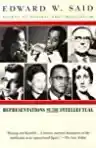
Orientalism
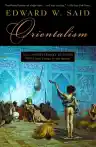
The foundational work for Said’s analysis of Orientalism, cultural representation, and imperial power.
Author guide
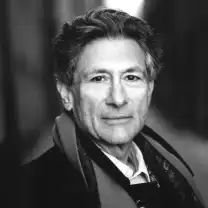
Edward Wadie Said was born in Jerusalem in 1935 and educated in the United States, receiving degrees from Princeton and Harvard. He taught at Columbia University from 1963 until his death in 2003, becoming University Professor of English and Comparative Literature. His scholarship joined literary criticism, cultural history, music, politics, and theories of imperialism. Orientalism (1978) transformed the study of Western representations of the Middle East and helped establish postcolonial studies. Alongside his academic work, Said was a major public intellectual and an influential advocate for Palestinian rights and self-determination. He also wrote extensively on music, exile, intellectual responsibility, nationalism, and the Israeli-Palestinian conflict.
Catalog record updated .
Not sure where to begin?
The foundational work for Said’s analysis of Orientalism, cultural representation, and imperial power.

The most accessible entry point to Said’s personal history, exile, identity, and intellectual formation.
Outside the series
nonfiction-book · 1966
nonfiction-book · 1975
nonfiction-book · 1978
Orientalism is a 1978 book by Edward W. Said, in which the author discusses Orientalism, defined as the West's patronizing representations of "The East"—the societies and peoples who inhabit the places of Asia, North Africa, and the…
nonfiction-book · 1979
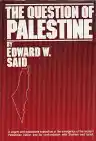
This original and deeply provocative book was the first to make Palestine the subject of a serious debate—one that remains as critical as ever. With the rigorous scholarship he brought to his influential Orientalism and an exile's passion…
nonfiction-book · 1981
nonfiction-book · 1986
nonfiction-book · 2003
memoir · 1999
pamphlet · 1979
essay-collection · 1983
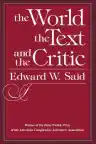
Said demonstrates that critical discourse has been strengthened by the writings of Derrida and Foucault and by influences like Marxism, structuralism, linguistics, and psychoanalysis. But, he argues, these forces have compelled literature…
pamphlet · 1991
lecture-book · 1991
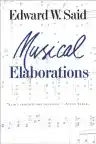
Examines the performance of Western high-art music, the politicized theorizing of it, and the use of "melody, solitude, and affirmation" in it.
essay-collection · 1993
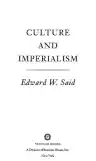
In a series of essays, Said argues the impact of mainstream culture (mainly British writers of the 19th and early 20th century, like Jane Austen and Rudyard Kipling) on colonialism and imperialism, and conversely how imperialism,…
essay-collection · 1994
lecture-book · 1994
essay-collection · 1995
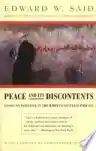
In works such as Culture and Imperialism, Said has compelled us to question our culture's most privileged myths. Now with this impassioned and incisive book, our foremost Palestinian-American intellectual challenges the official version…
essay-collection · 2000
essay-collection · 2000
lecture-book · 2004
essay-collection · 2004
essay-collection · 2006
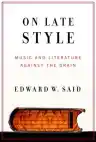
In his fascinating last book, Edward Said looks at a selection of essays, poems, novels, films, and operas to determine what late style may explain about the evolution of the creative life. He discusses how the approaching death of an…
essay-collection · 2007
co-authored-pamphlet · 1975
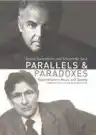
co-authored-book · 2002
These free-wheeling, often exhilarating dialogues--which grew out of the acclaimed Carnegie Hall Talks--are an exchange between two of the most prominent figures in contemporary culture: Daniel Barenboim, internationally renowned…
Edward W. Said was born in West Jerusalem, then part of British-ruled Palestine, on November 1, 1935.
He was Palestinian and held U.S. citizenship. His work and public life were deeply connected to Palestinian rights and self-determination.
Source: birzeit.edu (opens in a new tab)
Said joined Columbia University’s English and Comparative Literature faculty in 1963 and became University Professor in 1992, a position he held until his death in 2003.
His thought brought literary criticism into conversation with cultural history, politics, music, imperialism, and Palestinian experience. The 1967 Arab-Israeli war was a major turning point that drew him more fully into public writing on Palestine.
Sources: college.columbia.edu (opens in a new tab)palquest.palestine-studies.org (opens in a new tab)
He is remembered as a founder of postcolonial studies and an influential public intellectual whose scholarship continues to shape work on culture, empire, and Palestine. In 2002, he shared the Prince of Asturias Award for Concord with Daniel Barenboim for promoting dialogue and coexistence.
Sources: columbia.edu (opens in a new tab)fpa.es (opens in a new tab)