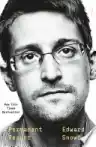
Permanent Record
Edward Snowden's sole standalone book-length authored work and his definitive account of his life, intelligence work, and 2013 disclosures.

Author guide
Edward Snowden is an American former intelligence contractor and cybersecurity specialist who disclosed classified information about U.S. mass-surveillance programs in 2013. He later became an advocate for privacy, press freedom, and secure communications, and published the memoir Permanent Record in 2019.
Catalog record updated .
Not sure where to begin?
Edward Snowden's sole standalone book-length authored work and his definitive account of his life, intelligence work, and 2013 disclosures.
Outside the series
memoir · 2019
Edward Snowden, the man who risked everything to expose the US government’s system of mass surveillance, reveals for the first time the story of his life, including how he helped to build that system and what motivated him to try to bring…
Edward Snowden is an American technologist, former CIA officer, and former National Security Agency contractor. He was born in North Carolina on June 21, 1983, and became internationally known after disclosing classified surveillance information in 2013.
Snowden worked as a computer systems engineer for the CIA and later held positions with the NSA, Dell, and contractor Booz Allen Hamilton. These roles gave him access to classified intelligence systems and surveillance programs.
Sources: rightlivelihood.org (opens in a new tab)justice.gov (opens in a new tab)
Snowden said he became concerned that mass-surveillance practices violated fundamental rights and threatened democracy. After believing that internal efforts had not addressed those concerns, he provided evidence to journalists for public scrutiny.
In 2014, Snowden received the Right Livelihood Honorary Award for revealing the extent of state surveillance and its implications for democratic processes and constitutional rights.
Sources: rightlivelihood.org (opens in a new tab)rightlivelihood.org (opens in a new tab)
Snowden’s disclosures reshaped public and policy debates about surveillance, privacy, whistleblowing, journalism, and trust in government. They also helped spur surveillance-law reforms, including the USA Freedom Act’s end of the bulk telephone-metadata program under Section 215.
Sources: iapp.org (opens in a new tab)rightlivelihood.org (opens in a new tab)