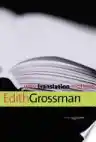
Why Translation Matters
The most accessible and representative introduction to Grossman's own writing and ideas about literary translation.
Author guide
Edith Marion Grossman (1936–2023) was an American literary translator, writer, and teacher. She translated major Spanish-language and Latin American authors, including Miguel de Cervantes, Gabriel García Márquez, Mario Vargas Llosa, Carlos Fuentes, Mayra Montero, and Álvaro Mutis. Her authored books include the scholarly monograph The Antipoetry of Nicanor Parra and the essay collection Why Translation Matters.
Catalog record updated .
Not sure where to begin?
The most accessible and representative introduction to Grossman's own writing and ideas about literary translation.
Her earliest standalone book and her principal work of literary criticism and poetics.
Read in order
publisher series · unknown
A Yale University Press series of concise books arguing for the continuing relevance of important people or ideas.
Book 4 · essay collection · 2010
"Why Translation Matters argues for the cultural importance of translation and for a more encompassing and nuanced appreciation of the translator's role. As the acclaimed translator Edith Grossman writes in her introduction, "My intention…
Outside the series
nonfiction · 1975
Edith Grossman (1936–2023) was an American literary translator, writer, and teacher known especially for translating Spanish-language literature into English. Her work brought major writers including Gabriel García Márquez, Mario Vargas Llosa, Carlos Fuentes, and Miguel de Cervantes to English-speaking readers.
Sources: pen.org (opens in a new tab)yalebooks.yale.edu (opens in a new tab)
Born Edith Marion Dorph in Philadelphia, Grossman studied Spanish and Spanish literature at the University of Pennsylvania, earning bachelor’s and master’s degrees. She later received a PhD in Spanish from New York University.
Sources: washingtonpost.com (opens in a new tab)nytimes.com (opens in a new tab)
Grossman credited a high-school Spanish teacher with sparking her interest in the language. Her professional translation career began in the early 1970s when she was asked to translate a story by Argentine writer Macedonio Fernández; she eventually left teaching to translate full time.
Sources: blogs.loc.gov (opens in a new tab)americareadsspanish.org (opens in a new tab)washingtonpost.com (opens in a new tab)
Grossman helped establish literary translation as a creative art and argued that translators deserved visible credit alongside authors. Her acclaimed translation of Don Quixote and her advocacy for translation’s cultural importance made her a major influence on readers, writers, and translators.
Sources: pen.org (opens in a new tab)yalebooks.yale.edu (opens in a new tab)washingtonpost.com (opens in a new tab)
Among her major honors were the 2006 PEN/Ralph Manheim Medal for Translation, the 2008 American Academy of Arts and Letters Award in Literature, a 2009 Guggenheim Fellowship, the 2010 Queen Sofía Spanish Institute Translation Prize, and the 2022 Thornton Wilder Prize for Translation.
Sources: pen.org (opens in a new tab)yalebooks.yale.edu (opens in a new tab)thorntonwilder.com (opens in a new tab)