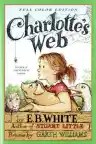
Charlotte's Web
The most widely recognized introduction to White's children's fiction, combining imaginative storytelling with emotional depth.
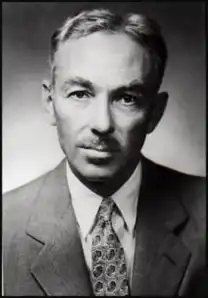
Author guide
Elwyn Brooks White (1899–1985) was an American writer whose career included nearly six decades of essays, humor, poetry, journalism, and editorial work for The New Yorker. He also wrote influential nonfiction, co-authored Is Sex Necessary? with James Thurber, substantially revised William Strunk Jr.'s The Elements of Style, and created three enduring children's classics: Stuart Little, Charlotte's Web, and The Trumpet of the Swan.
Catalog record updated .
Not sure where to begin?
The most widely recognized introduction to White's children's fiction, combining imaginative storytelling with emotional depth.
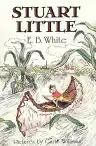
The first of White's three children's novels and an accessible entry to his distinctive fantasy.
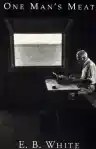
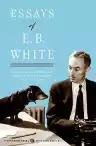
A representative collection of White's celebrated personal essays and observations of rural Maine.
Outside the series
nonfiction · 1929
nonfiction · 1945
novel · 1945
This is the first children's book by the distinguished author E. B. White. Stuart Little, the hero, is a mouse in the family of Frederick C. Little and is a pleasantly debonair little character, with a shy, engaging manner and a somewhat…
novel · 1952
Some Pig. Humble. Radiant. These are the words in Charlotte's Web, high up in Zuckerman's barn. Charlotte's spiderweb tells of her feelings for a little pig named Wilbur, who simply wants a friend. They also express the love of a girl…
nonfiction · 1959
novel · 1970
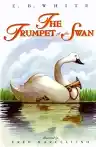
Swan Song Like the rest of his family, Louis is a trumpeter swan. But unlike his four brothers and sisters, Louis can't trumpet joyfully. In fact, he can't even make a sound. And since he can't trumpet his love, the beautiful swan Serena…
pamphlet · 1933
essays · 1934
essays · 1936
essays · 1939
essays · 1942
essay · 1949
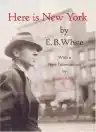
Perceptive, funny, and nostalgic, E. B. White's stroll around Manhattan remains the quintessential love letter to the city, written by one of America's foremost literary figures. The New York Times has named Here is New York one of the…
essays · 1954
A selection of E.B. White's penetrating and thoughtful observations on the conditions of life
essays · 1962
A collection of eighteen essays, reports and reminiscences (all but one of which have previously appeared in The New Yorker as a "Letter from the East" or some other compass point). Author writes of coons, and how a swallow builds a nest,…
pamphlet · 1968
essays · 1977
When E.B. White received the Gold Medal for Essays and Criticism from the American Academy of Arts and Letters, the following citation, here quoted in part, accompanied the award: "If we are remembered as a civilized era, I think it will…
poetry · 1929
poetry · 1938
poetry · 1981
Offers a collection of approximately fifty poems and thirty-five sketches, stories, parodies, and commentary, selected by the author from a lifetime of writing.
humor · 1931
humor · 1932
correspondence · 1976
E.B. White was the professional name of Elwyn Brooks White, an American essayist, humorist, editor, and author of children’s literature who lived from 1899 to 1985.
Sources: biography.com (opens in a new tab)rare.library.cornell.edu (opens in a new tab)
White contributed to The New Yorker from 1925 onward and remained associated with the magazine for decades as a writer and contributing editor. His essays and magazine pieces established him as a major American literary voice.
Sources: pulitzer.org (opens in a new tab)rare.library.cornell.edu (opens in a new tab)
William Strunk Jr., White’s former English professor at Cornell, had a lasting influence on his prose. White later updated and expanded Strunk’s concise guide to grammar and usage.
White received the Presidential Medal of Freedom in 1963, the National Medal for Literature in 1971, and a 1978 Pulitzer Prize Special Citation for his letters, essays, and full body of work.
Sources: pulitzer.org (opens in a new tab)pulitzer.org (opens in a new tab)
White’s legacy combines influential adult prose with enduring children’s literature. His manuscripts and correspondence are preserved by Cornell, while his writing guide has remained widely used in classrooms and newsrooms.
Sources: rare.library.cornell.edu (opens in a new tab)pulitzer.org (opens in a new tab)