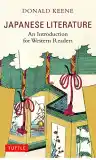
Japanese Literature: An Introduction for Western Readers
Best concise entry point to Keene's approach to Japanese literature and its major traditions.
Author guide
Donald Lawrence Keene (1922–2019) was a Columbia University professor and Japanologist whose scholarship, literary histories, biographies, memoirs, essays, anthologies, and translations introduced Japanese literature to generations of English-language readers. His major achievements include A History of Japanese Literature, studies of Chikamatsu, Noh and bunraku, biographies of Emperor Meiji, Ashikaga Yoshimasa, Watanabe Kazan, Masaoka Shiki, and Ishikawa Takuboku, and autobiographical works about his lifelong engagement with Japan. He became a Japanese citizen in 2012 and was the first non-Japanese recipient of Japan’s Order of Culture.
Catalog record updated .
Not sure where to begin?
Best concise entry point to Keene's approach to Japanese literature and its major traditions.
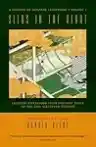
Beginning of his comprehensive history of Japanese literature and the natural starting point for the series.
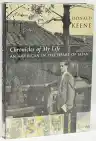
Accessible memoir explaining Keene's intellectual development and lifelong relationship with Japan.
Read in order
scholarly history · complete
Donald Keene’s four-volume history of Japanese literature from its earliest beginnings through the modern era.
Book 1 · literary history · 1993
Book 2 · literary history · 1976
Book 3 · literary history · 1984
Book 4 · literary history · 1984
Outside the series
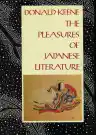
literary criticism · 1955
travel writing · 1981
literary criticism · 1988
Perhaps no one is more qualified to write about Japanese culture than Donald Keene, considered the leading interpreter of that nation's literature to the Western world. The author, editor, or translator of nearly three dozen books of…
travel and cultural studies · 1989
literary criticism · 1989
literary criticism · 1989
memoir · 1994
literary criticism · 1995
memoir · 1999
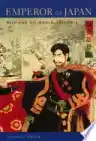
biography · 2002
"When Emperor Meiji began his rule, in 1867, Japan was a splintered empire, dominated by the shogun and the daimyos, who ruled over the country's more than 250 decentralized domains and who were, in the main, cut off from the outside…
literary criticism · 2002
biography · 2003
biography · 2006
memoir · 2008
biography · 2013
biography · 2016
essay collection · 1978
essay collection · 1978
essay collection · 1991
poetry criticism · 1991
theater and art · 1965
theater studies · 1990
edited anthology · 1955
This extensive anthology includes excerpts from plays and novels plus stories, fairy tales, and many poems.
edited anthology · 1956
drama anthology · 1961
drama anthology · 1961
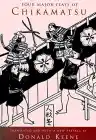
Chikamatsu Monzaemon (1653-1725) wrote some 130 plays, chiefly for the puppet theater, many of which are still performed today by puppet operators and Kabuki actors. Chikamatsu is thought to have written the first major tragedies about…
edited collection · 1961
drama anthology · 1970
poetry anthology · 2000
edited anthology · 2001
scholarly study · 1951
cultural studies · 1959
cultural studies · 1979
Donald Keene was an American-born scholar, translator, writer, and Columbia University professor who became one of the leading international interpreters of Japanese literature and culture. He taught at Columbia from 1955 and produced major scholarship and translations.
Sources: ealac.columbia.edu (opens in a new tab)magazine.columbia.edu (opens in a new tab)
Keene was born in Brooklyn, New York, and was educated at Columbia University. He became a Japanese citizen in 2012 after deciding to move permanently to Japan.
Sources: college.columbia.edu (opens in a new tab)donaldkeenecenter.jp (opens in a new tab)
In 1940, he encountered Japanese literature through Arthur Waley’s translation of The Tale of Genji, which deeply impressed him. His wartime service at the U.S. Navy Japanese Language School then gave him intensive Japanese training and led him toward a lifelong career in Japanese studies.
Sources: magazine.columbia.edu (opens in a new tab)donaldkeenecenter.jp (opens in a new tab)
Among his many honors were Japan’s Order of Culture in 2008, the first Westerner to receive it, and the Order of the Rising Sun. He also received the Japan Foundation Prize, the National Book Critics Circle Ivan Sandorf Award, and the Inoue Yasushi Prize.
Sources: news.columbia.edu (opens in a new tab)ealac.columbia.edu (opens in a new tab)
Keene helped bring Japanese literature to Western audiences through influential scholarship, translations, and teaching. His legacy continues through institutions such as Columbia’s Donald Keene Center of Japanese Culture and the Donald Keene Center Kashiwazaki, which preserve and promote Japanese literary and cultural studies.
Sources: magazine.columbia.edu (opens in a new tab)donaldkeenecenter.jp (opens in a new tab)donaldkeene.org (opens in a new tab)