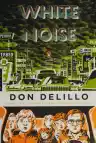
White Noise
A highly accessible entry point combining DeLillo's satire, philosophical concerns, and recurring themes of media and mortality.
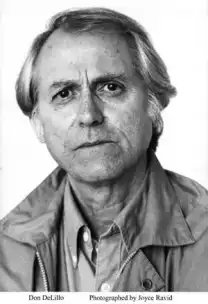
Author guide
Don DeLillo is an American writer whose fiction explores media, technology, consumer culture, violence, history, politics, mortality, and the unstable relationship between reality and representation. His work spans novels, novellas, short stories, plays, screenwriting, essays, and a co-authored pseudonymous novel.
Catalog record updated .
Not sure where to begin?
A highly accessible entry point combining DeLillo's satire, philosophical concerns, and recurring themes of media and mortality.
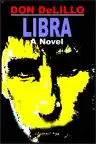
A strong introduction to his historical and political fiction.
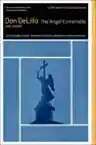
A career-spanning introduction to his short fiction.
Outside the series
novel · 1971
“DeLillo’s swift, ironic, and witty cross-country American nightmare doesn't have a dull or an unoriginal line.”—Rolling Stone The first novel by Don DeLillo, author of White Noise (winner of the National Book Award) and The Silence At…
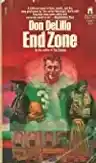
novel · 1972
"Nobody, it seems, could write better than this. No one could have a clearer vision of the micro-circuitry of post-modern life" Evening StandardA rich parody of the parallels between the jargon of football and the jargon of battle - and a…
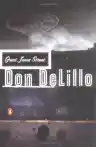
novel · 1973
From the author of the National Book Award–winning White Noise comes a novel that “reflects our era’s nightmares and hallucinations with all appropriate lurid, tawdry shades” (The Cleveland Plain Dealer) A thought-provoking exploration of…
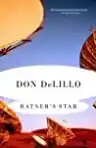
novel · 1976
"A whimsical, surrealistic excursion into the modern scientific mind." --The New Yorker One of DeLillo's first novels, Ratner's Star follows Billy, the genius adolescent, who is recruited to live in obscurity, underground, as he tries to…
novel · 1977
In Players DeLillo explores the dark side of contemporary affluence and its discontents. Pammy and Lyle Wynant are an attractive, modern couple who seem to have it all. Yet behind their "ideal" life is a lingering boredom and quiet…
novel · 1978
Moll Robbins is a journalist in a rut. But she gets wind of a very exciting story: it concerns a small piece of celluloid, a pornographic film purportedly shot in a bunker in the climactic days of Berlin's fall – with Hitler as its star.…
novel · 1980
novel · 1982
In an expatriate's world of turmoil and danger, American risk analyst James Axton learns of a ritual-murder cult in the Aegean and follows the trail to its secret meanings in the ancient city of Lahore
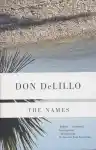
novel · 1985
White Noise is the story of Jack, his wife, Babette, and their four ultramodern offspring. They live in a college town where Jack is Professor of Hitler Studies (and conceals the fact that he does not speak a word of German), and Babette…
novel · 1988
In this powerful, eerily convincing fictional speculation on the assassination of John F. Kennedy, Don DeLillo chronicles Lee Harvey Oswald's odyssey from troubled teenager to a man of precarious stability who imagines himself an agent of…
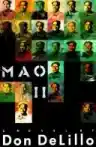
novel · 1991
"One of the most intelligent, grimly funny voices to comment on life in present-day America" (The New York Times), Don DeLillo presents an extraordinary new novel about words and images, novelists and terrorists, the mass mind and the…
novella · 1992
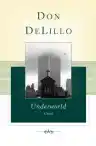
novel · 1997
While Eisenstein documented the forces of totalitarianism and Stalinism upon the faces of the Russian peoples, DeLillo offers a stunning, at times overwhelming, document of the twin forces of the Cold War and American culture, compelling…
novel · 2001
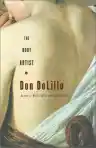
The Body Artist opens with a breakfast scene in a rambling rented house somewhere on the New England coast. We meet Lauren Hartke, the Body Artist of the title, and her husband Rey Robles, a much older, thrice-married film-director.…
novel · 2003
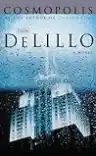
It is an April day in the year 2000 and an era is about to end -- those booming times of market optimism when the culture boiled with money and corporations seemed more vital and influential than governments. Eric Packer, a billionaire…
novel · 2007
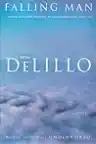
There is September 11 and then there are the days after, and finally the years. Falling Man begins in the smoke and ash of the burning towers and traces the aftermath of this global tremor in the intimate lives of a few people. First…
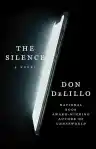
novel · 2010
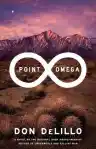
Jim Finley, a young filmmaker, attempts to convince Richard Elster, a former secret war advisor, to tell his story on film, an endeavor complicated by the arrival of Richard's daughter, Jessie, from New York and a devastating event that…
novel · 2016
Jeffrey Lockhart’s father, Ross, is a billionaire in his sixties, with a younger wife, Artis Martineau, whose health is failing. Ross is the primary investor in a remote and secret compound where death is exquisitely controlled and bodies…
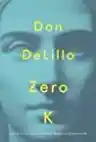
novel · 2020
From the National Book Award–winning author of Underworld, a “daring…provocative…exquisite” (The Washington Post) novel about five people gathered together in a Manhattan apartment, in the midst of a catastrophic event. It is Super Bowl…
short-story-collection · 2011
In The Angel Esmeralda, DeLillo finds the freedom to represent the wide range of human experience in contemporary America - and forces us to confront the uncomfortable shadows lurking in the background. His characters are exposed to their…
pamphlet · 1994
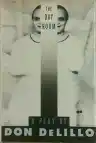
play · 1986
"The Day Room", Don DeLillo's first play, is a black comedy that explores the chaos caused when the onlooker is unsure of the status of a team of medics in a psychiatric unit. Are they really bona fide staff or patients just pretending to…
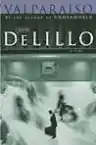
play · 1999
A man sets out on an ordinary business trip to Valparaiso, Indiana. It turns out to be a mock-heroic journey toward identity and transcendence. This is Don DeLillo's second play and it is funny, sharp, and deep-reaching. Its characters…
play · 2006
play · 2014
Don DeLillo is an American novelist, short-story writer, playwright, screenwriter, and essayist. He is regarded as one of the most celebrated writers in postwar American literature.
Sources: nationalbook.org (opens in a new tab)loc.gov (opens in a new tab)
DeLillo was born in the Bronx in 1936 to Italian immigrant parents and grew up in an Italian-American neighborhood. He studied communication arts at Fordham University, worked as an advertising copywriter, and wrote his first fiction during that period.
Sources: theparisreview.org (opens in a new tab)nationalbook.org (opens in a new tab)
DeLillo has discussed the influence of William Faulkner, James Joyce, Ernest Hemingway, and James T. Farrell’s Studs Lonigan trilogy. He particularly credited Joyce with showing him the expressive power and history contained in language.
His honors include the 1985 National Book Award for White Noise, the 1992 PEN/Faulkner Award for Mao II, the 1999 Jerusalem Prize, the 2010 PEN/Saul Bellow Award, and the 2013 Library of Congress Prize for American Fiction.
Sources: nationalbook.org (opens in a new tab)loc.gov (opens in a new tab)nationalbook.org (opens in a new tab)
DeLillo is known for fiction that examines media, technology, consumer culture, politics, art, mortality, and the instability of modern reality. Oxford Bibliographies identifies him as a major influence on American literature and a central postmodern novelist.
Sources: academic.oup.com (opens in a new tab)loc.gov (opens in a new tab)