The End of Physics: The Myth of a Unified Theory
Best starting point for Lindley's critique of theoretical physics and his science-writing approach.
Author guide
David Lindley (born 1956) is a British theoretical physicist and science writer. He holds a doctorate in astrophysics from the University of Sussex and has worked as an editor at Nature, Science, and Science News. His books explain major developments in physics through scientific history, biography, and debates among researchers.
Catalog record updated .
Not sure where to begin?
Best starting point for Lindley's critique of theoretical physics and his science-writing approach.
Accessible historical narrative about the development and philosophical implications of quantum mechanics.
Outside the series
nonfiction · 1993
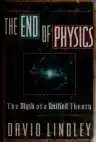
In *The End of Physics*, Lindley challenged the assumption that string theorists might achieve a unified theory. He contended that particle physics was in danger of becoming a branch of aesthetics, since these theories could be validated…
nonfiction · 2001
nonfiction · 2004
nonfiction · 2020
David Lindley is an astrophysicist and science writer. He holds a Ph.D. in astrophysics from the University of Sussex and has edited Nature, Science, and Science News.
He worked in theoretical astrophysics at Cambridge University and Fermilab before moving into science editing and writing.
Sources: hachettebookgroup.com (opens in a new tab)penguinrandomhouse.com (opens in a new tab)
He explains difficult physics through scientific history, focusing on the debates and personalities behind major ideas. His account of quantum mechanics, for example, centers on the debate among Einstein, Heisenberg, and Bohr.
Source: penguinrandomhousehighereducation.com (opens in a new tab)
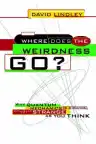
Yes. Phi Beta Kappa lists David Lindley as the 1996 recipient of its Award in Science for Where Does the Weirdness Go?
Sources: pbk.org (opens in a new tab)penguinrandomhouse.com (opens in a new tab)
He helped make advanced physics accessible to general readers while questioning theories that move beyond testable evidence. His work connects modern scientific debates with their historical and human context.
Sources: penguinrandomhousehighereducation.com (opens in a new tab)penguinrandomhousehighereducation.com (opens in a new tab)