Sum: Forty Tales from the Afterlives
The shortest and most distinctive introduction to Eagleman's literary imagination.
Author guide
David Eagleman is an American neuroscientist, author, and science communicator. His research focuses on sensory substitution, time perception, brain plasticity, synesthesia, and neurolaw. He has written literary fiction, popular neuroscience, an introductory cognitive-neuroscience textbook, and works on creativity and technology.
Catalog record updated .
Not sure where to begin?
The shortest and most distinctive introduction to Eagleman's literary imagination.
A widely accessible introduction to his popular neuroscience.
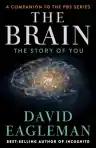
A broad overview of how the brain constructs identity and experience.
Outside the series
nonfiction_book · 2009
nonfiction_book · 2020
nonfiction_book · 2011
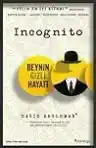
If the conscious mind—the part you consider you—is just the tip of the iceberg in the brain, what is all the rest doing? In Incognito, neuroscientist David Eagleman plumbs the depths of the subconscious brain to illuminate surprising…
nonfiction_book · 2015
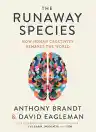
"The dramatic story of the brain's role in creating our world, our experience of it, and ourselves; the basis for a PBS television series by the bestselling David Eagleman. How does a three pound mass of biological matter locked in the…
nonfiction_book · 2017
This powerful, wide-ranging exploration of human creativity explores how individuals, organizations, and educational institutions can benefit from fostering it.
nonfiction_book · 2020
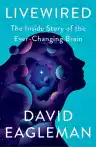
“Vivid. . . . Livewired reads wonderfully, like what a book would be if it were written by Oliver Sacks and William Gibson, sitting on Carl Sagan’s front lawn.” —The Wall Street Journal What does drug withdrawal have in common with a…
short_story_collection · 2008
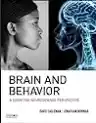
textbook · 2016
David Eagleman is an American neuroscientist, author, and science communicator who teaches at Stanford University. He is known for connecting brain science with public education, technology, and legal policy.
Sources: neuroscience.stanford.edu (opens in a new tab)eagleman.com (opens in a new tab)
His research includes sensory substitution, time perception, vision, synesthesia, brain plasticity, and the intersection of neuroscience with the legal system. He also directs the nonprofit Center for Science and Law.
Sources: neuroscience.stanford.edu (opens in a new tab)eagleman.com (opens in a new tab)
Eagleman earned a bachelor’s degree in British and American literature from Rice University and a doctorate in neuroscience from Baylor College of Medicine. His later academic career included research leadership at Baylor and teaching at Stanford.
Eagleman has identified Carl Sagan and Sagan’s television series Cosmos as major influences, especially Sagan’s ability to convey the beauty of scientific discovery. He has also credited teachers at Albuquerque Academy with encouraging intellectual curiosity and bravery.
Source: aa.edu (opens in a new tab)
He is a Guggenheim Fellow, received the Society for Neuroscience’s 2012 Science Educator Award, and won the American Medical Writers Association’s John J. McGovern Award for Excellence in Biomedical Education. His broader legacy is translating neuroscience for wide audiences through teaching, television, writing, and neurotechnology.
Sources: eagleman.com (opens in a new tab)sfn.org (opens in a new tab)eagleman.com (opens in a new tab)alumni.rice.edu (opens in a new tab)