Book Series Guide
David Brooks

Author guide

David Brooks Books in Order

David Brooks is a Canadian-born American journalist, author, and cultural commentator. He has written opinion columns for The New York Times and commentary for broadcast and literary outlets. His books examine American social classes, culture, psychology, character, moral development, and human connection.

nonfictionsocial commentarycultural criticismpsychologyself-help

Catalog record updated .

David Brooks's Newest Book

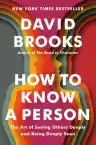
Cover of How to Know a Person: The Art of Seeing Others Deeply and Being Deeply Seen

How to Know a Person: The Art of Seeing Others Deeply and Being Deeply Seen

nonfiction · First published 2023

A practical, heartfelt guide to the art of truly knowing another person in order to foster deeper connections at home, at work, and throughout our lives—from the #1 New York Times bestselling author of The Road to Character and The Second Mountain As David Brooks observes, “There is one skill that lies at the heart of any healthy person, family, school, community organization, or the ability to see someone else deeply and make them feel seen—to accurately know another person, to let them feel valued, heard, and understood.” And yet we humans don’t do this well. All around us are people who feel invisible, unseen, misunderstood. In How to Know a Person, Brooks sets out to help us do better, posing questions that are essential for all of If you want to know a person, what kind of attention should you cast on them? What kind of conversations should you have? What parts of a person’s story should you pay attention to? Driven by his trademark sense of curiosity and his determination to grow as a person, Brooks draws from the fields of psychology and neuroscience and from the worlds of theater, philosophy, history, and education to present a welcoming, hopeful, integrated approach to human connection. How to Know a Person helps readers become more understanding and considerate toward others, and to find the joy that comes from being seen. Along the way it offers a possible remedy for a society that is riven by fragmentation, hostility, and misperception. The act of seeing another person, Brooks argues, is profoundly How can we look somebody in the eye and see something large in them, and in turn, see something larger in ourselves? How to Know a Person is for anyone searching for connection, and yearning to be understood.
Not sure where to begin?

Start with one of these

Cover of Bobos in Paradise: The New Upper Class and How They Got There

Bobos in Paradise: The New Upper Class and How They Got There

The chronological starting point and a representative introduction to Brooks's cultural commentary.

Cover of How to Know a Person: The Art of Seeing Others Deeply and Being Deeply Seen

How to Know a Person: The Art of Seeing Others Deeply and Being Deeply Seen

An accessible entry point to his later work on psychology, empathy, and human connection.

Outside the series

Bibliography by category

Novels (6)
  1. Bobos in Paradise: The New Upper Class and How They Got There

    nonfiction · 2000

    It used to be pretty easy to distinguish between the bourgeois world of capitalism and the bohemian counterculture. The bourgeois worked for corporations, wore gray, and went to church; bohemians were artists and intellectuals. But now,…

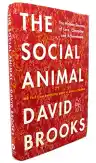
  2. The Social Animal: The Hidden Sources of Love, Character, and Achievement

    nonfiction · 2011

    #1 NEW YORK TIMES BESTSELLER With unequaled insight and brio, New York Times columnist David Brooks has long explored and explained the way we live. Now Brooks turns to the building blocks of human flourishing in a multilayered,…

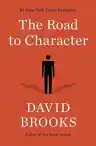
  3. The Road to Character

    nonfiction · 2015

    With the wisdom, humor, curiosity, and sharp insights that have brought millions of readers to his New York Times column and his previous bestsellers, David Brooks has consistently illuminated our daily lives in surprising and original…

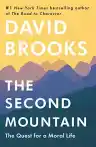
  4. The Second Mountain: The Quest for a Moral Life

    nonfiction · 2019

    #1 NEW YORK TIMES BESTSELLER • Everybody tells you to live for a cause larger than yourself, but how exactly do you do it? The author of The Road to Character explores what it takes to lead a meaningful life in a self-centered world.…

  5. How to Know a Person: The Art of Seeing Others Deeply and Being Deeply Seen

    nonfiction · 2023

    A practical, heartfelt guide to the art of truly knowing another person in order to foster deeper connections at home, at work, and throughout our lives—from the #1 New York Times bestselling author of The Road to Character and The Second…

Frequently asked questions about David Brooks

Who is David Brooks?

David Brooks is a journalist, author, and political and cultural commentator known for writing about American society, politics, character, and public life.

Sources: news.yale.edu (opens in a new tab)home.dartmouth.edu (opens in a new tab)

Where was David Brooks born and educated?

He was born in Toronto, Canada, and graduated from the University of Chicago in 1983 with a bachelor’s degree in history.

Source: home.dartmouth.edu (opens in a new tab)

How did David Brooks develop his journalism career?

Brooks began as a police reporter for Chicago’s City News Bureau, then worked at The Washington Times, The Wall Street Journal, and The Weekly Standard before becoming a New York Times opinion columnist. In 2026, Yale identified him as a staff writer at The Atlantic, a PBS NewsHour contributor, and a Yale Presidential Senior Fellow.

Sources: home.dartmouth.edu (opens in a new tab)news.yale.edu (opens in a new tab)

What is David Brooks’s political identity?

Brooks has described himself as a “moderate or conservative Democrat” after decades as a Republican. He also places himself in a conservative tradition associated with thinkers such as Edmund Burke and David Hume.

Source: theatlantic.com (opens in a new tab)

What awards and honors has David Brooks received?

He was elected a Fellow of the American Academy of Arts and Sciences in 2010 and received an honorary Doctor of Letters from Dartmouth College in 2015.

Sources: amacad.org (opens in a new tab)home.dartmouth.edu (opens in a new tab)