Book Series Guide
Daron Acemoglu

Author guide

Daron Acemoglu Books in Order

Daron Acemoglu is a Turkish-American economist and Institute Professor at the Massachusetts Institute of Technology. His research examines how institutions, technology, political power, economic development, growth, and labor markets shape prosperity and inequality. He is the co-author of influential books on institutions, liberty, democracy, and technological progress, and received the 2024 Sveriges Riksbank Prize in Economic Sciences in Memory of Alfred Nobel with Simon Johnson and James A. Robinson.

economicspolitical economyeconomic developmenteconomic historymacroeconomicslabor economicstechnology and society

Catalog record updated .

Daron Acemoglu's Newest Book

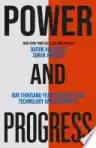
Cover of Power and Progress: Our Thousand-Year Struggle Over Technology and Prosperity

Power and Progress: Our Thousand-Year Struggle Over Technology and Prosperity

nonfiction · First published 2023

'The blueprint we need for the challenges ahead' Shoshana Zuboff 'If you are not already an addict of Daron Acemoglu and Simon Johnson's previous books, Power and Progress is guaranteed to make you one' Jared Diamond 'A breathtaking tour of the history and future of technology' Abhijit Banerjee and Esther Duflo A bold new interpretation of why technology has all too often benefited elites - and how we must reshape the path of innovation to create true shared prosperity. A thousand years of history and contemporary evidence make one thing clear. Progress is not automatic but depends on the choices we make about technology. New ways of organizing production and communication can either serve the narrow interests of an elite or become the foundation for widespread prosperity. Much of the wealth generated by agricultural advances during the European Middle Ages was captured by the Church and used to build grand cathedrals while the peasants starved. The first hundred years of industrialization in England delivered stagnant incomes for workers, while making a few people very rich. And throughout the world today, digital technologies and artificial intelligence increase inequality and undermine democracy through excessive automation, massive data collection, and intrusive surveillance. It doesn't have to be this way. Power and Progress demonstrates that the path of technology was once - and can again be - brought under control. The tremendous computing advances of the last half century can become empowering and democratizing tools, but not if all major decisions remain in the hands of a few hubristic tech leaders striving to build a society that elevates their own power and prestige. With their breakthrough economic theory and manifesto for a better society, Acemoglu and Johnson provide the understanding and the vision to reshape how we innovate and who really gains from technological advances so we can create real prosperity for all.
Not sure where to begin?

Start with one of these

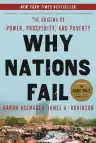
Cover of Why Nations Fail: The Origins of Power, Prosperity, and Poverty

Why Nations Fail: The Origins of Power, Prosperity, and Poverty

Accessible introduction to Acemoglu's central argument about institutions, power, and prosperity.

Cover of Power and Progress: Our Thousand-Year Struggle Over Technology and Prosperity

Power and Progress: Our Thousand-Year Struggle Over Technology and Prosperity

Strong starting point for his work on technology, automation, and the distribution of economic gains.

Outside the series

Bibliography by category

Novels (5)
  1. Why Nations Fail: The Origins of Power, Prosperity, and Poverty

    nonfiction · 2012

    Brilliant and engagingly written, Why Nations Fail answers the question that has stumped the experts for centuries: Why are some nations rich and others poor, divided by wealth and poverty, health and sickness, food and famine? Is it…

  2. The Narrow Corridor: States, Societies, and the Fate of Liberty

    nonfiction · 2019

    'As enjoyable as it is thought-provoking' Jared Diamond By the authors of the international bestseller Why Nations Fail, based on decades of research, this powerful new big-picture framework explains how some countries develop towards and…

  3. Power and Progress: Our Thousand-Year Struggle Over Technology and Prosperity

    nonfiction · 2023

    'The blueprint we need for the challenges ahead' Shoshana Zuboff 'If you are not already an addict of Daron Acemoglu and Simon Johnson's previous books, Power and Progress is guaranteed to make you one' Jared Diamond 'A breathtaking tour…

Edited works (1)
  1. Redesigning AI: Work, Democracy, and Justice in the Age of Automation

    edited_collection · 2021

    A look at how new technologies can be put to use in the creation of a more just society. Artificial Intelligence (AI) is not likely to make humans redundant. Nor will it create superintelligence anytime soon. But it will make huge…

Other (1)
  1. Principles of Economics

    textbook · 2014

Frequently asked questions about Daron Acemoglu

What is Daron Acemoglu’s background?

Daron Acemoglu was born in Istanbul, Turkey, on September 3, 1967. He has described himself and his parents as Armenian, and his MIT CV lists his nationality as U.S. and Turkish.

Sources: nobelprize.org (opens in a new tab)nobelprize.org (opens in a new tab)economics.mit.edu (opens in a new tab)

Where did Daron Acemoglu study and build his academic career?

He earned a bachelor’s degree from the University of York and master’s and doctoral degrees from the London School of Economics. He joined MIT in 1993 and became an MIT Institute Professor in 2019.

Sources: economics.mit.edu (opens in a new tab)economics.mit.edu (opens in a new tab)

What inspired Daron Acemoglu to study economics?

As a teenager in Turkey, Acemoglu became concerned about the political repression following a military coup and about unemployment, inflation, and stagnation. He began wondering whether political and economic conditions were connected, which led him toward economics.

Source: nobelprize.org (opens in a new tab)

What major awards has Daron Acemoglu received?

Acemoglu received the 2024 Sveriges Riksbank Prize in Economic Sciences in Memory of Alfred Nobel with Simon Johnson and James A. Robinson. Earlier honors include the 2005 John Bates Clark Medal and the 2016 BBVA Frontiers of Knowledge Award.

Sources: nobelprize.org (opens in a new tab)economics.mit.edu (opens in a new tab)

What is Daron Acemoglu’s scholarly legacy?

His research helped place political and economic institutions at the center of explanations for differences in prosperity across countries. He has also made influential contributions to the study of technology, automation, labor markets, inequality, and economic growth.

Sources: nobelprize.org (opens in a new tab)economics.mit.edu (opens in a new tab)amacad.org (opens in a new tab)