Inferno
The conventional entry point to Dante's central poetic work and the first cantica of the Divine Comedy.
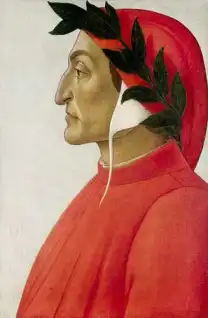
Author guide
Dante Alighieri (c. 1265–1321) was a Florentine poet whose works helped establish the Tuscan vernacular as a major literary language. His writing encompasses lyric and narrative poetry, philosophy, theology, linguistics, and political thought, culminating in the Divine Comedy.
Catalog record updated .
Not sure where to begin?
The conventional entry point to Dante's central poetic work and the first cantica of the Divine Comedy.
A shorter early work introducing Dante's lyric, autobiographical, and theological concerns.
Read in order
poetry-cycle · complete
Dante's three-part narrative poem comprising Inferno, Purgatorio, and Paradiso.
Book 1 · epic-poem · 1314
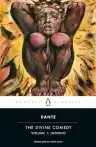
Belonging in the immortal company of the great works of literature, Dante Alighieri’s poetic masterpiece, *The Divine Comedy* (Italian: *Divina Commedia),* is a moving human drama, an unforgettable visionary journey through the infinite…
Book 2 · epic-poem · 1315
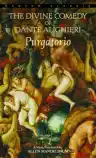
In Purgatorio Dante, having described his journey into Hell, narrates his ascent of Mount Purgatory with Virgil, as he encounters penitents who toil through physical agonies, starvation and flames to assuage their earthly vices. Only by…
Book 3 · epic-poem · 1321
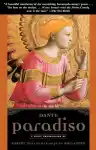
The Divine Comedy stands as one of the towering creations of world literature, and its climactic section, the Paradiso, is perhaps the most ambitious poetic attempt ever made to represent the merging of individual destiny with universal…
Outside the series
linguistic-treatise · 1304
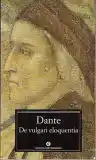
Excerpt from IL Trattato De Vulgari Eloquentia Quanta liberalita abbia trovato dovunque, quanti amici e benevoli mi siano al bisogno venuti in aiuto, sara in generale detto via via. Qui segnalero gli obblighi che ho al mio carissimo…
political-treatise · 1313
attributed-scientific-treatise · 1320
poetry-collection · 1283
attributed-poetry-sequence · 1290
attributed-poem · 1290
prosimetrum · 1294
encyclopedic-prosimetrum · 1304
letter-collection · 1304
eclogue-collection · 1319
Dante Alighieri (c. 1265–1321) was an Italian poet and scholar from Florence whose work also engaged with philosophy, theology, politics, and language. He is best known for La Commedia, later called The Divine Comedy.
Sources: poetryfoundation.org (opens in a new tab)treccani.it (opens in a new tab)
Yes. He participated in Florence’s civic government, served as one of the city’s six priors in 1300, and undertook diplomatic missions before his exile.
Sources: treccani.it (opens in a new tab)poetryfoundation.org (opens in a new tab)
Dante was aligned with the White Guelphs during Florence’s factional conflicts. After the Black Guelphs took control, he was sentenced to exile in 1302 and never returned to Florence.
Sources: treccani.it (opens in a new tab)poetryfoundation.org (opens in a new tab)
Beatrice was a central poetic and spiritual inspiration, while Virgil served as an important literary model and guide. Dante also drew on Aristotle, Boethius, Cicero, biblical texts, and Christian philosophy.
Sources: treccani.it (opens in a new tab)treccani.it (opens in a new tab)
Dante’s ambitious use of the Italian vernacular helped establish it as a major literary language. The Divine Comedy remains a landmark of world literature and a lasting reference point for modern writers and readers.
Sources: poetryfoundation.org (opens in a new tab)academic.oup.com (opens in a new tab)