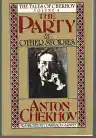
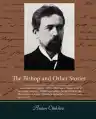
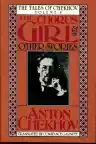
The Brothers Karamazov
A landmark translation that established Garnett's importance as an English-language translator of Dostoevsky.
Author guide
Constance Clara Garnett (1861–1946) was an English translator of Russian literature. She produced the first English translations of substantial bodies of work by Anton Chekhov and Fyodor Dostoevsky, and also translated Ivan Turgenev, Leo Tolstoy, Nikolai Gogol, Ivan Goncharov, Alexander Herzen, Alexander Ostrovsky, and Constantine Feldmann. Her career yielded more than seventy volumes, including novels, short-story collections, plays, memoirs, letters, and nonfiction. She retired from translation after publishing Three Plays by Turgenev in 1934.
Catalog record updated .
Not sure where to begin?
A landmark translation that established Garnett's importance as an English-language translator of Dostoevsky.
A major early translation and a representative entry point to Garnett's Tolstoy.
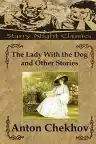
A representative collection from Garnett's pioneering translations of Chekhov.
Outside the series
translation · 1894
translation · 1894
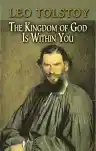
Banned in Russia, Tolstoy's The Kingdom of God Is Within You was deemed a threat to church and state. The culmination of a lifetime's thought, it espouses a commitment to Jesus's message of turning the other cheek. In a bold and original…
translation · 1894
translation · 1894
translation · 1895
translation · 1895
translation · 1895
translation · 1895
translation · 1896
translation · 1897
translation · 1897
translation · 1898
translation · 1899
translation · 1899
Ivan Sergeyevich Turgenev (1818-1883) was a great Russian novelist and playwright. His novel Fathers and Sons is regarded as one of major works of 19th-century fiction. After the standard schooling for a child of a gentleman's family, He…
translation · 1900
translation · 1899
translation · 1901
translation · 1902
translation · 1904
translation · 1908
translation · 1912
translation · 1913
translation · 1913
translation · 1914
translation · 1914
translation · 1915
Accused of political subversion as a young man, Fyodor Dostoyevsky was sentenced to four years of hard labor at a Siberian prison camp — a horrifying experience from which he developed this astounding semi-autobiographical memoir of a man…
translation · 1915
translation · 1916
translation · 1916
translation · 1916
translation · 1917
translation · 1917
Join us for an outing with the master of the short story. Written during the author's "middle period" from the mid-1880s to the mid-1890s, Chekhov shows his great understanding of human nature during times of great difficulty in ten…
translation · 1917
Contains: [Моя жизнь](https://openlibrary.org/works/OL9120843W)
translation · 1918
These short stories offer a dazzling glimpse of life in the Russian Empire and penetrating portraits of unforgettable characters. In the titular story, a lonely man has a chance meeting with a sad young woman. Learning that she is in love…
translation · 1918
translation · 1918
translation · 1919
Anton Pavlovich Chekhov (1860 - 1904) was a Russian writer of short stories and plays. Chekhov was a doctor during most of his life. He was quoted as saying, "Medicine is my lawful wife and literature is my mistress." Stories included in…
translation · 1919
translation · 1920
translation · 1920
Contains: [Моя жизнь](https://openlibrary.org/works/OL9120843W)
translation · 1920
translation · 1920
translation · 1921
translation · 1921
translation · 1922
translation · 1922
translation · 1922
translation · 1922
translation · 1922
translation · 1922
translation · 1923
translation · 1923
translation · 1923
translation · 1924
translation · 1926
translation · 1926
translation · 1926
translation · 1928
translation · 1934
Constance Garnett, born Constance Black in 1861, was an English translator of nineteenth-century Russian literature. She died in 1946.
She studied classics at Cambridge, then worked as a tutor and librarian in London. Her education and early work developed the language skills and independence that supported her later career.
Her interest deepened after she met Russian émigrés Felix Volkhovsky and Sergey Stepniak through her husband, Edward Garnett. They encouraged her to learn Russian and helped her begin translating Ivan Goncharov and Ivan Turgenev.
She translated major Russian authors for English-speaking readers, making many important works accessible in English for the first time. Her translations helped establish the English-language reception of writers such as Chekhov and Dostoevsky.
Sources: rsliterature.org (opens in a new tab)stir.ac.uk (opens in a new tab)
Her translations had a lasting influence on anglophone literary culture and helped shape the development of the modernist short story. Although later critics have questioned aspects of her style and accuracy, her work remains historically influential and widely studied.
Sources: stir.ac.uk (opens in a new tab)rsliterature.org (opens in a new tab)