Book Series Guide
Colson Whitehead

Author guide

Colson Whitehead Books in Order

Colson Whitehead was born in 1969 and raised in Manhattan. A former Village Voice writer, he is the author of novels including The Intuitionist, John Henry Days, Sag Harbor, Zone One, The Underground Railroad, The Nickel Boys, and the Harlem Trilogy. His nonfiction includes The Colossus of New York and The Noble Hustle. His work has received two Pulitzer Prizes, the National Book Award, the MacArthur Fellowship, and Guggenheim and Whiting fellowships.

literary fictionhistorical fictioncrime fictionspeculative fictionnonfictionessays

Catalog record updated .

Colson Whitehead's Newest Book

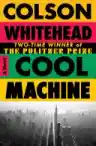
Cover of Cool Machine

Cool Machine

novel · First published 2026

1981. New York City is beginning to emerge from financial ruin and decline, energized by rampant real estate development and a Wall Street unchained by Reagan-era predatory capitalism. Up in Harlem, successful business owner/master fence Ray Carney has just been named Sterling Furniture’s Dealer of the Month. When the banks won’t give his beloved wife Elizabeth a loan for her new travel agency, however, Carney gambles on one last heist, and finds himself entangled with a legendary criminal mastermind. 1983. To some, Carney’s friend and partner in crime, Pepper, is a stone-cold sociopath. To others, a top thief with questionable people skills. Either way, he’s feeling his age in his troubled gut and his aching bones. When he takes on a bodyguard gig as a favor to Elizabeth, he’s plunged into the alien territory of the East Village art and club scene. Luckily for him, whether you’re uptown or down, everyone speaks the same language of violence—Pepper is a native speaker. 1986. Carney has always been haunted by his inability to save his cousin Freddie. Now, twenty years after Freddie’s death, he has a chance to rescue Freddie’s son from the violent forces of the city. But coming out of retirement and teaming up with Pepper again will mean risking the safety and security he’s spent decades building for his family, with only one shot to get it right. With his usual pitch-perfect prose, Whitehead paints a portrait of a city in transition, where shimmering skyscrapers rise to the heavens as displaced people huddle in abandoned tunnels below. In a dazzling display of protean imagination, Cool Machine roves all over the city, from Windows on the World to the Meadowlands, to show that in New York, and in the lives of Whitehead’s vivid characters, it’s what’s below the surface that reveals the truth.
Not sure where to begin?

Start with one of these

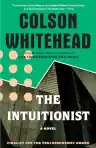
Cover of The Intuitionist

The Intuitionist

Whitehead's debut novel and an influential introduction to his genre-blending fiction.

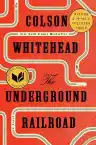
Cover of The Underground Railroad

The Underground Railroad

A standalone, Pulitzer Prize- and National Book Award-winning novel that presents his historical and speculative fiction at full scale.

Read in order

Books by series

novel trilogy · complete

The Harlem Trilogy

A completed trilogy of crime novels following Ray Carney, a Harlem furniture dealer and reluctant participant in the city's criminal underworld across the 1960s, 1970s, and 1980s.

Series guide →
  1. 1
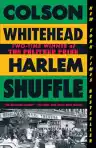
    Harlem Shuffle

    Book 1 · novel · 2021

    “Ray Carney was only slightly bent when it came to being crooked…” To his customers and neighbors on 125th street, Carney is an upstanding salesman of reasonably priced furniture, making a decent life for himself and his family. He and…

  2. 2
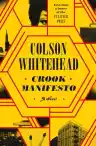
    Crook Manifesto

    Book 2 · novel · 2023

    It's 1971. Trash piles up on the streets, crime is at an all-time high, the city is careening towards bankruptcy, and a shooting war has broken out between the NYPD and the Black Liberation Army. Amidst this collective nervous breakdown…

  3. 3
    Cool Machine

    Book 3 · novel · 2026

    1981. New York City is beginning to emerge from financial ruin and decline, energized by rampant real estate development and a Wall Street unchained by Reagan-era predatory capitalism. Up in Harlem, successful business owner/master fence…

Outside the series

Bibliography by category

Novels (8)
  1. The Intuitionist

    novel · 1999

    Who tampered with the elevator? The mundane job of elevator inspection becomes a mysterious tale of intrigue. Whitehead weaves a beautiful narrative featuring an independent protagonist who elevates herself from the racism she faces in…

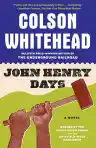
  2. John Henry Days

    novel · 2001

    In a glowing review of Colson Whitehead's first novel, The Intuitionist, the New York Times Book Review concluded, "Literary reputations may not always rise and fall as predictably as elevators, but if there's any justice in the world of…

  3. Apex Hides the Hurt

    novel · 2006

    From the MacArthur and Whiting Award--winning author of John Henry Days andThe Intuitionist comes a new, brisk, comic tour de force about identity,history, and the adhesive bandage industryWhen the citizens of Winthrop needed a new name…

  4. Sag Harbor

    novel · 2009

    NATIONAL BESTSELLER • PEN/FAULKNER AWARD FINALIST • From the two-time Pulitzer Prize-winning author of The Underground Railroad and The Nickel Boys: a hilarious and supremely original novel set in the Hamptons in the 1980s, “a…

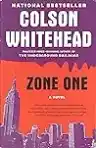
  5. Zone One

    novel · 2011

    NATIONAL BESTSELLER • From the two-time Pulitzer Prize-winning author of The Underground Railroad and The Nickel Boys: A pandemic has devastated the planet, sorting humanity into two types: the uninfected and the infected, the living and…

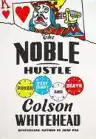
  6. The Noble Hustle: Poker, Beef Jerky & Death

    nonfiction · 2014

    "In THE NOBLE HUSTLE Colson Whitehead does for participatory journalism what he did for zombie novels in ZONE ONE: Take one literary genius, add $10,000 and a seat at the World Series of Poker, and stir. On one level, Colson Whitehead's…

  7. The Underground Railroad

    novel · 2016

    Cora is a slave on a cotton plantation in Georgia. Life is hell for all the slaves, but especially bad for Cora; an outcast even among her fellow Africans, she is coming into womanhood—where even greater pain awaits. When Caesar, a recent…

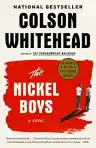
  8. The Nickel Boys

    novel · 2019

    When Elwood Curtis, a black boy growing up in 1960s Tallahassee, is unfairly sentenced to a juvenile reformatory called the Nickel Academy, he finds himself trapped in a grotesque chamber of horrors. Elwood's only salvation is his…

Essays and speeches (1)
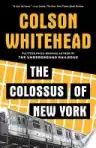
  1. The Colossus of New York

    essay collection · 2003

    In a dazzlingly original work of nonfiction, the two time Pulitzer-Prize winning author of The Underground Railroad and The Nickel Boys recreates the exuberance, the chaos, the promise, and the heartbreak of New York. Here is a literary…

Frequently asked questions about Colson Whitehead

Who is Colson Whitehead?

Colson Whitehead is an American novelist and essayist whose genre-defying writing explores race, history, class, and American life. He was born in 1969 and raised in New York City.

Sources: colsonwhitehead.com (opens in a new tab)neh.gov (opens in a new tab)

Where did Colson Whitehead go to college, and how did he begin his career?

He graduated from Harvard College and began his writing career at The Village Voice, where he reviewed television, books, and music.

Sources: colsonwhitehead.com (opens in a new tab)news.harvard.edu (opens in a new tab)

What influenced Colson Whitehead’s writing?

His early influences included science fiction, horror, Borges, and Gabriel García Márquez. At Harvard, writers such as James Joyce and Samuel Beckett broadened his ideas about storytelling.

Sources: neh.gov (opens in a new tab)news.harvard.edu (opens in a new tab)

What awards has Colson Whitehead won?

Whitehead has won two Pulitzer Prizes for Fiction, the National Book Award, a MacArthur Fellowship, a Guggenheim Fellowship, the Library of Congress Prize for American Fiction, and the 2021 National Humanities Medal.

Sources: pulitzer.org (opens in a new tab)neh.gov (opens in a new tab)loc.gov (opens in a new tab)

Why is Colson Whitehead important to American literature?

He is widely recognized for stretching and reinventing genre conventions while confronting America’s history of slavery, racism, and inequality. His work has also been honored for expanding historical events into powerful metaphors for the present.

Sources: neh.gov (opens in a new tab)loc.gov (opens in a new tab)