Book Series Guide
Chuck Klosterman

Author guide

Chuck Klosterman Books in Order

Chuck Klosterman is an American author, essayist, journalist, and cultural critic. His bibliography spans nonfiction, memoir, essay collections, two novels, and a short-story collection, with recurring interests in popular culture, rock music, sports, technology, media, ethics, and American history. He was raised in North Dakota and has written for publications including The New York Times Magazine, Esquire, Spin, GQ, The Guardian, and ESPN.

nonfictioncultural criticismessaysmemoirnovelsshort storiessports writing

Catalog record updated .

Chuck Klosterman's Newest Book

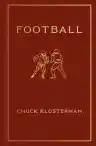
Cover of Football

Football

nonfiction · First published 2026

A hilarious but nonetheless groundbreaking contribution to the argument about which force shapes American life the most. For two kinds of readers—those who know it’s football and those who are about to find out. Chuck Klosterman—New York Times bestselling critic, journalist, and, yes, football psychotic—did not write this book to deepen your appreciation of the game. He’s not trying to help you become that person at the party, or to teach you how to make better bets, or to validate any preexisting views you might have about the sport (positive or negative). Football does, in fact, do all of those things. But not in the way such things have been done in the past, and never in a way any normal person would expect. Cultural theorists talk about hyperobjects—phenomena that bulk so large that their true dimensions are hidden in plain sight. In 2023, 93 of the 100 most-watched programs on U.S. television were NFL football games. This is not an anomaly. This is how society is best understood. Football is not merely the country’s most popular sport; it is engrained in almost everything that explains what America is, even for those who barely pay attention. Klosterman gets to the bottom of all of it. He takes us to a metaphorical projection of Texas, where the religion of six-man football merges with America’s Team [sic] and makes an inexplicable impact on a boy in North Dakota. He dissects the question of natural greatness, the paradox of gambling and war, and the timeless caricature of the uncompromising head coach. He interrogates the perfection of football’s marriage with television and the morality of acceptable risk. He even conjures an extinction-level event. If Žižek liked the SEC more than he liked cinema, if Stephen Jay Gould cared about linebackers more than he cared about dinosaurs, if Steve Martin played quarterback instead of the banjo . . . it would still be nothing like this. A century ago, Yale’s legendary coach Walter Camp wrote his unified theory of the game. He called it Football. Chuck Klosterman has given us a new Camp for the new age, rooted in a personal history he cannot escape.
Not sure where to begin?

Start with one of these

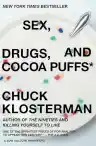
Cover of Sex, Drugs, and Cocoa Puffs: A Low Culture Manifesto

Sex, Drugs, and Cocoa Puffs: A Low Culture Manifesto

The clearest introduction to Klosterman's signature pop-culture essays and low-culture criticism.

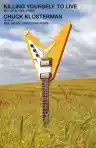
Cover of Killing Yourself to Live: 85% of a True Story

Killing Yourself to Live: 85% of a True Story

The best starting point for his memoiristic, music-centered nonfiction.

Cover of Downtown Owl: A Novel

Downtown Owl: A Novel

The starting point for his fiction and first novel.

Outside the series

Bibliography by category

Novels (6)
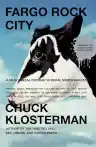
  1. Fargo Rock City: A Heavy Metal Odyssey in Rural Nörth Daköta

    nonfiction · 2001

    Empirically proving that—no matter where you are—kids wanna rock, this is Chuck Klosterman's hilrious memoir of growing up as a shameless metalhead in Wyndmere, North Dakotoa (population: 498). With a voice like Ace Frehley's guitar,…

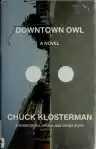
  2. Downtown Owl: A Novel

    novel · 2008

  3. The Visible Man: A Novel

    novel · 2011

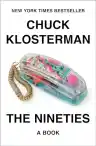
  4. The Nineties

    nonfiction · 2022

    A description and analysis of some of the more acknowledged events that happened in America between the fall of the Berlin Wall and the fall of the Twin Towers.

  5. Football

    nonfiction · 2026

    A hilarious but nonetheless groundbreaking contribution to the argument about which force shapes American life the most. For two kinds of readers—those who know it’s football and those who are about to find out. Chuck Klosterman—New York…

Nonfiction (1)
  1. Killing Yourself to Live: 85% of a True Story

    memoir · 2005

    For 6,557 miles, Chuck Klosterman thought about dying. He drove a rental car from New York to Rhode Island to Georgia to Mississippi to Iowa to Minneapolis to Fargo to Seattle, and he chased death and rock 'n' roll all the way. Within the…

Short fiction (1)
  1. Raised in Captivity: Fictional Nonfiction

    short-story-collection · 2019

    Microdoses of the straight dope, stories so true they had to be wrapped in fiction for our own protection, from the best-selling author of But What if We're Wrong? A man flying first class discovers a puma in the lavatory. A new coach of…

Essays and speeches (5)
  1. Sex, Drugs, and Cocoa Puffs: A Low Culture Manifesto

    essay-collection · 2003

    "Countless writers and artists have spoken for a generation, but no one has done it quite like Chuck Klosterman. With an exhaustive knowledge of popular culture and an almost effortless ability to spin brilliant prose out of unlikely…

  2. Chuck Klosterman IV: A Decade of Curious People and Dangerous Ideas

    essay-collection · 2006

    A bestselling pop culture guru and author of "Sex, Drugs, and Cocoa Puffs" takes a unique look at his career in journalism, in this collection of work that includes the legendary chicken McNuggets experiment and an uncensored profile of…

  3. Eating the Dinosaur

    essay-collection · 2009

    The bestselling author of "Sex, Drugs, and Cocoa Puffs" returns with an all-original nonfiction collection of questions and answers about pop culture, sports, and the meaning of reality.

  4. I Wear the Black Hat: Grappling with Villains (Real and Imagined)

    essay-collection · 2013

    The cultural critic questions how modern people understand the concept of villainy, describing how his youthful idealism gave way to an adult sympathy with notorious cultural figures to offer insight into the appeal of anti-heroes.

  5. Chuck Klosterman X: A Highly Specific, Defiantly Incomplete History of the Early 21st Century

    essay-collection · 2017

    "New York Times-bestselling author and cultural critic Chuck Klosterman compiles and contextualizes the best of his articles and essays from the past decade. Chuck Klosterman has created an incomparable body of work in books, magazines,…

Other (2)

Frequently asked questions about Chuck Klosterman

Who is Chuck Klosterman?

Chuck Klosterman is an American author, journalist, essayist, and cultural critic. He is known for writing about popular culture, music, sports, and media.

Sources: nationalbook.org (opens in a new tab)blogs.und.edu (opens in a new tab)

Where did Chuck Klosterman grow up and go to college?

He grew up in Wyndmere, North Dakota, and graduated from the University of North Dakota in 1994 with a degree in journalism and a minor in English.

Source: blogs.und.edu (opens in a new tab)

What influenced Chuck Klosterman’s writing?

His writing was shaped by growing up with heavy metal and hard rock in North Dakota. He has also cited David Foster Wallace’s combination of intellectualism and humor and Malcolm Gladwell’s clarity as influences.

Sources: newyorker.com (opens in a new tab)publishersweekly.com (opens in a new tab)

What awards or honors has Chuck Klosterman received?

His debut book, Fargo Rock City, won the ASCAP-Deems Taylor Award. In 2024, the University of North Dakota awarded him an honorary degree.

Sources: nationalbook.org (opens in a new tab)blogs.und.edu (opens in a new tab)

How has Chuck Klosterman influenced cultural criticism?

The New Yorker credits Klosterman’s earlier nonfiction with pioneering the now-familiar blend of memoir and popular-culture commentary. His candid, wide-ranging approach helped make criticism of everyday media and entertainment accessible to a broad audience.

Source: newyorker.com (opens in a new tab)