Jane Eyre
The best starting point for Brontë's major fiction and her most widely read novel.
Author guide
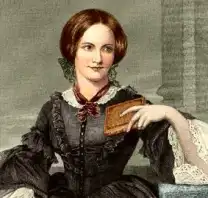
Charlotte Brontë (1816–1855) was an English novelist and poet. Her four completed novels include Jane Eyre, Shirley, Villette, and the posthumously published The Professor; she also left the unfinished novel Emma and extensive juvenile fiction, poetry, essays, and letters. With her sisters Emily and Anne, she published Poems by Currer, Ellis, and Acton Bell in 1846.
Catalog record updated .
Not sure where to begin?
The best starting point for Brontë's major fiction and her most widely read novel.
Outside the series
novel · 1847
"The orphaned Jane Eyre is no beauty but her plain appearance belies an indomitable spirit, sharp wit and great courage. As a child she suffers under cruel guardians, harsh schooling and a rigid social order but when she goes to…
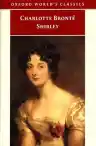
novel · 1849
Set in the industrializing England of the Napoleonic wars and Luddite revolts of 1811-12, Shirley (1849) is the story of two contrasting heroines. One is the shy Caroline Helstone, who is trapped in the oppressive atmosphere of a…
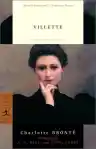
novel · 1853
With her final novel, Villette, Charlotte Brontë reached the height of her artistic power. First published in 1853, Villette is Brontë's most accomplished and deeply felt work, eclipsing even Jane Eyre in critical acclaim. Her narrator,…
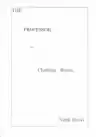
novel · 1857
The Professor (1857) was Charlotte Bront's first and least regarded novel, rejected by all publishers during her lifetime and published posthumously by her widower A. B. Nicholls. Charlotte herself defended the novel passionately. "I said…
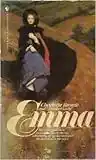
unfinished-novel · 1860
In the very last month before her death at the age of thirty-nine, at the height of her powers, Charlotte Brontë set the scene of a new novel called Emma. A child spiritually oppressed, a school run on shallow and mercenary principles, a…
nonfiction · 1930
novella-collection · 1971
short-story · 1919
short-story-collection · 1925
short-story-collection · 1978
short-story · 1981
essay-collection · 1996
juvenile-fiction · 1896
juvenile-poem · 1916
juvenile-fiction · 1918
poetry-collection · 1846
poetry-collection · 1902
poem · 1912
poetry-collection · 1913
poetry-collection · 1917
poetry-collection · 1917
poetry-collection · 1917
poetry-collection · 1918
poem · 1920
poetry-collection · 1934
letters · 1889
juvenilia-collection · 1933
juvenilia-collection · 1936
juvenilia-collection · 1987
Charlotte Brontë (1816–1855) was an English novelist and poet, and the eldest of the three Brontë sisters who became published writers. She is best known for Jane Eyre, published in 1847.
Sources: poetryfoundation.org (opens in a new tab)bronte.org.uk (opens in a new tab)
She published her work under the pen name Currer Bell. Her sisters Emily and Anne used Ellis and Acton Bell, partly because women writers faced prejudice at the time.
She worked as a teacher and governess, including teaching in Brussels, while trying to establish herself as a writer. She also encouraged her sisters to publish their work.
Sources: bronte.org.uk (opens in a new tab)bronte.org.uk (opens in a new tab)
Her childhood in Haworth, collaborative storytelling with her siblings, the books and journals she read, the surrounding moorland, and her experiences as a teacher and governess all shaped her writing. The Brontë Parsonage Museum also connects her teaching experience in Brussels with Jane Eyre.
Sources: bronte.org.uk (opens in a new tab)bronte.org.uk (opens in a new tab)
She is remembered as a pioneering woman writer whose fiction explores independence, gender, and emotional life with unusual force. Jane Eyre remains a major literary classic, and her work continues to inspire adaptations and contemporary writers.
Sources: sydney.edu.au (opens in a new tab)bronte.org.uk (opens in a new tab)