Separation of Powers: How to Preserve Liberty in Troubled Times
book · First published 2026
Author guide
Cass R. Sunstein is Robert Walmsley University Professor at Harvard Law School and founder and director of Harvard's Program on Behavioral Economics and Public Policy. He previously served as Administrator of the White House Office of Information and Regulatory Affairs. His scholarship and books address constitutional law, administrative and regulatory law, freedom of speech, risk, behavioral economics, choice architecture, public policy, democracy, and artificial intelligence.
Catalog record updated .
book · First published 2026
Not sure where to begin?
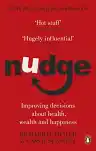
The most accessible introduction to Sunstein's behavioral economics, choice architecture, and public-policy work.
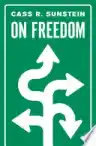
A concise entry point into his broader treatment of liberty and public life.
A foundational statement of his constitutional-law scholarship.
Outside the series
book · 1986
book · 1993
book · 1993
Sunstein focus the free-market approach to free-speech regulation with a Madisonian emphasis on discourse in a deliberative democracy. The laissez-faire framework for regulation are replaced by a two-tier framework that slots political,…
book · 1996
book · 1999
Government does not reflect rights that are somewhere out there in the universe, but defines and ensures rights itself. And that takes money, which requires taxes.
book · 1999
book · 1999
book · 2001
book · 2001
"See only what you want to see, hear only what you want to hear, read only what you want to read. In cyberspace, we already have the ability to filter out everything but what we wish to see, hear, and read. Cass Sunstein asks the…
book · 2002
book · 2002
book · 2002
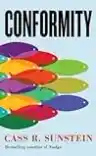
book · 2003
Dissenters are often portrayed as selfish and disloyal, but Sunstein shows that those who reject pressures imposed by others perform valuable social functions, often at their own expense.
book · 2005
What is the relationship between fear, danger, and the law? Cass Sunstein attacks the increasingly influential Precautionary Principle - the idea that regulators should take steps to protect against potential harms, even if causal chains…
book · 2005
Argues that conservatives want to restore "the Constitution in Exile," which would undermine the civil liberties of Americans and endanger environmental regulations, campaign finance laws, and the right to privacy.
book · 2006
book · 2007
Nuclear bombs in suitcases, anthrax bacilli in ventilators, tsunamis and meteors, avian flu, scorchingly hot temperatures: nightmares that were once the plot of Hollywood movies are now frighteningly real possibilities. How can we steer a…
book · 2008
GetAbstract Summary: Get the key points from this book in less than 10 minutes. In this lovely, useful book, Richard Thaler and Cass Sunstein examine choices, biases and the limits of human reasoning from a variety of perspectives. They…
book · 2009
Many of us are being misled. Claiming to know the “pals” of presidential aspirants, dark secrets about public officials, and hidden causes of the current economic crisis, those who spread rumors know precisely what they are doing. They…
book · 2013
book · 2013
In How to Humble a Wingnut, leading constitutional scholar, behavioral economist, and former Administrator of the White House Office of Information and Regulatory Affairs Cass R. Sunstein examines the unconventional impetuses behind human…
book · 2014
A collection of controversial essays touches upon an array of issues, from marriage equality and conspiracy theories to animal rights.
book · 2014
Based on a series of pathbreaking lectures given at Yale University in 2012, this powerful, thought-provoking work by national best-selling author Cass R. Sunstein combines legal theory with behavioral economics to make a fresh argument…
book · 2014
Franklin's algebra -- Inside government -- Human consequences, or the real world of cost-benefit analysis -- Dignity, financial meltdown, and other nonquantifiable things -- Valuing life, 1: problems -- Valuing life, 2: solutions -- The…
book · 2015
Cass R. Sunstein is at the forefront of developing public policy to encourage people to make better decisions. In Choosing Not to Choose he presents his most complete argument for how we should understand the value of choice, and when and…
book · 2015
"Since America's founding, hundreds of U.S. Supreme Court Justices have issued a vast number of decisions on a staggeringly wide variety of subjects. Yet as the eminent legal scholar, Cass R. Sunstein shows, constitutional law is…
book · 2016
book · 2017
“With insight, wisdom, affection, and concern, Sunstein has written the story of impeachment every citizen needs to know. This is a remarkable, essential book.” —Doris Kearns Goodwin No one is above the law, not even the president.…
book · 2018
book · 2019
book · 2019
From New York Times bestselling author Cass Sunstein, a brisk, provocative book that shows what freedom really means—and requires—today In this pathbreaking book, New York Times bestselling author Cass Sunstein asks us to rethink freedom.…
book · 2019
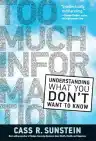
book · 2020
book · 2020
How information can make us happy or miserable, and why we sometimes avoid it and sometimes seek it out. How much information is too much? Do we need to know how many calories are in the giant vat of popcorn that we bought on our way into…
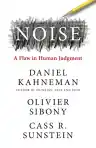
book · 2021
Show how noise produces errors in many fields, including in medicine, law, public health, economic forecasting, forensic science, child protection, creative strategy, performance review and hiring
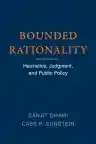
book · 2022
Two leaders in the field explore the foundations of bounded rationality and its effects on choices by individuals, firms, and the government. Bounded rationality recognizes that human behavior departs from the perfect rationality assumed…
book · 2023
book · 2024
This “smart and fun read, and a valuable way to revitalize your life” (Walter Isaacson) deftly explains how disrupting our well-worn routines, both good and bad, can rejuvenate and reset our brains for the better. Have you ever noticed…
book · 2024
In this concise, pragmatic guide, Cass Sunstein presents a range of scenarios involving students, professors, and administrators, and demonstrates how to distinguish reasonable restrictions from impermissible infringement on free speech.…
book · 2025
book · 2025
A much-needed defense of liberalism—what it is, why it is under threat, and why we need it more than ever—from one of our most important political thinkers today. More than at any time since World War II, liberalism is under pressure,…
Cass R. Sunstein is an American legal scholar and author who serves as Robert Walmsley University Professor at Harvard. He is known for influential work in constitutional law, administrative law, behavioral economics, and public policy.
Sources: hls.harvard.edu (opens in a new tab)holbergprize.org (opens in a new tab)
Sunstein was born in 1954. He graduated from Harvard College in 1975 and Harvard Law School in 1978, later clerking for Massachusetts Supreme Judicial Court Justice Benjamin Kaplan and U.S. Supreme Court Justice Thurgood Marshall.
Sources: holbergprize.org (opens in a new tab)hls.harvard.edu (opens in a new tab)
He taught at the University of Chicago before joining Harvard Law School, where he founded and directs the Program on Behavioral Economics and Public Policy. From 2009 to 2012, he served as Administrator of the White House Office of Information and Regulatory Affairs.
Sources: hls.harvard.edu (opens in a new tab)obamawhitehouse.archives.gov (opens in a new tab)
His approach draws especially on cognitive psychology and behavioral economics, alongside legal theory and political science. With Richard Thaler and Christine Jolls, he helped establish behavioral law and economics as an interdisciplinary field focused on how people actually make decisions.
Sources: hls.harvard.edu (opens in a new tab)hls.harvard.edu (opens in a new tab)
Sunstein received the American Philosophical Society’s Henry M. Phillips Prize in Jurisprudence in 2007 and the Holberg Prize in 2018. His lasting legacy is the integration of behavioral science with legal scholarship and public policy, with broad influence on academic research and practical regulation.
Sources: amphilsoc.org (opens in a new tab)holbergprize.org (opens in a new tab)