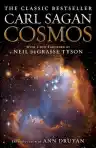
Cosmos
The broadest and most accessible introduction to Sagan's scientific worldview and cosmic perspective.

Author guide
Carl Edward Sagan (1934–1996) was an American astronomer and planetary scientist whose research addressed planetary atmospheres, the origin of life, extraterrestrial intelligence, and nuclear winter. He became one of the most influential science communicators of the twentieth century through books including The Dragons of Eden, Cosmos, Contact, Pale Blue Dot, and The Demon-Haunted World, as well as the television series Cosmos: A Personal Voyage.
Catalog record updated .
Not sure where to begin?
The broadest and most accessible introduction to Sagan's scientific worldview and cosmic perspective.
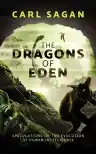
An award-winning exploration of human intelligence, evolution, and the brain.
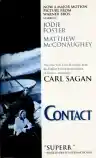
Sagan's sole novel and a readable introduction to his ideas about extraterrestrial intelligence.
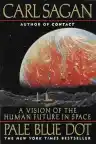
A reflective synthesis of space exploration, planetary responsibility, and humanity's future.
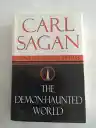
A foundational guide to scientific skepticism and critical thinking.
Outside the series
nonfiction · 1966
nonfiction · 1966
nonfiction · 1972
nonfiction · 1973
I came across this when i was watching cosmos by Neil. Its mentioned as the book which was given to him by the legend himself, sagan.
nonfiction · 1975
nonfiction · 1977
Presents an overview of human evolution and discusses human and animal intelligence, the mechanisms of the brain, memory, sleep, myths and legends about evolution, and the possibility of intelligent extraterrestrial life.
nonfiction · 1978
In 1977, two extraodinary spacecraft called Voyager were launched to the stars. Affixed to each Voyager craft was a gold-coated copped phonograph record as a message to possible extra-terrestrial civilizations that might encounter the…
nonfiction · 1978
nonfiction · 1980
This book is about science in its broadest human context, how science and civilization grew up together. It is the story of our long journey of discovery and the forces and individuals who helped to shape modern science, including…
nonfiction · 1984
nonfiction · 1984
“The scientific discoveries described in this book may turn out . . . to have been the most important research findings in the long history of science.” —Lewis Thomas, from the Foreward
novel · 1985
In December, 1999, a multinational team journeys out to the stars, to the most awesome encounter in human history. Who -- or what -- is out there? In Cosmos, Carl Sagan explained the universe. In Contact, he predicts its future -- and our…
nonfiction · 1985
nonfiction · 1990
Discusses the theory of nuclear winter, its predicted consequences, and what can be done to prevent a war.
nonfiction · 1992
NATIONAL BESTSELLER • “Exciting and provocative . . . A tour de force of a book that begs to be seen as well as to be read.”—The Washington Post Book World World renowned scientist Carl Sagan and acclaimed author Ann Druyan have written a…
nonfiction · 1994
In Cosmos, the late astronomer Carl Sagan cast his gaze over the magnificent mystery of the Universe and made it accessible to millions of people around the world. Now in this stunning sequel, Carl Sagan completes his revolutionary…
nonfiction · 1995
A prescient warning of a future we now inhabit, where fake news stories and Internet conspiracy theories play to a disaffected American populace “A glorious book . . . A spirited defense of science . . . From the first page to the last,…
lecture-collection · 1970
essay-collection · 1973
essay-collection · 1973
essay-collection · 1979
A fascinating book on the joys of discovering how the world works, by the Pulitzer Prize–winning author of Cosmos and Shadows of Forgotten Ancestors. “Magnificent . . . Delightful . . . A masterpiece. A message of tremendous hope for…
essay-collection · 1997
essay-collection · 2006
From the Publisher: Carl Sagan's prophetic vision of the tragic resurgence of fundamentalism and the hope-filled potential of the next great development in human spirituality. The late great astronomer and astrophysicist describes his…
edited-volume · 1971
edited-volume · 1971
edited-volume · 1972
edited-volume · 1973
edited-volume · 1977
technical-report · 1961
technical-report · 1979
Carl Sagan was an American astronomer, astrobiologist, educator, author, and science communicator who helped bridge academic science and popular culture.
Source: loc.gov (opens in a new tab)
He was born on November 9, 1934, in Brooklyn, New York.
Sagan taught at Harvard before joining Cornell in 1968, where he became a full professor. He also contributed to NASA’s Mariner, Viking, Voyager, and Galileo missions.
His childhood science-fiction reading and visit to the 1939 New York World’s Fair helped shape his fascination with astronomy and the possibilities of science.
Source: loc.gov (opens in a new tab)
He won the 1978 Pulitzer Prize for General Nonfiction for The Dragons of Eden. His legacy also includes co-founding The Planetary Society, which continues to advance space science and exploration.
Sources: pulitzer.org (opens in a new tab)planetary.org (opens in a new tab)