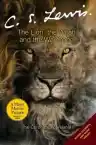
The Lion, the Witch and the Wardrobe
The natural entry point to The Chronicles of Narnia and Lewis's imaginative fiction.
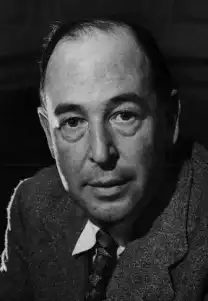
Author guide
Clive Staples Lewis (1898–1963) was an Irish-born British writer and scholar of medieval and Renaissance literature. He taught at Oxford and Cambridge and wrote influential fiction, literary criticism, Christian apologetics, theology, memoir, poetry, and correspondence. His best-known works include The Chronicles of Narnia, The Space Trilogy, The Screwtape Letters, Mere Christianity, and The Problem of Pain.
Catalog record updated .
Not sure where to begin?
The natural entry point to The Chronicles of Narnia and Lewis's imaginative fiction.
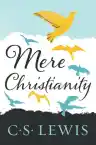
The clearest accessible introduction to Lewis's Christian apologetics.
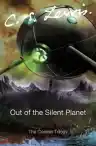
The opening novel of The Space Trilogy and a strong entry to Lewis's science fiction.
Read in order
novel-trilogy · complete
A science-fiction trilogy following the philologist Elwin Ransom across Earth, Mars, and Venus.
Book 1 · science-fiction-novel · 1938
The first book in Lewis's Space Trilogy, *Out of the Silent Planet* tells the story of Dr. Elwin Ransom, a philologist who likes to explore the English countryside on foot. Seeking out a place to stay the night, he ends up at the estate…
Book 2 · science-fiction-novel · 1943
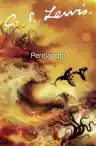
Dr. Ransom is ordered to Perelandra by the supreme being, and there he finds a Garden of Eden.
Book 3 · science-fiction-novel · 1945
children's-fantasy-series · complete
Seven children's fantasy novels set primarily in the magical world of Narnia.
Book 1 · children's-fantasy-novel · 1950
Four adventurous siblings—Peter, Susan, Edmund, and Lucy Pevensie—step through a wardrobe door and into the land of Narnia, a land frozen in eternal winter and enslaved by the power of the White Witch. But when almost all hope is lost,…
Book 2 · children's-fantasy-novel · 1951
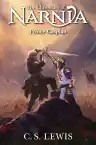
Narnia . . . where animals talk . . . where trees walk . . . where a battle is about to begin. A prince denied his rightful throne gathers an army in a desperate attempt to rid his land of a false king. But in the end, it is a battle of…
Book 3 · children's-fantasy-novel · 1952
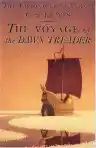
Lucy, Edmund, and their cousin travel back to Narnia through a painting where they board a ship named "The Dawn Treader." They find King Caspian and a mouse on the ship and they find mystical creatures and go on a mission that will decide…
Book 4 · children's-fantasy-novel · 1953
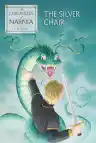
Jill and Eustace must rescue the Prince from the evil Witch.
Book 5 · children's-fantasy-novel · 1954
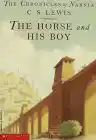
The Horse and his Boy is a stirring and dramatic fantasy story that finds a young boy named Shasta on the run from his homeland with the talking horse, Bree. When the pair discover a deadly plot by the Calormen people to conquer the land…
Book 6 · children's-fantasy-novel · 1955
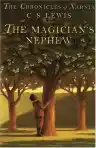
Digory let out a scream. “What's happened to Polly?” “Congratulate me, my dear boy,” said Uncle Andrew, rubbing his hands. “My experiment has succeeded. The little girl's gone – vanished – right out of this world.” When Digory and Polly…
Book 7 · children's-fantasy-novel · 1956
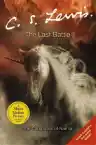
The conclusion of the saga that began with The Magician's Nephew
Outside the series
allegorical-novel · 1933
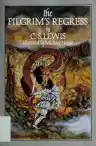
One of Lewis's earlier works, this book is a similar parable to Bunyan's "The Pilgrim's Progress"; while "Pilgrim's Progress" describes the journey of a non-Christian coming into Christianity, "The Pilgrim's Regress" describes the journey…
satirical-epistolary-fiction · 1942
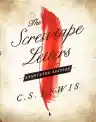
This profound and striking narrative takes the form of a series of letters from Screwtape, a devil high in the Infernal Civil Service, to his nephew Wormwood, a junior colleague engaged in his first mission on earth, trying to secure the…
philosophical-nonfiction · 1943
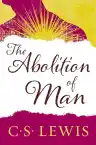
C. S. Lewis sets out to persuade his audience of the importance and relevance of universal values such as courage and honor in contemporary society.
allegorical-fiction · 1945
C.S. Lewis’s dazzling allegory about heaven and hell—and the chasm fixed between them—is one of his most brilliantly imaginative tales, as he takes issue with the ideas in William Blake’s ‘The Marriage of Heaven and Hell’. In a dream, the…
mythic-novel · 1956
theological-nonfiction · 1958
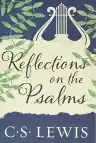
A repackaged edition of the revered author’s moving theological work in which he considers the most poetic portions from Scripture and what they tell us about God, the Bible, and faith. In this wise and enlightening book, C. S. Lewis—the…
theological-nonfiction · 1960
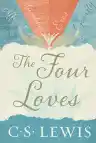
The revered author's classic work that examines the four types of human love: affection, friendship, erotic love, and the love of God. In this work Lewis examines four varieties of love, as approached from the Greek language: storge, the…
literary-criticism · 1936
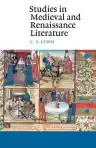
literary-criticism · 1942
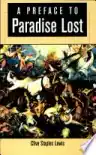
"Considering the story within the context of the Western literary tradition, Lewis offers invaluable insights into Paradise Lost and the nature of literature itself, unveiling the poem’s beauty and its wisdom. Lewis explains and defends…
literary-history · 1954
Discusses the literary development of literature in the sixteenth century without a discussion of drama.
memoir · 1955
A repackaged edition of the revered author’s spiritual memoir, in which he recounts the story of his divine journey and eventual conversion to Christianity. C. S. Lewis—the great British writer, scholar, lay theologian, broadcaster,…
linguistic-literary-criticism · 1960
literary-criticism · 1961
Why do we read literature and how do we judge it? C. S. Lewis's classic An Experiment in Criticism springs from the conviction that literature exists for the joy of the reader and that books should be judged by the kind of reading they…
memoir · 1961
Written after his wife's tragic death as a way of surviving the "mad midnight moment," A Grief Observed is C.S. Lewis's honest reflection on the fundamental issues of life, death, and faith in the midst of loss. This work contains his…
literary-criticism · 1964
Hailed as "the final memorial to the work of a great scholar and teacher and a wise and noble mind," this work paints a lucid picture of the medieval world view, as historical and cultural background to the literature of the Middle Ages…
literary-criticism-collection · 1966
This entertaining and learned volume contains book reviews, lectures, and hard to find articles from the late C. S. Lewis, whose constant aim was to show the twentieth century reader how to read and how to understand old books and…
literary-criticism-collection · 1967
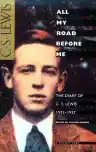
diary · 1991
The diary of the famous scholar and author chronicles his undergraduate career at Oxford, his marriage to a woman twenty-six years his senior, and his eventual conversion to Christianity.
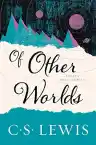
essay-and-short-story-collection · 1966
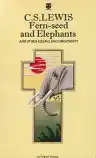
The contemporary writer discusses elements in fairy tales and science fiction, often overlooked by critics and presents three selections from his own works. Bibliogs.
short-story-collection · 1977
A compilation of all of Lewis's shorter fiction including several science fiction tales.
essay-collection · 1939
Christian-essay-collection · 1949
essay-collection · 1960
A repackaged edition of the revered author’s anthology of satirical yet serious essays on evil. In these spirited essays, C. S. Lewis—the great British writer, scholar, lay theologian, broadcaster, Christian apologist, and bestselling…
essay-collection · 1962
essay-and-fiction-collection · 1965
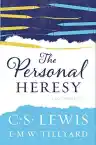
theological-essay-collection · 1967
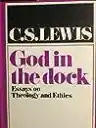
This collection contains fourteen of Lewis's theological papers on subjects such as Christianity and literature, Christianity and culture, ethics, futility, church music, modern theology and biblical criticism, the Psalms, and petitionary…
theological-essay-collection · 1970
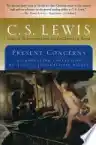
"Lewis struck me as the most thoroughly converted man I ever met," observes Walter Hooper in the preface to this collection of essays by C.S. Lewis. "His whole vision of life was such that the natural and the supernatural seemed…
theological-essay-collection · 1975
C. S. (Clive Staples) Lewis, "Jack" to his intimates, was born on November 29, 1898 in Belfast, Ireland. His mother died when he was 10 years old and his lawyer father allowed Lewis and his brother Warren extensive freedom. The pair were…
essay-collection · 1986
"Where God gives the gift, the 'foolishness of preaching' is still mighty. But best of all is a team of two: one to deliver the preliminary intellectual barrage, and the other to follow up with a direct attack on the heart." An inveterate…
theological-essay-collection · 1996
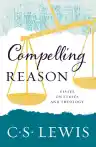
C.S. Lewis wrote Compelling Reason. It is a collection of essays on ethics and Christian theology. Lewis defends the idea of real right and wrong that exists outside personal opinion. He attacks modern subjectivism that turns values into…
essay-and-review-collection · 2013
children's-fiction-collection · 1985
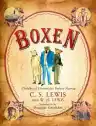
A collection of maps, histories, sketches, and stories created by C.S. Lewis as a child to describe his private fantasy world, known as Animal-Land or Boxen. A scholarly introduction explains the stories in the context of Lewis's life.
poetry · 1919
C. S. Lewis, one of literature's finest storytellers, began as a poet and selected St. Peter's First Epistle as the subject of his first book of poetry. Since this book's themes aren't particularly spiritual, it's surprising that he went…
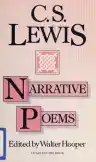
narrative-poem · 1926
poetry-collection · 1964
poetry-collection · 1969
co-authored-literary-criticism · 1939
co-authored-literary-criticism · 1948
theology · 1940
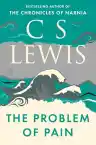
Why must humanity suffer? In this elegant and thoughtful work, C. S. Lewis questions the pain and suffering that occur everyday and how this contrasts with the notion of a God that is both omnipotent and good. An answer to this critical…
Christian-apologetics · 1942
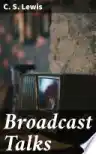
"Broadcast Talks" by C. S. Lewis. Published by Good Press. Good Press publishes a wide range of titles that encompasses every genre. From well-known classics & literary fiction and non-fiction to forgotten−or yet undiscovered gems−of…
Christian-apologetics · 1943
Christian-apologetics · 1944
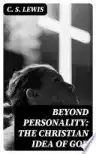
DigiCat Publishing presents to you this special edition of "Beyond Personality: The Christian Idea of God" by C. S. Lewis. DigiCat Publishing considers every written word to be a legacy of humankind. Every DigiCat book has been carefully…
Christian-apologetics · 1952
A forceful and accessible discussion of Christian belief that has become one of the most popular introductions to Christianity and one of the most popular of Lewis's books. Uncovers common ground upon which all Christians can stand…
epistolary-theology · 1964
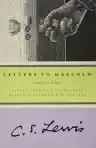
In the form of warm, relaxed letters to a close friend, Lewis meditates on many puzzling questions concerning the intimate dialogue between man and God. Lewis also considers practical and metaphysical aspects of private prayer,…
correspondence · 1966
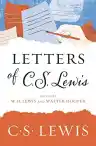
A repackaged edition of the revered author’s collection of personal letters—a curated selection of the best of his correspondence with family, friends, and fans—and a short biography by his brother Warren Lewis. Letters of C. S. Lewis…
correspondence · 1988
correspondence · 1987
correspondence · 2000
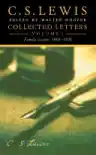
This collection brings together the best of C.S. Lewis’s letters – some published for the first time. Arranged in chronological order, this is the first volume covering Family Letters: 1905-1931.
correspondence · 2004
correspondence · 2006
Clive Staples Lewis (1898–1963) was a Belfast-born writer, literary scholar, poet, and Christian apologist. He became known for both imaginative fiction and influential religious writing.
Sources: westminster-abbey.org (opens in a new tab)cam.ac.uk (opens in a new tab)
Lewis was born in Belfast in 1898, when Ireland was part of the United Kingdom, and is commonly described as Irish-born British. He spent most of his adult life and academic career in England.
Sources: westminster-abbey.org (opens in a new tab)cslewis.com (opens in a new tab)
Lewis was a Fellow and Tutor in English Literature at Magdalen College, Oxford, from 1925 to 1954. He then became the first Professor of Medieval and Renaissance Literature at Cambridge, a position he held until 1963.
Sources: magd.ox.ac.uk (opens in a new tab)cam.ac.uk (opens in a new tab)
Lewis drew on Norse, Greek, and Celtic mythology, medieval and early modern literature, and Christian thought. His friendship with J. R. R. Tolkien and other members of the Oxford literary group known as the Inklings also influenced his intellectual development.
Sources: cam.ac.uk (opens in a new tab)cslewiswordsandworlds.magd.ox.ac.uk (opens in a new tab)
Lewis’s legacy spans children’s fantasy, literary scholarship, and Christian apologetics. His work received major recognition when The Last Battle won the Carnegie Medal, and Westminster Abbey commemorated him with a memorial stone in Poets’ Corner in 2013.
Sources: cslewis.com (opens in a new tab)westminster-abbey.org (opens in a new tab)