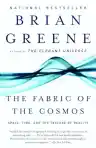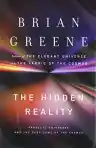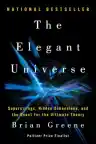
The Elegant Universe: Superstrings, Hidden Dimensions, and the Quest for the Ultimate Theory
Best starting point for Greene's core popular-science work and introduction to string theory.

Author guide
Brian Greene is a professor of physics and mathematics at Columbia University and director of its Center for Theoretical Physics. He is known for research in superstring theory and for translating complex ideas about space, time, cosmology, and reality for general audiences. His books include bestselling popular-science works, a science-fiction novella for younger readers, and theatrical works developed with the World Science Festival, which he co-founded with Tracy Day.
Catalog record updated .
Not sure where to begin?
Best starting point for Greene's core popular-science work and introduction to string theory.

Accessible fictional starting point for younger readers.
Outside the series
nonfiction · 1999
Brian Greene, one of the world's leading string theorists, peels away layers of mystery to reveal a universe that consists of eleven dimensions, where the fabric of space tears and repairs itself, and all matter―from the smallest quarks…
nonfiction · 2003
A foremost string theorist discusses such topics as Newton's perspectives on space, Einstein's fusion of space and time, and recent breakthroughs on multidimensional universe theory.
novella · 2008
A futuristic reimaging of the classic Greek myth, as a boy ventures through deep space and challenges the awesome power of black holes. The beauty of the book lies in the images, provided by NASA and the Hubble Space telescope, and…
nonfiction · 2020
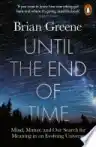
From the world-renowned physicist and bestselling author of The Elegant Universe and The Fabric of the Cosmos, a captivating exploration of deep time and humanity's search for purpose In both time and space, the cosmos is astoundingly…
play · 2017
Brian Greene is a theoretical physicist, mathematician, and science communicator. He is a professor of physics and mathematics at Columbia University and directs its Center for Theoretical Physics.
Greene graduated from Harvard in 1984 and earned a Ph.D. from Oxford in 1987 as a Rhodes Scholar. He later became a professor in Columbia University’s physics and mathematics departments.
Sources: pbs.org (opens in a new tab)physics.columbia.edu (opens in a new tab)
His enthusiasm for mathematics began in childhood, and a Columbia mentor helped him pursue advanced study while he was still in school. His father was a vaudeville entertainer, composer, and voice coach, and Greene’s own theater experience helped shape his later skill as a public science communicator.
Sources: thecrimson.com (opens in a new tab)time.com (opens in a new tab)
Greene’s science programs won a Peabody Award and the French Prix Jules Verne Award. In 2022, Columbia awarded him the Michael Pupin Medal for contributions to mathematics, theoretical physics, and cosmology.
Sources: briangreene.org (opens in a new tab)physics.columbia.edu (opens in a new tab)
Greene helped bring advanced ideas in string theory and cosmology to broad audiences through public lectures, television, and educational projects. He also co-founded the World Science Festival, whose mission is to make science accessible and culturally prominent.
Sources: physics.columbia.edu (opens in a new tab)worldsciencefestival.com (opens in a new tab)