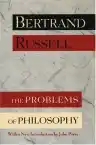
The Problems of Philosophy
Clear, concise introduction to Russell’s epistemology and analytic method.
Author guide
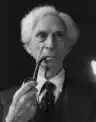
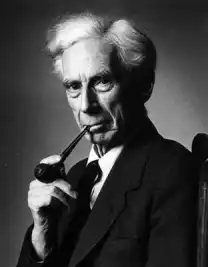
Bertrand Russell (1872–1970) was a British philosopher, logician, mathematician, historian, social critic, and public intellectual. A founder of analytic philosophy and co-author of Principia Mathematica, he wrote influential works on logic, mathematics, epistemology, metaphysics, ethics, education, politics, war, religion, and nuclear disarmament. He received the 1950 Nobel Prize in Literature.
Catalog record updated .
Not sure where to begin?
Clear, concise introduction to Russell’s epistemology and analytic method.
Accessible survey of the philosophical tradition and Russell’s interpretive voice.
Representative collection of Russell’s writing on religion, ethics, and public life.
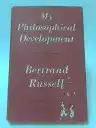
Personal account of Russell’s intellectual and political development.
Outside the series
memoir · 1959
Russell gives an account of his philosophical development. He describes his Hegelian period and includes hitherto unpublished notes for a Hegelian philosophy of science. He deals next with the two-fold revolution involved with his…
memoir · 1967
short_story_collection · 1953
short_story_collection · 1954
short_story_collection · 1972
essay_collection · 1910
essay_collection · 1915
pamphlet · 1916
In dark days, men need a clear faith and a well-grounded hope; and as the outcome of these, the calm courage which takes no account of hardships by the way. The times through which we are passing have afforded to many of us a confirmation…
essay_collection · 1918
CONTENTS: Preface - 1 Mysticism and Logic - 3 The Place of Science in a Liberal Education - 24 A Free Man's Worship - 33 The Study of Mathematics - 41 Mathematics and the Metaphysicians - 52 On Scientific Method in Philosophy - 68 The…
essay_collection · 1928
essay_collection · 1935
essay_collection · 1941
essay_collection · 1950
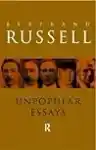
A classic collection of Bertrand Russell's more controversial works, reaffirming his staunch liberal values, *Unpopular Essays* is one of Russell's most characteristic and self-revealing books. Written to "combat... the growth in…
essay_collection · 1951
essay_collection · 1956
essay_collection · 1956
'I have come to think that one of the main causes of trouble in the world is dogmatic and fanatical belief in some doctrine for which there is no adequate evidence.' - Bertrand Russell, Portraits from Memory Portraits from Memory is one…
essay_collection · 1957
essay_collection · 1957
essay_collection · 1959
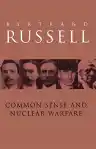
Available for the first time in many years, Commonsense and Nuclear Warfare presents Russell's keen insights into the threat of nuclear conflict, and his argument that the only way to end this threat is to end war itself. Written at the…
essay_collection · 1961
Reflects on the books and writings that influenced the author's life, including fiction, essays on politics and education, divertissements and parables. This book offers insight into the range of interests and depth of conviction of one…
essay_collection · 1961
essay_collection · 1963
essay_collection · 1967
essay_collection · 1973
essay_collection · 1973
essay_collection · 1975
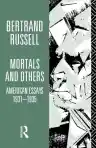
From 1931 to 1935 Bertrand Russell was one of the regular contributors to the literary pages of the New York American, together with other distinguished authors such as Aldous Huxley and Vita Sackville-West. Mortals and Others presents a…
pamphlet · 1910
pamphlet · 1912
pamphlet · 1914
pamphlet · 1914
pamphlet · 1915
pamphlet · 1915
pamphlet · 1916
pamphlet · 1916
pamphlet · 1916
pamphlet · 1916
pamphlet · 1916
pamphlet · 1919
pamphlet · 1922
pamphlet · 1922
pamphlet · 1924
pamphlet · 1927
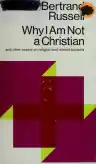
'Why I am not a Christian' is considered one of the most blasphemous philosophical documents ever written, and at a time when we have faith schools and wars over religious beliefs, its message today couldn't be more relevant. If religion…
pamphlet · 1929
pamphlet · 1932
pamphlet · 1936
pamphlet · 1937
pamphlet · 1942
pamphlet · 1943
pamphlet · 1943
pamphlet · 1944
pamphlet · 1946
pamphlet · 1947
pamphlet · 1947
pamphlet · 1948
pamphlet · 1952
pamphlet · 1952
pamphlet · 1953
pamphlet · 1953
pamphlet · 1954
pamphlet · 1955
pamphlet · 1955
pamphlet · 1958
pamphlet · 1960
pamphlet · 1960
pamphlet · 1961
pamphlet · 1961
pamphlet · 1962
pamphlet · 1964
pamphlet · 1964
pamphlet · 1964
pamphlet · 1965
pamphlet · 1965
pamphlet · 1965
pamphlet · 1965
pamphlet · 1965
pamphlet · 1965
coauthored_book · 1910
coauthored_book · 1923
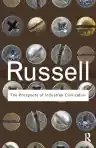
First published in 1923, The Prospects of Industrial Civilization is considered the most ambitious of Bertrand Russell's works on modern society. It offers a rare glimpse into often-ignored subtleties of his political thought and in it he…
coauthored_statement · 1955
book · 1897
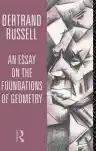
This text provides both an insight into the foundations of Russell's philosophical thinking and an introduction to the philosophy of mathematics and logic. It explores the various concepts of geometry and their philosophical implications,…
book · 1903
book · 1912
Bertrand Russell was one of the greatest logicians since Aristotle, and one of the most important philosophers of the past two hundred years. The Problems of Philosophy, one of the most popular works in Russell's prolific collection of…
book · 1916
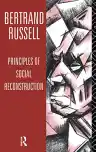
Originally entitled Why Men Fight, this work is generally seen as the fullest expression of Russell's political philosophy. The ideas laid out here greatly contributed to Russell's fame as a social critic and anti-war activist.
book · 1917
book · 1918
THE attempt to conceive imaginatively a better ordering of human society than the destructive and cruel chaos in which mankind has hitherto existed is by no means modern: it is at least as old as Plato, whose ``Republic'' set the model…
book · 1919
Unlike some other reproductions of classic texts (1) We have not used OCR(Optical Character Recognition), as this leads to bad quality books with introduced typos. (2) In books where there are images such as portraits, maps, sketches etc…
book · 1920
The Russian Revolution is one of the great heroic events of the world's history. It is natural to compare it to the French Revolution, but it is in fact something of even more importance. It does more to change daily life and the…
book · 1921
book · 1922
Written at a time when China was largely regarded by the West as backward, The Problem of China sees Russell rise above the prejudices of his era and assess China's past, present and future. This Routledge Classics edition includes a new…
book · 1923
chapbook · 1923
book · 1924
book · 1925
book · 1925
book · 1926
book · 1927
book · 1927
In this controversial book first published in 1927, Bertrand Russell argues that humanity demands consideration solely as the instrument by which we acquire knowledge of the universe. From our inner-world to the outer-world, from our…
book · 1929
Marriage & Morals is the great book by great Philosopher of 20th c Bertrand Russell
book · 1934
book · 1935
book · 1936
book · 1938
book · 1940
book · 1945
NOBEL LETTERATURA 1950 Vero e proprio capolavoro di sintesi e di chiarezza espositiva, la Storia della filosofia occidentale si offre come un quadro completo dello sviluppo del pensiero filosofico, all’interno del quale i singoli…
book · 1948
Human Knowledge is Bertrand Russell's examination of the relation between individual experience and the general body of scientific knowledge. It presents an examination of the problems of an empiricist epistemology. --From publisher's…
book · 1949
From Ancient Greek philosophy to the French Revolution to the modern welfare state, in Authority & the Individual Bertrand Russell tackles the perennial questions about the balance between authority & human freedom. With characteristic…
book · 1951
book · 1954
book · 1959
leaflet · 1907
leaflet · 1922
leaflet · 1927
letter · 1961
statement · 1962
Bertrand Russell (1872–1970) was a British philosopher, logician, mathematician, essayist, and social critic. He is widely regarded as one of the founders of modern analytic philosophy.
Sources: plato.stanford.edu (opens in a new tab)nobelprize.org (opens in a new tab)
He was best known for groundbreaking work in mathematical logic and analytic philosophy, including logicism, Russell’s paradox, and the theory of types. He also helped establish modern logical methods in philosophy.
Sources: plato.stanford.edu (opens in a new tab)phil.cam.ac.uk (opens in a new tab)
Russell campaigned for peace, nuclear disarmament, social reform, and freedom of thought. He opposed the First World War, became a leading figure in the Campaign for Nuclear Disarmament, and later criticized the Vietnam War.
Sources: russell.humanities.mcmaster.ca (opens in a new tab)library.mcmaster.ca (opens in a new tab)
Russell’s thinking was shaped by Gottlob Frege’s work in logic, his Cambridge colleague G. E. Moore, and his collaboration with A. N. Whitehead. Later exchanges with Ludwig Wittgenstein and Frank Ramsey also influenced his development in logic and epistemology.
Sources: plato.stanford.edu (opens in a new tab)phil.cam.ac.uk (opens in a new tab)
Russell received the Order of Merit in 1949 and the 1950 Nobel Prize in Literature for writings that championed humanitarian ideals and freedom of thought. His lasting legacy includes major contributions to logic and analytic philosophy, as well as influential public advocacy for peace and disarmament.
Sources: nobelprize.org (opens in a new tab)plato.stanford.edu (opens in a new tab)russell.humanities.mcmaster.ca (opens in a new tab)