The Fountainhead
A relatively accessible major novel that introduces Rand's central themes of independence, creative achievement, and individual judgment.
Author guide
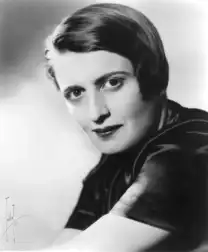
Ayn Rand (1905–1982) was a Russian-American writer and philosopher. Born Alisa Zinovyevna Rosenbaum in Saint Petersburg, she immigrated to the United States in 1926 and worked as a screenwriter before becoming known for her novels, including We the Living, Anthem, The Fountainhead, and Atlas Shrugged. Through her fiction and nonfiction, she developed and presented Objectivism, a philosophical system emphasizing reason, objective reality, individual rights, rational self-interest, and laissez-faire capitalism. Her later publications include essays, lectures, correspondence, journals, early fiction, dramatic works, and writings from her Russian period.
Catalog record updated .
Not sure where to begin?
A relatively accessible major novel that introduces Rand's central themes of independence, creative achievement, and individual judgment.
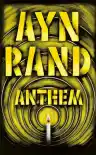
A short fictional introduction to Rand's themes of individual identity and resistance to collectivism.
Outside the series
fiction-collection · 1984
novel · 1936
This book is about a young woman named Kira Argounova who is trying to live during the Soviet takeover of Russia. Kira wants to be an engineer, but the lack of freedom in Soviet Russia oppresses her. She becomes involved in a love…
novel · 1938
Anthem is a tale of a future dark age of the great “we” – a world that deprives individuals of name, independence, and values. He lived in the dark ages of the future. In a loveless world he dared to love the woman of his choice. In an…
novel · 1943
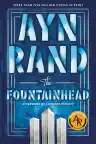
The revolutionary literary vision that sowed the seeds of Objectivism, Ayn Rand's groundbreaking philosophy, and brought her immediate worldwide acclaim. This modern classic is the story of intransigent young architect Howard Roark, whose…
novel · 1957
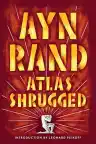
Set in a near-future U.S.A. whose economy is collapsing as a result of the mysterious disappearance of leading innovators and industrialists, this novel presents an astounding panorama of human life-from the productive genius who becomes…
nonfiction · 1961
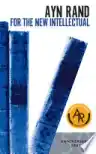
Here is Ayn Rand’s first non-fiction work—a challenge to the prevalent philosophical doctrines of our time and the “atmosphere of guilt, of panic, of despair, of boredom, and of all-pervasive evasion” that they create. As incisive and…
nonfiction · 1967
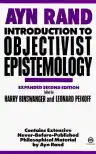
Today man's mind is under attack by all the leading schools of philosophy. We are told that we cannot trust our senses, that logic is arbitrary, that concepts have no basis in reality. Ayn Rand opposes that torrent of nihilism, and she…
nonfiction · 1971
nonfiction · 2000
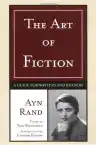
In 1958, Ayn Rand, already the world-famous author of such bestselling books as Atlas Shrugged and The Fountainhead, gave a private series of extemporaneous lectures in her own living room on the art of fiction. Tore Boeckmann and Leonard…
nonfiction · 2001
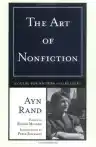
A remarkable series of lectures on the art of creating effective nonfiction by one of the 20th century's most profound writers and thinkers--now available for the first time in print.Culled from sixteen informal lectures Ayn Rand…
nonfiction · 2005
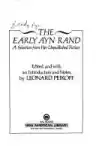
journals · 1997
novelette · 2015
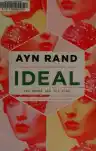
"Originally conceived as a novel but then transformed into a play by Ayn Rand, Ideal is the story of beautiful but tormented actress Kay Gonda. Accused of murder, she is on the run, and she turns for help to six fans who have written…
essay-collection · 1964
essay-collection · 1966
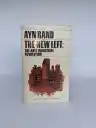
Presents the author's views on modern society through a series of essays.
essay-collection · 1969
In this beautifully written and brilliantly reasoned book, Ayn Rand throws a new light on the nature of art and its purpose in human life. Once again Miss Rand eloquently demonstrates her refusal to let popular catchwords and conventional…
essay-collection · 1982
This collection of essays was the last work planned by Ayn Rand before her death in 1982. In it, she summarizes her view of philosophy and deals with a broad spectrum of topics. According to Ayn Rand, the choice we make is not whether to…
essay-collection · 1989
essay-collection · 1991
essay-collection · 1999
play-collection · 2005
play · 1968
letters · 1995
These remarkable letters cover more than fifty-five years of Ayn Rand's extraordinary life, work, and thought. They begin in 1926, with a note from the twenty-year-old Ayn Rand newly arrived in Chicago from Soviet Russia, an impoverished…
interviews · 2009
Ayn Rand was born Alisa Rosenbaum in St. Petersburg, Russia, in 1905. She adopted the name Ayn Rand after immigrating to the United States in 1926.
She left in 1926 to pursue filmmaking in the United States and intended to remain there, rather than return to Soviet Russia.
Source: aynrand.org (opens in a new tab)
After arriving in Hollywood, she worked briefly as a film extra before becoming a writer at DeMille Studios. In 1932, she sold the screenplay “Red Pawn” to Paramount Pictures.
Source: aynrand.org (opens in a new tab)
Films and Viennese and German operettas were important early artistic influences. Philosophically, Rand identified Aristotle as her only acknowledged intellectual debt.
Sources: aynrand.org (opens in a new tab)courses.aynrand.org (opens in a new tab)
Her legacy centers on Objectivism, a philosophy emphasizing objective reality, reason, rational self-interest, individual rights, and laissez-faire capitalism. Her ideas continue to influence libertarians and advocates of limited government, while her papers are preserved by the Library of Congress.
Sources: aynrand.org (opens in a new tab)loc.gov (opens in a new tab)findingaids.loc.gov (opens in a new tab)