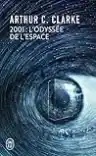
2001: A Space Odyssey
The defining entry point to Clarke's most influential space-fiction sequence.
Author guide
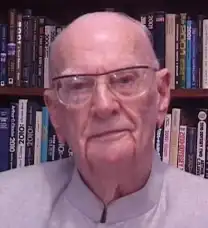
Arthur C. Clarke (1917–2008) was a British science-fiction writer and science popularizer who lived in Sri Lanka for much of his life. A leading practitioner of hard science fiction, he wrote novels, short-story collections, essays, scientific nonfiction, memoirs, and collaborative works. His 1945 proposal for geostationary communications satellites helped establish the conceptual basis of modern satellite communications. He co-wrote the screenplay and novel of 2001: A Space Odyssey with Stanley Kubrick and collaborated with Gentry Lee, Stephen Baxter, Mike McQuay, Michael P. Kube-McDowell, and Frederik Pohl.
Catalog record updated .
Not sure where to begin?
The defining entry point to Clarke's most influential space-fiction sequence.
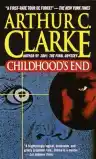
A landmark standalone novel that presents Clarke's central themes of cosmic intelligence and human transformation.

An acclaimed standalone first novel in the Rama sequence and a strong introduction to Clarke's sense-of-wonder science fiction.
A foundational, accessible example of Clarke's science writing and futurist thinking.
Read in order
novel-series · complete
A four-novel sequence about humanity's encounters with advanced extraterrestrial intelligence and the evolution of human consciousness.
Book 1 · novel · 1968
From the savannas of Africa at the dawn of mankind to the rings of Saturn as man ventures to the outer rim of our solar system, 2001: A Space Odyssey is a journey unlike any other. This allegory about humanity’s exploration of the…
Book 2 · novel · 1982
Nine years after the disastrous Discovery mission to Jupiter in 2001, a joint U.S.-Soviet expedition sets out to rendezvous with the derelict spacecraft—to search the memory banks of the mutinous computer HAL 9000 for clues to what went…
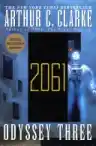
Book 3 · novel · 1987
Arthur C. Clarke’s 2061: Odyssey Three is truly a masterful elaboration on one man’s epic vision of the universe. Only rarely does a novelist weave a tapestry so compelling that it captures the imagination of the entire world. But that is…
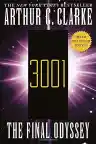
Book 4 · novel · 1997
A thousand years after the Jupiter Mission, astronaut Frank Poole is recovered and revived. He is intrigued by how much has changed. Then he receives a warning that the Monoliths have decided to destroy the human race.
novel-series · complete
A sequence centered on humanity's encounters with the immense alien spacecraft Rama.
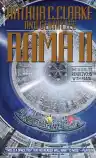
Book 1 · novel · 1973
Rama was first picked up by radar as asteroid 31/439 while still outside the orbit of Jupiter; and it was only when it was realised that it had a diameter of some twelve miles and that its course might completely upset the delicate…
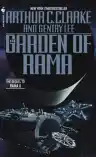
Book 3 · novel · 1991
In the spellbinding Arthur C. Clarke tradition, here is an exhilarating adventure into the hearts of both the Universe and mankind . . . By the twenty-third century Earth has already had two encounters with massive, mysterious robotic…
Book 4 · novel · 1993
A massive alien starship carries its human passengers to the end of their generations-long odyssey and toward an epic confrontation with the mysterious Ramans.
novel-series · complete
A trilogy of novels co-written with Stephen Baxter involving time travel, human history, and the Firstborn.
Book 1 · novel · 2003
“Wonderfully entertaining . . . a story that engrosses you with its dramatized ideas about the nature of existence . . . You won’t set the book down either to eat or sleep or work if you can help it.”—Chicago Tribune In an instant, Earth…
Book 2 · novel · 2005
“Clarke and Baxter have mastered the art of saving the world in blockbuster style.”—Entertainment Weekly Returned to the Earth of 2037 by the mysterious and powerful Firstborn, Bisesa Dutt is haunted by memories of her five years spent on…
Book 3 · novel · 2007
The Firstborn--the mysterious race of aliens who first became known to science fiction fans as the builders of the iconic black monolith in 2001: A Space Odyssey--have inhabited legendary master of science fiction Sir Arthur C. Clarke's…
nonfiction-series · complete
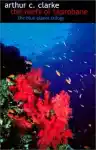
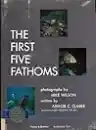
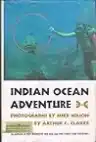
An illustrated nonfiction trilogy about underwater exploration and the marine environments around Ceylon and the Indian Ocean.
Book 1 · illustrated-nonfiction · 1956
Book 2 · illustrated-nonfiction · 1957
Looking for new underwater worlds to conquer, Arthur Clarke and Mike Wilson followed up their expedition to Australia's Great Barrier Reef (described in The Coast of Coral) by exploring the romantic seas surrounding Ceylon. Meetings with…
Book 3 · illustrated-nonfiction · 1964
Outside the series
novel · 1948
Fifty years after its first publication, the novel cthat is onsidered Clark'sfirstborn story is available once again. Clark presents his visionary tale ofthe only man born in 10 million years who desperately wants to find what liesbeyond…
nonfiction · 1950
The celebrated science writer recounts the exciting history of space exploration and flight, from Sputnik I to the present, reviews present missions and plans, and speculates on future journeys and accomplishments
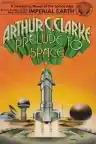
novel · 1951
The world's first lunar spacecraft is about to launch. The ship, Prometheus, is built from two separate components—one designed to travel from Earth's atmosphere to the Moon and back, and the other to carry the first component through…
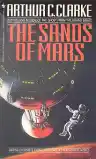
novel · 1951
Martin Gibson, a famous science fiction author, is travelling to Mars, as a guest of the crew of the spaceship Ares. After arriving at Space Station One, in the orbit of Earth, from which all interplanetary journeys start, he makes the…
nonfiction · 1951
Arthur C. Clarke was renowned for his science fiction, but his understanding of the subject was more than imagined. First published in 1951, this painstakingly-researched non-fiction book shows the depth of Clarke's expertise - he…
novel · 1952
When young Roy Malcolm won the Aviation Quiz Contest, the sponsor, World Airways, never dreamed he could legally claim a trip to the Inner Space Station as his prize. Set in the middle of the twenty-first century, this is an amazing yarn…
novel · 1953
The Overlords appeared suddenly over every city—intellectually, technologically, and militarily superior to humankind. Benevolent, they made few demands: unify earth, eliminate poverty, and end war. With little rebellion, humankind…
nonfiction · 1954
nonfiction · 1954
novel · 1955
A thrilling, suspense-filled space opera set in the near future and a forerunner of television hits like Star Trek and The Expanse. Two hundred years after landing on the Moon, mankind has moved further out into the solar system. With…
novel · 1956
Men had built cities before, but never such a city as Diaspar; for millennia its protective dome shutout the creeping decay and danger of the world outside. Once, it held powers that rules the stars. But then, as legend had it, The…
novel · 1957
A science fiction tale set under the ocean rather than in space, taking place in a future when whales are herded by submarines and the world is fed on plankton. The adventures of a former astronaut who now works in the deep ocean.
nonfiction · 1957
illustrated-nonfiction · 1958
nonfiction · 1958
nonfiction · 1959
nonfiction · 1960
illustrated-nonfiction · 1960
illustrated-nonfiction · 1961
novel · 1961
For a million years the bubble had been growing, like a vast abscess, below the root of the mountains. Now the abscess was about to burst. Captain Harris had left the controls on autopilot and was talking to the front row of passengers as…
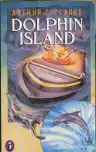
novel · 1963
A seventeen-year-old boy becomes involved in communication experiments with dolphins off the Great Barrier Reef.
novel · 1963
The joint efforts of a group of brilliant scientists, courageous flyers, and specially trained servicemen, working under pressure to perfect a radar talk-down system for planes, called Ground Controlled Descent.
nonfiction · 1964
History of rocketry and spaceflight, from the novel books of 1700's and Chinese fireworks up to Project Apollo preparations.
illustrated-nonfiction · 1964
nonfiction · 1968
illustrated-nonfiction · 1972
nonfiction · 1973
nonfiction · 1975
novel · 1975
Duncan Makenzie is the latest generation of the 'first family' of Titan, a colonised moon of Saturn. Originally settled by his grandfather Malcolm Makenzie in the early 23rd century, Titan's economy has flourished based on the harvest and…
novel · 1979
In the 22nd century visionary scientist Vannevar Morgan conceives the most grandiose engineering project of all time, and one which will revolutionize the future of humankind in space: a Space Elevator, 36,000 kilometers high, anchored to…
nonfiction · 1981
nonfiction · 1985
novel · 1986
From the New York Times bestselling author of the Space Odyssey series comes a dazzling adventure of exploration and paradise lost. Just a few islands in a planetwide ocean, Thalassa was a veritable paradise—home to one of the small…
novel · 1988
In 1994, a missile mysteriously disappears off the coast of Florida during military testing. While investigating the link between the disappearance and some unusual whale sightings, journalist Carol Dawson finds much more-an enigmatic…
novel · 1990
It is 2010. In two years' time it will be the centennial of the sinking of the Titanic. Two of the world's most powerful corporations race to raise the vessel but there are other powers at work, and chaos theory comes into play as plans…
nonfiction · 1992
novel · 1993
In the year 2110 technology has cured most of our worries. But even as humankind enters a new golden age, an amateur astronomer points his telescope at just the right corner of the night sky and sees disaster hurtling toward Earth: a…
illustrated-nonfiction · 1994
A computer simulation of human colonization and terraforming of Mars, using the computer program Vistapro.
novel · 1996
Thirty years after the 1994 Los Angeles earthquake killed his family, Lewis Crane has become the world's top seismologist, determined to protect people from his parent's fate. But in a world controlled by Chinese corporations and split by…
novel · 1999
"Jeffrey Horton of Terabyte Laboratories is the brilliant, driven and idealistic scientist responsible for the discovery of the Trigger. It was an accidental discovery: Horton was hoping to build the analogue of a laser for gravity.…
novel · 2000
When a brilliant, driven industrialist harnesses the cutting edge of quantum physics to enable people everywhere, at trivial cost, to see one another at all times: around every corner, through every wall, into everyone's most private,…
memoir · 1984
"A Wiley-Interscience publication."
memoir · 1989
Arthur C. Clarke acquired his first science fiction magazine - a copy of Astounding Stories - in 1930, when he was 13. Immediately he became an avid reader and collector: and, soon enough, a would-be-writer. The rest is history. Now, in…
essay-collection · 1962
essay-collection · 1965
essay-collection · 1972
essay-collection · 1977
This book is actually titled, "Be Full of Yourself!" Not a book by Arthur C. Clarke, as advertised.
essay-collection · 1984
essay-collection · 1986
pamphlet · 1992
essay-collection · 1993
essay-collection · 1999
In the definitive work of his brilliant career, Clarke has collected his most prophetic nonfiction essays, lucidly demonstrating that he not only anticipated many of the 20th century's greatest scientific innovations, but he in fact…
screenplay · 2001
collection · 1953
Arthur C. Clarke has been the presiding genius of science fiction for almost fifty years. His novels include the groundbreaking and profound Childhood's End and Rendezvous with Rama, and his collaboration with Stanley Kubrick produced one…
collection · 1956
From the grandmaster of science fiction, a dozen memorable tales filled with wonder and imagination.
collection · 1956
collection · 1957
"(Clarke) remains a master at describing the wonders of the material universe in sentences that combine a respect for scientific accuracy with an often startling lyricism".--"The New York Times Book Review". Here is one of his…
collection · 1958
The Other Side of the Sky presents a glimpse of our future: a future where reality is no longer contained in earthly dimensions, where man has learned to exist with the knowledge that he is not alone in the universe. These stories of…
collection · 1962
This classic collection of short stories includes some of Clarke's finest work: vivid glimpses into the future, a year, a decade, a century, a millennium from now.
collection · 1967
collection · 1972
collection · 1972
collection · 1983
From the Introduction... Today's readers are indeed fortunate; this really is the Golden Age of science fiction. There are dozens of authors at work today who can match all but the giants of the past. (And probably one who can do even…
collection · 1990
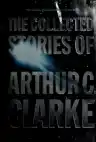
If you want an omnibus of short fiction by Arthur C. Clarke, a Science Fiction Writers of America Grand Master, then you want The Collected Stories of Arthur C. Clarke. If you're looking for a representative sample of Clarke's short…
collection · 1991
collection · 1996
chapbook · 1998
correspondence · 1998
collection · 2001
This work is a comprehensive collection of Sir Arthur C Clarke's short stories. Many of these stories were published in pulp sci-fi publications in the 1950s/60s. Over the years there have been quite a few collections floating around, but…
Arthur C. Clarke was a British science-fiction writer, science writer, futurist, and popularizer of space exploration. He also co-wrote the screenplay for 2001: A Space Odyssey with Stanley Kubrick.
Sources: nebulas.sfwa.org (opens in a new tab)oscars.org (opens in a new tab)
He was born on December 16, 1917, in Minehead, Somerset, England, to a farming family.
During World War II, he served in the Royal Air Force as a radar instructor and technician. After the war, he earned a first-class degree in physics and mathematics at King’s College London.
Sources: clarkefoundation.org (opens in a new tab)kcl.ac.uk (opens in a new tab)
Clarke said that the writer who probably influenced him most was Olaf Stapledon; he also identified H. G. Wells among his literary ideals.
He won both the Hugo and Nebula Awards for Rendezvous with Rama and received UNESCO’s Kalinga Prize for popularizing science. His 1945 proposal for geostationary communications satellites helped shape modern satellite telecommunications, and the Clarke orbit is named in recognition of his contribution.
Sources: thehugoawards.org (opens in a new tab)nebulas.sfwa.org (opens in a new tab)kcl.ac.uk (opens in a new tab)nasa.gov (opens in a new tab)