Correspondance, 1930-1944
correspondence · First published 2021
Author guide
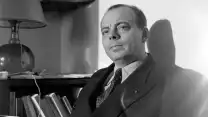
Antoine de Saint-Exupéry (1900–1944) was a French writer and pioneering aviator associated with the Aéropostale. His literary work combines aviation experience, memoir, reportage, philosophical reflection, and imaginative fiction. He disappeared during a reconnaissance flight over the Mediterranean on July 31, 1944. His posthumously published papers include correspondence, notebooks, wartime writings, drawings, unfinished prose, and previously unpublished texts.
Catalog record updated .
correspondence · First published 2021
Not sure where to begin?
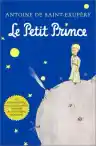
A concise, self-contained introduction to Saint-Exupéry's imagination, humanism, and illustrations.
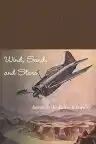
The clearest entry point to his aviation memoirs and central themes of responsibility, solidarity, and human dignity.
Outside the series
novel · 1929
In his first novel, Saint-Exup ry pays homage to "those elemental divinities-night, day, mountain, sea, and storm," turning an account of a routine mail flight from France to North Africa into an epic rendering of the pioneer days of…
novel · 1931
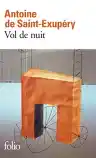
*Night Flight* (French title: *Vol de Nuit*) is the second novel by French writer and aviator Antoine de Saint-Exupéry. It was first published in 1931 and became an international bestseller. The book is based on Saint-Exupéry's…
illustrated novella · 1943
*Le Petit Prince* est une œuvre de langue française, la plus connue d'Antoine de Saint-Exupéry. Publié en 1943 à New York simultanément à sa traduction anglaise, c'est une œuvre poétique et philosophique sous l'apparence d'un conte pour…
memoir · 1939
A lyrical account of the author’s time as a pilot flying the dangerous mail routes across the Sahara and the Andes. Many incidents are recounted, including the time he crashed his plane in the Sahara and, along with his navigator, is…
memoir · 1942
unfinished philosophical work · 1948
J'ai pitié de celui-là seul qui se réveille dans la grande nuit patriarcale se croyant abrité sous les étoiles de Dieu, et qui sent tout à coup le voyage. De l'homme, je ne demande pas quelle est la valeur de ses lois, mais bien quel est…
essay · 1943
«Il nous semble, à nous, que notre ascension n'est pas achevée, que la vérité de demain se nourrit de l'erreur d'hier, et que les contradictions à surmonter sont le terreau même de notre croissance. Nous reconnaissons comme nôtres ceux…
correspondence · 1953
notebooks · 1953
correspondence · 1955
collection · 1956
En marge de l'oeuvre de Saint-Exupéry, Un sens à la vie nous livre des aspects peu connus de son activité : nouvelliste, reporter, éditorialiste et préfacier, Saint-Exupéry dispersa ainsi un certain nombre de textes qu'Un sens à la vie…
collection · 1982
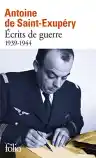
Aux nombreux fervents de Saint-Exupéry, cet ouvrage apporte, pour la période 1939-1944, un ensemble de documents et de témoignages, parfois connus mais dispersés ou inaccessibles, souvent inédits, qui éclairent vivement son attitude…
film project · 1999
graphic work · 2006
collection · 2007
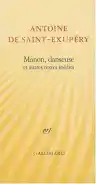
Ce coffret regroupe un ensemble exceptionnel de textes inédits d'Antoine de Saint-Exupéry, écrits entre 1925 et 1943 : récits de genèse (Manon danseuse), causeries, souvenirs d'enfance et d'aviation, lettres diverses (à Louise de Vilmorin…
correspondence · 2008
collection · 2018
correspondence · 2021
Antoine de Saint-Exupéry (1900–1944) was a French writer, poet, humanist, and aviator. He became internationally known for The Little Prince, while aviation shaped much of his literary identity.
Sources: antoinedesaintexupery.org (opens in a new tab)cheminsdememoire.gouv.fr (opens in a new tab)
He helped develop early airmail routes in South America, including service toward Patagonia and across the Andes. His dangerous flying experiences became a major source for his literary work.
Sources: antoinedesaintexupery.org (opens in a new tab)cheminsdememoire.gouv.fr (opens in a new tab)
Saint-Exupéry began writing it in 1942 while exiled in the United States, drawing on his experiences, imagination, and reflections on friendship, love, responsibility, and the difference between adult and child perspectives.
He won the Prix Femina in 1931 for Vol de nuit and the Académie française’s Grand Prix du Roman in 1939 for Terre des hommes. He also received the Légion d’honneur and the Croix de Guerre for his service.
Sources: antoinedesaintexupery.org (opens in a new tab)academie-francaise.fr (opens in a new tab)
He disappeared on July 31, 1944, after departing Corsica on a reconnaissance mission over occupied France, and was later recognized as “Mort pour la France.” His legacy connects aviation, humanist literature, and the enduring international influence of The Little Prince.
Sources: antoinedesaintexupery.org (opens in a new tab)antoinedesaintexupery.org (opens in a new tab)cheminsdememoire.gouv.fr (opens in a new tab)