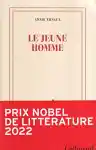
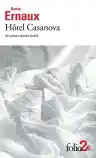
Une conversation
coauthored interview · First published 2023
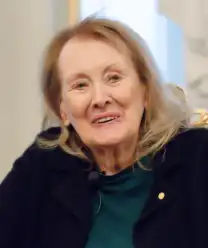
Author guide
Annie Ernaux was born in Lillebonne, Normandy, in 1940 and grew up in Yvetot. A former literature teacher, she began publishing with Les Armoires vides in 1974 and developed a distinctive form of autobiographical writing combining personal memory with social history and ethnographic observation. Her major works include La Place, Une femme, Les Années, and Mémoire de fille. She was awarded the Nobel Prize in Literature in 2022 for her writing about the roots and collective constraints of personal memory.
Catalog record updated .
coauthored interview · First published 2023
Not sure where to begin?

A concise and representative introduction to Ernaux’s method of linking family memory, class, and social history.

A short, accessible entry into her direct treatment of desire, intimacy, and emotional experience.
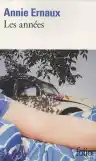
A panoramic work that connects personal memory with the social and historical experience of postwar France.
Outside the series
novel · 1974
novel · 1977
novel · 1981
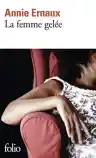
Elle a trente ans, elle est professeur, mariée à un "cadre", mère de deux enfants. Elle habite un appartement agréable. Pourtant, c'est une femme gelée. C'est-à-dire que, comme des milliers d'autres femmes, elle a senti l'élan, la…
memoir · 1983
A fragmented and largely retrospective description of a daughter's relationship with her father, "La Place" deals with issues of sexuality, social sta nding and alienation. This will be an accessible and exciting addition to French…
memoir · 1987
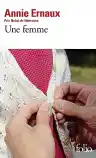
Annie Ernaux s'efforce ici de retrouver les différents visages et la vie de sa mère, morte le 7 avril 1986, au terme d'une maladie qui avait détruit sa mémoire et son intégrité intellectuelle et physique. Elle, si active, si ouverte au…
memoir · 1991
journal · 1993
memoir · 1997
diary · 1997
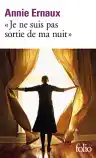
"An evocation of a grown daughter's close attachment to her mother, and of both women's strength and resiliency, "I Remain in Darkness" recounts Annie's attempts first to help her mother recover from Alzheimer's disease, and then, when…
journal · 2000
memoir · 2000
diary · 2001
"Available in English for the first time, the latest astonishing, bestselling, and award-winning book by Annie Ernaux. The Years is a personal narrative of the period 1941 to 2006 told through the lens of memory, impressions past and…
memoir · 2002
memoir · 2008
memoir · 2011
journal · 2014
Pendant un an Annie Ernaux a tenu le journal de ses visites dans un hypermarché Auchan. On redécouvre à ses côtés le monde de la grande surface. Loin de se résumer à la corvée des courses, celle-ci prend dans ce livre un autre visage :…
memoir · 2016
memoir · 2022
Frankreich, 1990er: Annie beginnt eine Liaison mit einem jungen Mann: fast dreißig Jahre jünger als sie. A. wohnt in Rouen, die Stadt, in der sie selbst in den 1960er Jahren studiert hat und erlebt dort das jugendlich Provisorische ihrer…
lecture and memoir · 2013
110 Seiten liniert, perfekt als Notizbuch, Notizheft, Zeichenblock, Skizzenbuch, Reisetagebuch, Tagebuch, Travel Journal oder Notizblock für Beer Pong Spieler. Schönes Cover, Geschenkidee, perfekt als Ideenbuch um Notizen festzuhalten.…
pamphlet · 2020
coauthored photo-text · 2005
coauthored interview · 2023
interview · 2003
writer’s notebook · 2011
interview · 2014
short-text collection · 2020
Annie Ernaux is best known for autobiographical and sociological writing that turns personal memory into an examination of class, gender, language, and collective experience. Her spare, plain style is a defining feature of her work.
She was born in Lillebonne, France, in 1940, and grew up in Yvetot, Normandy. Her parents ran a small café-grocery, and the tension between her working-class origins and later education became central to her perspective as a writer.
Yes. After studying modern literature and earning the agrégation, she taught literature for many years while writing, and she retired from teaching in 2000.
Reading was encouraged by her mother and shaped her childhood; Ernaux has also identified Simone de Beauvoir’s The Second Sex as a revelation. Nobel materials further note the influence of Marcel Proust and sociologist Pierre Bourdieu on her memory work.
Sources: nobelprize.org (opens in a new tab)nobelprize.org (opens in a new tab)nobelprize.org (opens in a new tab)
She won the 2022 Nobel Prize in Literature, awarded for the courage and clinical acuity with which she uncovers the roots, estrangements, and collective restraints of personal memory. Nobel’s account presents her as an author who expanded autobiographical writing toward a form of collective autobiography, connecting individual life with social history.
Sources: nobelprize.org (opens in a new tab)nobelprize.org (opens in a new tab)