The Secret Annex
Anne Frank’s foundational diary and best-known completed book-length work.
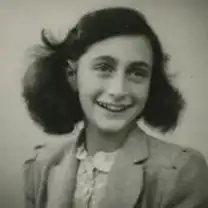
Author guide
Anne Frank (1929–1945) was born in Frankfurt am Main and moved with her family to Amsterdam after the Nazis came to power. During the German occupation of the Netherlands, she and seven others hid in the Secret Annex from July 1942 until their arrest in August 1944. Anne wrote a diary, short stories, fables, personal reminiscences, and an unfinished novel. She died in Bergen-Belsen in 1945. Her father, Otto Frank, compiled and published her diary as Het Achterhuis in 1947; her lesser-known writings were collected posthumously in Tales from the Secret Annex.
Catalog record updated .
Not sure where to begin?
Anne Frank’s foundational diary and best-known completed book-length work.
A complementary collection of her short stories, fables, reminiscences, and unfinished novel.
Outside the series
diary · 1947
short-story collection · 1982
Anne Frank, born Annelies Marie Frank, was a German-born Jewish diarist and writer. She became known worldwide for documenting her family’s life in hiding from Nazi persecution in Amsterdam during the Holocaust.
Sources: encyclopedia.ushmm.org (opens in a new tab)annefrank.org (opens in a new tab)
Anne Frank was born on June 12, 1929, in Frankfurt am Main, Germany. Her family moved to Amsterdam after the Nazis came to power in 1933 and antisemitism intensified in Germany.
Sources: encyclopedia.ushmm.org (opens in a new tab)annefrank.org (opens in a new tab)
Anne wanted someone to correspond with, so she addressed diary letters to imaginary friends, especially Kitty. The character was inspired by Cissy van Marxveldt’s Joop ter Heul books, some of which used a letter-writing format.
German SS and police discovered the hiding place on August 4, 1944, and deported the people hiding there. Anne was later sent to Bergen-Belsen, where she died of typhus in February or March 1945 at age fifteen.
Sources: encyclopedia.ushmm.org (opens in a new tab)annefrank.org (opens in a new tab)
After the war, Otto Frank published Anne’s diary, fulfilling her wish to share her writing. The diary became an international work of Holocaust remembrance, translated into more than 75 languages, while the Anne Frank House continues her educational legacy.
Sources: annefrank.org (opens in a new tab)annefrank.org (opens in a new tab)