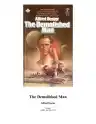
The Demolished Man
The award-winning novel that established Bester as a major science-fiction writer.
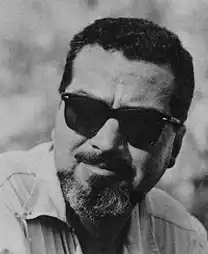
Author guide
Alfred Bester (1913–1987) was an American writer whose influential science fiction combined psychological intensity, visual experimentation, hard-edged satire, and fast-paced plotting. He also wrote mainstream fiction, nonfiction, essays, comic-book scripts, radio and television scripts, and travel journalism. His first novel, The Demolished Man, won the inaugural Hugo Award for Best Novel in 1953; he was named an SFWA Grand Master posthumously in 1988.
Catalog record updated .
Not sure where to begin?
The award-winning novel that established Bester as a major science-fiction writer.
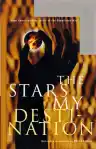
A landmark, highly experimental science-fiction novel and one of Bester's defining works.
Outside the series
novel · 1953
In a world in which the police have telepathic powers, how do you get away with murder? Ben Reichs heads a huge 24th century business empire, spanning the solar system. He is also an obsessed, driven man determined to murder a rival. To…
novel · 1953
novel · 1956
In this pulse-quickening novel, Alfred Bester imagines a future in which people "jaunte" a thousand miles with a single thought, where the rich barricade themselves in labyrinths and protect themselves with radioactive hitmen—and where an…
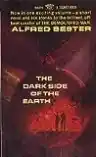
nonfiction · 1966
novel · 1975
Alfred Bester's first science fiction novel since The Stars My Destination was a major event--a fast-moving adventure story set in Earth's future. A band of immortals--as charming a bunch of eccentrics as you'll ever come across--recruit…
novel · 1980
novel · 1981
The hero is Rogue Winter, King of Maori Commandos. His lover is the beautiful Demi Jeroux, who has been kidnapped by the villainous, demonic Manchu Duke of Death. Rogue must search through the entire solar system to find missing Demi,…
novel · 1991
short-story-collection · 1958
short-story-collection · 1964
short-story-collection · 1976
short-story-collection · 1976
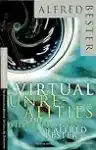
short-story-collection · 1997
short-story-and-essay-collection · 2000
“Bester’s two superb books have stood the test of time. For nearly sixty years they’ve held their place on everybody’s list of the ten greatest sf novels” —Robert Silverberg Before his untimely death in 1987, Alfred Bester had established…
essay-collection · 1959
essay-collection · 1976
co-authored novel · 1998
graphic-adaptation · 1979
graphic-adaptation · 1992
chapbook · 2009
chapbook · 2013
Alfred Bester was an American science-fiction author, magazine editor, radio and television scriptwriter, and comic-book scripter. He is best remembered for his innovative science fiction.
He was born in New York on December 18, 1913, and died in Doylestown, Pennsylvania, on September 30, 1987.
Sources: sf-encyclopedia.com (opens in a new tab)ebsco.com (opens in a new tab)
Besides writing science fiction, Bester worked on comic books, scripted radio serials and television, and later became a feature writer and senior literary editor at Holiday magazine.
Sources: sf-encyclopedia.com (opens in a new tab)press.uillinois.edu (opens in a new tab)
Psychology was especially important to Bester’s fiction. His work also drew on Jacobean revenge drama and Alexandre Dumas’s The Count of Monte Cristo.
He won the 1953 Hugo Award for Best Novel, was named an SFWA Grand Master, and was inducted into the Science Fiction and Fantasy Hall of Fame in 2001. His experimental style helped bridge science fiction’s older traditions and the New Wave, and he is often regarded as a forerunner of cyberpunk.
Sources: thehugoawards.org (opens in a new tab)nebulas.sfwa.org (opens in a new tab)mopop.org (opens in a new tab)