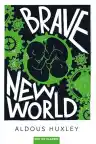
Brave New World
The clearest introduction to Huxley's social satire, dystopian fiction, and concerns about technology.
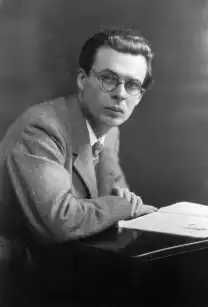
Author guide
Aldous Leonard Huxley (1894–1963) was an English writer whose career ranged across satirical and philosophical novels, short fiction, poetry, travel writing, literary criticism, social commentary, pacifist essays, drama, and mystical nonfiction. His work combined scientific and literary interests with sustained examinations of technology, education, politics, consciousness, religion, and human freedom. He lived in the United States from 1937 and became especially associated with The Doors of Perception and Heaven and Hell, which describe and interpret psychedelic experience. His final novel, Island, presents a humane utopian counterpart to the dystopian Brave New World.
Catalog record updated .
Not sure where to begin?
The clearest introduction to Huxley's social satire, dystopian fiction, and concerns about technology.
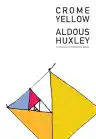
A lively entry point to his early satirical novels.
A concise introduction to his later philosophical and mystical nonfiction.
Outside the series
novel · 1921
“Crome Yellow” by Aldous Huxley ; 1922 A young English poet, Denis Stone, is spending some time at Crome, an English estate and mansion of the Wimbush family. He is in love with Anne Wimbush, the niece of Henry Wimbush. The other guests…
novel · 1923
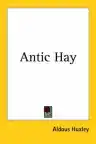
London life just after World War I, devoid of values and moving headlong into chaos at breakneck speed—Aldous Huxley's *Antic Hay*. like Hemingway's *The Sun Also Rises*, portrays a world of lost souls madly pursuing both pleasure and…
novel · 1925
Aldous Huxley spares no one in his ironic, piercing portrayal of a group gathered in an Italian palace by the socially ambitious and self-professed lover of art, Mrs. Aldwinkle. Here, Mrs. Aldwinkle yearns to recapture the glories of the…
novel · 1928
A satiric view of intellectual life in the '20s and is populated with characters based on such celebrities of the time as D.H. Lawrence, KatherineMansfield, Sir Oswald Mosley, Nancy Cunard, and John Middleton Murray, aswell as Huxley…
novel · 1932
"Aldous Huxley's profoundly important classic of world literature, Brave New World is a searching vision of an unequal, technologically-advanced future where humans are genetically bred, socially indoctrinated, and pharmaceutically…
novel · 1936
The novel focuses on the life of socialite Anthony Beavis, but it does so by employing a non-chronological structure. It juxtaposes four periods of Beavis' life, from the time that he is a young boy in the 1890s up until 1936. The novel…
novella · 1938
novel · 1939
A Hollywood millionaire with a terror of death, whose personal physician happens to be working on a theory of longevity—these are the elements of Aldous Huxley's caustic and entertaining satire on man's desire to live indefinitely. With…
nonfiction · 1940
nonfiction · 1942
novel · 1944
Sebastian Barnack, a handsome English schoolboy, goes to Italy for the summer, and there his real education begins. His teachers are two quite different men: Bruno Rontini, the saintly bookseller, who teaches him about things spiritual;…
philosophical-nonfiction · 1945
The Perennial Philosophy is defined by its author as "The metaphysic that recognizes a divine Reality substantial to the world of things and lives and minds." With great wit and stunning intellect, Aldous Huxley examines the spiritual…
nonfiction · 1946
novel · 1948
Life in Los Angeles a century after the Third World War, when atomic and bacterial warfare have left the area in ruins.
nonfiction · 1949
nonfiction · 1953
philosophical-nonfiction · 1954
novel · 1955
Thirty years ago, ecstasy and torment took hold of John Rivers, shocking him out of “half-baked imbecility into something more nearly resembling the human form.” He had an affair with the wife of his mentor, Henry Maartens—a pathbreaking…
philosophical-nonfiction · 1956
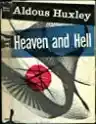
Inspired by the poetry of William Blake, Heaven and Hell delves into the murky topic of human consciousness through a discussion of religious mystical perception, biochemistry and psychoactive drug experimentation. Heaven and Hell…
nonfiction · 1958
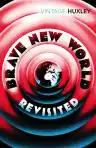
In 1958, Aldous Huxley wrote what might be called a sequel to his novel Brave New World, published in 1932, but it was a sequel that did not revisit the story or the characters, or re-enter the world of the novel. Instead, he revisited…
novel · 1962
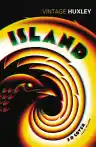
The final novel from Aldous Huxley, Island is a provocative counterpoint to his worldwide classic Brave New World, in which a flourishing, ideal society located on a remote Pacific island attracts the envy of the outside world.
nonfiction · 1963
travel-writing · 1925
travel-writing · 1926
travel-writing · 1934
art-criticism · 1938
biography · 1941
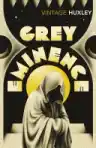
A gripping biography by the author of Brave New World The life of Father Joseph, Cardinal Richelieu's aide, was a shocking paradox. After spending his days directing operations on the battlefield, Father Joseph would pass the night in…
history · 1952
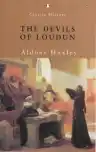
In 1634 Urbain Grandier, a handsome and dissolute priest of the parish of Loudun was tried, tortured and burnt at the stake. He had been found guilty of conspiring with the devil to seduce an entire convent of nuns in what was the most…
short-story-collection · 1920
short-story-collection · 1922
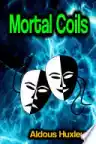
Mortal Coils is a collection of 5 stories, which were written by Aldous Huxley in the 1920s. The first story, The Gioconda Smile, involves a short murder story.Permutations Among the Nightingales is a play concerning the amorous problems…
short-story-collection · 1924
short-story-collection · 1926
short-story-collection · 1930
essay-collection · 1923
essay-collection · 1926
essay-collection · 1927
essay-collection · 1929
essay-collection · 1929
essay-collection · 1930
essay-collection · 1931
essay-collection · 1932
pamphlet · 1935
pamphlet · 1936
essay-collection · 1936
pamphlet · 1938
essay · 1949
essay-collection · 1950
pamphlet · 1952
essay-collection · 1956
essay-collection · 1960
pamphlet · 1963
essay · 1968
essay · 1970
lectures · 1977
children's-book · 1967
A rattlesnake eats every one of Mrs. Crow's eggs until Old Man Owl hatches an idea to solve the problem.
poetry · 1916
poetry · 1917
poetry · 1918
poetry · 1920
poetry · 1929
poetry · 1931
poetry · 1943
play · 1924
play · 1931
play · 1948
play · 1998
play · 2000
coauthored-nonfiction · 1974
graphic-work · 1949
chapbook · 1968
Aldous Huxley was an English writer and intellectual whose career included novels, essays, poetry, travel writing, and screenwriting. He is best known for his dystopian fiction and philosophical writing.
Sources: penguinrandomhouse.com (opens in a new tab)penguin.com.au (opens in a new tab)
He was born near Godalming, Surrey, England, on 26 July 1894, and died in California on 22 November 1963.
His thinking was shaped by literary figures including D. H. Lawrence and H. G. Wells, as well as by his family’s scientific and intellectual traditions. Later, Eastern and Western mystical traditions became increasingly important to his work.
Sources: ora.ox.ac.uk (opens in a new tab)encyclopedia.com (opens in a new tab)
The Royal Society of Literature elected Huxley a Companion of Literature in 1962; the RSL describes this as its highest award.
Huxley’s work remains influential for its criticism of technology, conditioning, propaganda, and threats to individual freedom. His writing on mysticism and psychedelic experience also shaped later cultural discussions.
Sources: encyclopedia.com (opens in a new tab)penguin.com.au (opens in a new tab)