Actuelles IV
posthumous political essay collection · First published 2024
Author guide
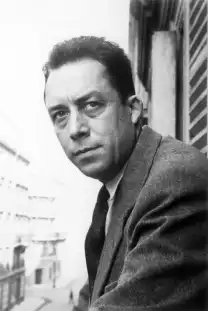
Albert Camus (1913–1960) was a French-Algerian writer, journalist, playwright, and essayist. His fiction, philosophical essays, political journalism, and drama explore absurdity, freedom, moral responsibility, solidarity, and revolt. His major works include L'Étranger, La Peste, Le Mythe de Sisyphe, L'Homme révolté, La Chute, and L'Exil et le royaume. He received the Nobel Prize in Literature in 1957.
Catalog record updated .
posthumous political essay collection · First published 2024
Not sure where to begin?
Camus's canonical first major novel and the clearest entry into his treatment of absurdity.
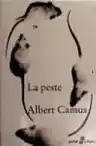
An accessible major novel introducing his themes of solidarity, moral responsibility, and revolt.
Read in order
thematic-cycle · complete
Camus's central treatment of absurdity through fiction, philosophy, and drama.
Book 1 · novel · 1942
Book 2 · philosophical essay · 1942
Book 3 · play · 1944
M Caligula is a play written by Albert Camus, begun in 1938 and published for the first time in May 1944 by Éditions Gallimard. The play was later the subject of numerous revisions. It was part of what the author called the "Cycle of the…
thematic-cycle · complete
Camus's linked treatment of collective resistance, historical violence, and moral limits.
Book 1 · novel · 1947
Sin duda mucho peso tuvo esta novela en la decisión de conceder a su autor el premio Nobel de Literatura de 1957: cumbre de la narrativa de este siglo, amarga y penetrante alegoría de un mundo al que sólo una catástrofe logra rehumanizar.…
Book 2 · philosophical and political essay · 1951
Book 3 · play · 1949
Une piece theatrale que j'ai tellement adoree qui raconte l'histoire d'un groupe du parti socialiste revolutionnaire russe qui essai de liberer la population russe de la tyrannie exercee sur elle par un systeme de terreur, cette piece est…
publication-series · complete
Camus's continuing series of political, cultural, and historical essays and chronicles.
Book 1 · political essay collection · 1950
Book 2 · political essay collection · 1953
Book 3 · political essay collection · 1958
"More than fifty years after Algerian independence, Albert Camus's Algerian Chronicles appears here in English for the first time. Published in France in 1958, the same year the Algerian War brought about the collapse of the Fourth French…
Book 4 · posthumous political essay collection · 2024
Outside the series
novella · 1956
novel · 1971
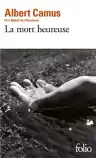
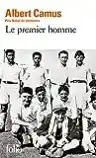
incomplete autobiographical novel · 1994
travel journals · 1978
"C'est les jambes flageolantes que je reçois le premier coup de New York. Au premier regard, hideuse ville inhumaine. Mais je sais qu'on change d'avis. Ce sont des détails qui me frappent : que les ramasseurs d'ordures portent des gants,…
journalism collection · 1978
journalism collection · 1987
journalism collection · 2002
short-story collection · 1957
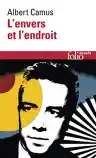
essay collection · 1937
Premier livre d'Albert Camus. A la fin de sa vie, Camus y verra la source secrète qui a alimenté tout ce qu'il a écrit.
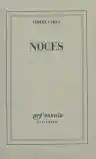
essay collection · 1939
essay and letters collection · 1945
satirical pamphlet · 1947
lyrical essay collection · 1954
essay · 1957
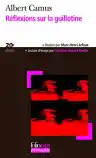
Dans Folioplus philosophie, le texte philosophique, associé à une œuvre d'art qui l'éclaire et le questionne, est suivi d'un dossier organisé en six points : les mots du texte : Monstre, châtiment, crime ; l'œuvre dans l'histoire des…
speeches and essays · 1958
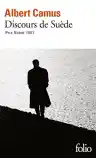
On aura peut-être été un peu surpris de voir dans ces discours l'accent porté par Camus sur la défense de l'art et la liberté de l'artiste en même temps que sur la solidarité qui s'impose à lui. Cela faisait certes partie de ce qui lui…
play · 1948
adapted play · 1953
adapted play · 1953
adapted play · 1955
adapted play · 1956
adapted play · 1957
co-authored play · 1936
co-authored prose-and-photography book · 1965
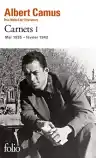
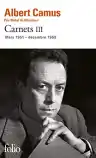
notebooks · 1962
notebooks · 1964
notebooks · 1989
«Chaque matin quand je sors sur cette terrasse, encore un peu ivre de sommeil, le chant des oiseaux me surprend, vient me chercher au fond du sommeil, et vient toucher une place précise pour y libérer d'un coup une sorte de joie…
Albert Camus (1913–1960) was a French-Algerian novelist, essayist, playwright, journalist, and editor whose work explored absurdity, moral responsibility, and revolt.
Sources: nobelprize.org (opens in a new tab)plato.stanford.edu (opens in a new tab)
He is commonly described as French-Algerian: born in Algeria, he moved to France at age 25 and became part of French literary life. His Algerian origins and experiences strongly shaped his thought and writing.
Sources: nobelprize.org (opens in a new tab)guides.loc.gov (opens in a new tab)
Camus worked as a journalist and editor, joined the French Resistance, edited the newspaper Combat after liberation, and was active in theater as a producer and playwright.
Sources: nobelprize.org (opens in a new tab)plato.stanford.edu (opens in a new tab)
His upbringing in Algeria and engagement with philosophy shaped his thinking, as did dialogue and disagreement with thinkers such as Nietzsche, Kierkegaard, Heidegger, Husserl, and Jean-Paul Sartre. Camus rejected the existentialist label, although his work is often discussed alongside existentialism.
Sources: plato.stanford.edu (opens in a new tab)nobelprize.org (opens in a new tab)
Camus remains influential for making absurdity, rebellion, and solidarity central themes in modern literature and moral thought. His relationship to colonial Algeria also remains an important and contested subject of scholarship.
Sources: plato.stanford.edu (opens in a new tab)academic.oup.com (opens in a new tab)