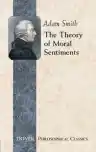
The Theory of Moral Sentiments
The best entry point to Smith's moral philosophy and account of sympathy, judgment, and virtue.
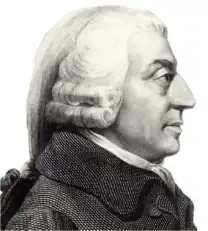
Author guide
Adam Smith (1723–1790) was a Scottish philosopher, economist, and leading figure of the Scottish Enlightenment. His work spans moral philosophy, jurisprudence, rhetoric, philosophy of science, and political economy. His two major books established influential accounts of moral judgment, social institutions, division of labor, markets, taxation, and economic development. Several posthumous works preserve lecture notes and philosophical manuscripts associated with his teaching and research.
Catalog record updated .
Not sure where to begin?
The best entry point to Smith's moral philosophy and account of sympathy, judgment, and virtue.
Smith's foundational work in political economy and his most influential book.
Outside the series
essay-collection · 1795
lecture-notes · 1896
lecture-notes · 1963
book · 1759
Best known for his revolutionary free-market economics treatise The Wealth of Nations, Adam Smith was first and foremost a moral philosopher. In his first book, The Theory of Moral Sentiments, he investigated the flip side of economic…
book · 1776
Book digitized by Google from the library of the University of California and uploaded to the Internet Archive by user tpb.
correspondence · 1977