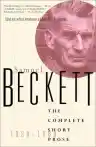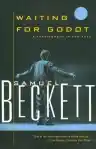
Waiting for Godot
The clearest entry point to Beckett's dramatic writing and his most widely known play.
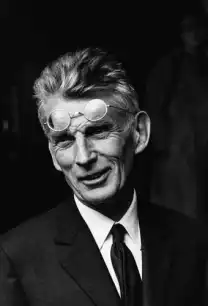
Author guide
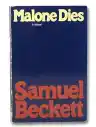
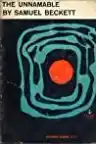
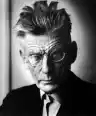
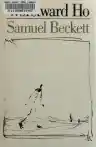
Samuel Beckett (1906–1989) was an Irish writer who lived and worked principally in France. He wrote in both English and French and often translated his own works. His fiction, poetry, essays, radio and television scripts, and stage plays are marked by linguistic minimalism, dark comedy, repetition, and an intense examination of consciousness, failure, memory, and human persistence. His major works include the novels Murphy, Watt, the trilogy Molloy, Malone Dies, and The Unnamable, and How It Is; the plays Waiting for Godot, Endgame, Happy Days, and Krapp's Last Tape; and late prose such as Company, Ill Seen Ill Said, and Worstward Ho. He received the Nobel Prize in Literature in 1969.
Not sure where to begin?
The clearest entry point to Beckett's dramatic writing and his most widely known play.
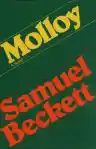
The first volume of the Trilogy and a central entry point to Beckett's mature fiction.
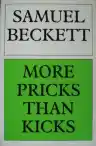
An accessible introduction to Beckett's early English prose and dark comic style.
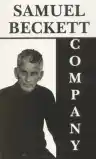
A concise entry point to Beckett's late prose and the Nohow On trilogy.
Read in order
novel-trilogy · complete
Samuel Beckett's three linked postwar novels, commonly known collectively as the Trilogy.
prose-trilogy · complete
A late prose trilogy comprising Company, Ill Seen Ill Said, and Worstward Ho.
Outside the series
nonfiction · 1931
novel · 1938

novel · 1953
novella · 1958

novel · 1961
novella · 1970
novel · 1970
novella · 1970
novel · 1992
play · 1952
play · 1957
radio-play · 1957
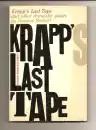
play-collection · 1960
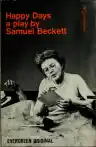
play · 1961
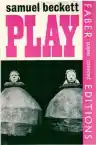
play-collection · 1964
dramatic-collection · 1967
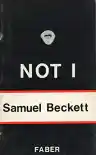
play · 1973
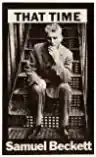
play · 1976
play · 1976
play-collection · 1976
play-collection · 1982
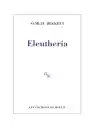
play · 1995