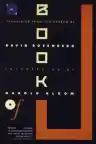
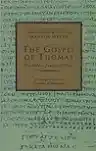
The Man Who Read Everything: The Literary Letters of Harold Bloom
posthumous correspondence collection · First published 2026
Search on Amazon ↗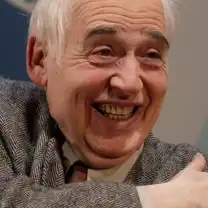
Author guide
Harold Bloom (1930-2019) was an American literary critic and Sterling Professor of the Humanities at Yale University. His books developed influential theories of poetic influence and misreading, defended aesthetic judgment and the Western canon, and examined Romantic poetry, Shakespeare, the Bible, Jewish and American religion, and major English-language writers. He also wrote one novel, edited and compiled literary anthologies, and published memoiristic and posthumous collections of criticism and correspondence.
posthumous correspondence collection · First published 2026
Search on Amazon ↗Not sure where to begin?
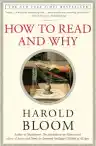
The most accessible introduction to Bloom's literary values and approach to reading.
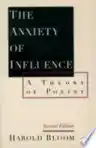
The foundational statement of Bloom's theory of poetic influence and revision.
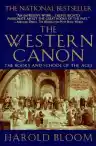
The clearest overview of Bloom's defense of aesthetic judgment and the Western literary canon.
Read in order
book series · completed
A five-volume series of brief studies of major Shakespearean characters by Harold Bloom.
Book 1 · Shakespeare criticism · 2017
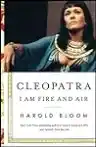
Book 2 · Shakespeare criticism · 2017
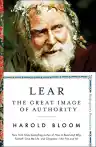
Book 3 · Shakespeare criticism · 2018
Book 4 · Shakespeare criticism · 2018
Book 5 · Shakespeare criticism · 2019
Outside the series
literary criticism · 1959
literary criticism · 1961
literary criticism · 1963
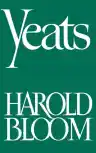
literary criticism · 1970
literary criticism · 1977
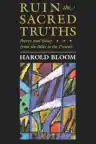
religious criticism · 1989
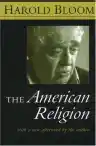
religious criticism · 1992
literary criticism · 1994
religious criticism · 1996
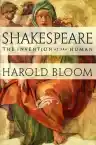
Shakespeare criticism · 1998
literary criticism · 2000
literary criticism · 2002
Shakespeare criticism · 2003
literary criticism · 2004
religious criticism · 2005
literary criticism · 2011
religious criticism · 2011
literary criticism · 2015
literary memoir · 2019
essay collection · 1971
essay collection · 1976
essay collection · 1982
pamphlet · 1987
essay collection · 1988
literary anthology · 2001
poetry anthology · 2004
poetry anthology · 2006
poetry anthology · 2010
posthumous essay collection · 2019
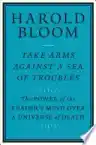
posthumous literary criticism · 2020
posthumous literary criticism · 2020
posthumous correspondence collection · 2026
co-authored essay collection · 1979
literary theory · 1973
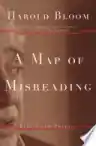
literary theory · 1975
literary theory · 1975
literary theory · 1976
literary theory · 1982
Harold Bloom was an American literary critic and theorist whose work reshaped discussions of poetic influence and literary value. He was also a prominent defender of Shakespeare, Romantic poetry, and the Western literary canon.
Sources: fas.yale.edu (opens in a new tab)macfound.org (opens in a new tab)
Bloom was born in the East Bronx on July 11, 1930, to Eastern European immigrant parents; Yiddish was his first language. He earned a bachelor’s degree from Cornell University in 1951 and a Ph.D. from Yale University in 1955.
Sources: news.cornell.edu (opens in a new tab)macfound.org (opens in a new tab)
Bloom joined Yale’s English faculty in 1955 and became Sterling Professor of the Humanities, Yale’s highest academic rank. He also served concurrently as Berg Professor of English at New York University from 1988 to 2004.
Sources: macfound.org (opens in a new tab)news.cornell.edu (opens in a new tab)
As a young reader, Bloom was captivated by William Blake and Hart Crane, and at Cornell he was strongly influenced and mentored by critic M. H. Abrams. His criticism also drew on British and American Romanticism, psychoanalytic theory, religious history, and Jewish studies.
Sources: fas.yale.edu (opens in a new tab)macfound.org (opens in a new tab)
Bloom was a MacArthur Prize Fellow and received the American Academy of Arts and Letters’ Gold Medal for Belles Lettres and Criticism, the Catalonia International Prize, and Mexico’s Alfonso Reyes International Prize. He was also a finalist for the National Book Awards in 1971 and 1998.
Sources: nationalbook.org (opens in a new tab)news.yale.edu (opens in a new tab)macfound.org (opens in a new tab)