Notes from Underground
A short, foundational introduction to Dostoevsky's psychological and philosophical fiction.
Author guide
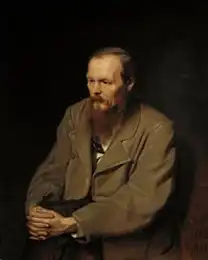
Fyodor Mikhailovich Dostoevsky (1821–1881) was a Russian writer whose career encompassed novels, novellas, journalism, essays, and memoiristic nonfiction. After imprisonment and exile in Siberia, he produced the major works for which he is known, including Crime and Punishment, The Idiot, Demons, and The Brothers Karamazov.
Catalog record updated .
Not sure where to begin?
A short, foundational introduction to Dostoevsky's psychological and philosophical fiction.
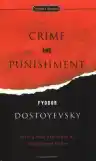
A compelling major novel and accessible entry point to his mature themes.

His culminating novel, recommended after gaining familiarity with his central concerns.
Outside the series
novel · 1846
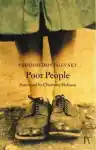
Poor Folk (Russian: Бедные люди, Bednye lyudi), sometimes translated as Poor People, is the first novel by Fyodor Dostoevsky, written over the span of nine months between 1844 and 1845. Dostoevsky was in financial difficulty because of…
novella · 1846
While his literary reputation rests mainly on such celebrated novels as Crime and Punishment, The Brothers Karamazov, and The Idiot, Dostoyevsky also wrote much superb short fiction. The Double is one of the finest of his shorter works.…
novella · 1847
Generally considered something of a departure for Dostoyevsky, The Landlady was first published in 1847, when most of the author's classic novels were still in his future. Set in Saint Petersburg, the novella tells of a brooding,…
novel · 1849
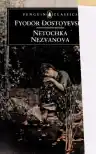
Netochka Nezvanova - a 'Nameless Nobody' - tells the story of a childhood dominated by her stepfather, Efimov, a failed musician who believes he is a neglected genius. The young girl is strangely drawn to this drunken ruin of a man, who…
novella · 1859
Love, hate, deceit and greed. Throw in a sprinkling of comedy and you have the recipe for an entertaining and humorous novella. "Uncle’s Dream" is a story by Fyodor Dostoevsky that follows the return of a Russian prince and an old…
novel · 1859
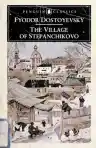
The Village of Stepanchikovo (Russian: Село Степанчиково и его обитатели, Selo Stepanchikovo i ego obitateli), also known as The Friend of the Family, is a novel written by Fyodor Dostoevsky and first published in 1859.
novel · 1861
From [wikipedia][1]: Crime and Punishment (Russian: Преступлéние и наказáние, tr. Prestupleniye i nakazaniye; IPA: [prʲɪstʊˈplʲenʲə ɪ nəkɐˈzanʲə]) is a novel by the Russian author Fyodor Dostoyevsky. It was first published in the literary…
novel · 1862
Accused of political subversion as a young man, Fyodor Dostoyevsky was sentenced to four years of hard labor at a Siberian prison camp — a horrifying experience from which he developed this astounding semi-autobiographical memoir of a man…
nonfiction · 1863
In June 1862, Dostoevsky left Petersburg on his first excursion to Western Europe. Ostensibly making the trip to consult Western specialists about his epilepsy, he also wished to see firsthand the source of the Western ideas he believed…
novella · 1864
Written in 1864, this classic novel recounts the apology and confession of a minor nineteenth-century official, an account of the man's separation from society, and his descent "underground.".
novel · 1866
Raskolnikov, a destitute and desperate former student, wanders through the slums of St Petersburg and commits a random murder without remorse or regret. He imagines himself to be a great man, a Napoleon: acting for a higher purpose beyond…
novella · 1867
The Gambler (Russian: Игрокъ, romanized: Igrok; modern spelling Игрок) is a short novel by Fyodor Dostoevsky about a young tutor in the employment of a formerly wealthy Russian general. The novella reflects Dostoevsky's own addiction to…
novel · 1869
Inspired by an image of Christ's suffering, Fyodor Dostoyevsky set out to portray "a truly beautiful soul" colliding with the brutal reality of contemporary society. Returning to St. Petersburg from a Swiss sanatorium, the gentle and…
novella · 1870
The Eternal Husband (Russian: Вечный муж, Vechny muzh) is a novella by Russian author Fyodor Dostoevsky that was first published in 1870 in Zarya magazine. The novella's plot revolves around the complicated relationship between…
novel · 1872
nonfiction · 1873
A Writer's Diary (Russian: Дневник писателя; Dnevnik pisatelya) is a collection of non-fiction and fictional writings by Fyodor Dostoyevsky. Taken from pieces written for a periodical which he founded and produced, it is normally…
novel · 1875
The Raw Youth (Russian: Подросток, Podrostok), also published as The Adolescent or An Accidental Family, is a novel by Russian writer Fyodor Dostoevsky, first published in monthly installments in 1875 in the Russian literary magazine…
novel · 1880
When brutal landowner Fyodor Karamazov is murdered, the lives of his sons are changed irrevocably: Mitya, the sensualist, whose bitter rivalry with his father immediately places him under suspicion for parricide; Ivan, the intellectual,…
Fyodor Dostoevsky was a Russian novelist, essayist, journalist, and publicist who lived from 1821 to 1881. His fiction is known for its psychological, moral, religious, and philosophical depth.
Sources: encyclopedia.com (opens in a new tab)academic.oup.com (opens in a new tab)
He trained as a military engineer at a school in St. Petersburg and briefly worked in engineering and civil service. He left that career in 1844 to devote himself to translating and writing literature.
He was arrested in 1849 for participating in the Petrashevsky Circle, a discussion group associated with political and social reform. After a staged execution, his death sentence was commuted to four years of hard labor followed by military service in Siberia.
Sources: encyclopedia.com (opens in a new tab)encyclopedia.com (opens in a new tab)
His early reading included Russian and European writers such as Nikolai Gogol, Honoré de Balzac, Victor Hugo, and Alexander Pushkin. His imprisonment, Siberian exile, Orthodox Christianity, and engagement with political and philosophical debates also shaped his mature work.
Sources: encyclopedia.com (opens in a new tab)academic.oup.com (opens in a new tab)
Dostoevsky remains influential because his fiction examines ethics, psychology, religion, freedom, and society with unusual intensity. His work is read worldwide and has had a lasting impact on modern literature and philosophy.
Sources: academic.oup.com (opens in a new tab)encyclopedia.com (opens in a new tab)